
Banks are actively converting magnetic cards to chip cards, and it is expected to complete the conversion next year, according to the State Bank’s schedule.
According to Mr. Nguyen Trong Duong, Deputy Director of Information Security Department (Ministry of Information and Communications), along with the explosion of technology 4.0, the gaps causing cybersecurity insecurity are increasing at a speed. 300% / year.
Cyber attacks take place every minute and mobile devices become popular targets. In these attacks, the bank is one of the regular targets of cyber criminals.
Security and security issues are always a challenge that banks must put at the top of the digital revolution today.
Technology transformation
According to many technology experts, the increase in card payment brings many benefits to the society, but with payment service providers, they face potential risks.
Usually, international credit cards have two uses: payment for goods, services and cash withdrawal. The cardholder is the only person who knows the personal identification number (PIN). In case the cardholder accidentally discloses this code and at the same time loses the card without notifying the issuing bank, due to some coincidence, the person who got the card also knows the PIN number, they can Use your card to withdraw cash at an automated teller machine (ATM).
Therefore, many banks have equipped security tools for ATM systems. Because coke cards are always located in banks, while ATM systems must also be invested carefully, ensuring the safety of the card system.
Currently, banks have invested carefully and connected ATM between banks as well as the whole ATM system and must always be upgraded. On the other hand, the process is mostly by banks in the retail sector, but security and security are placed in the information technology block, so a homogeneous process is also needed.
Convert magnetic cards to chip cards for added security
To control risks in e-payment activities, many banks have recently focused on investing in high-tech chip cards.
According to the State Bank’s roadmap, the whole system will complete this conversion in 2021.
Mr. Du Xuan Vu, Director of Technology Division of OCB said: The benefits that banks gain when making the conversion not only in the short term but also in the long term such as: Limiting the risk of fraudulent transactions. , ensure safety and security for customers.
To avoid confusion, OCB will issue new chip cards from the end of 2019, the card is due, and then it is time for the required conversion time for all customers. Switching to chip cards will overcome card theft of card data criminals to create fake cards to withdraw money.
At OCB, not only is customer security, but also our digital technology experience
According to Mr. Vu, from December 2018, OCB started implementing the project of standardizing the system according to the PCI DSS standard.
After one year of implementation, OCB completed the project and received the PCI DSS certificate, as a result of efforts in continuous improvement, raising security standards, and increasing control of operations. card.
Thereby, the bank has made significant changes and breakthroughs in its products, services and technologies such as: Customers experience payment transactions with modern technology – contactless payment (contactless) ; Successful application of 3D – Secure technology platform, OCB credit card ensures security when making transactions, serving as a platform to further expand connectivity and provide more diverse products and services. finance in the ecosystem, firstly with schools and hospitals.
“OCB is a pioneer in digitizing account opening service, this is also a highlight of the Bank. With 3-5 minutes, customers can open an online account, then have a contact staff to complete the procedures for the day. and customers can experience OCB OMNI immediately without having to visit a bank branch “.
In particular, recently, the Bank has launched Open API – Open bank ecosystem. This is considered one of the technologies that will completely change the banking and finance industry coming.
In Vietnam, OCB is one of the pioneer banks with an open banking model with Open API platform. OCB’s Open API has been exploited and applied to many services in many different models with outstanding growth after more than 6 months of official application.
However, Mr. Vu emphasized: The competition in digital transformation as well as the development of services in the financial sector to attract customers of the bank is getting bigger and bigger. In the past, customers’ choices were small and passive, but now customers are completely active and have many choices. Therefore, requiring banks to offer appropriate products to attract customers.
Currently, OCB is cooperating with AirPay, VnPay, Momo … to help customers pay their electricity, water and Internet bills, recharge their phones right on OCB OMNI application or transfer money via wallets to shop, pay for translation. service.
(Source: Cafef.vn)
Tin tức khác
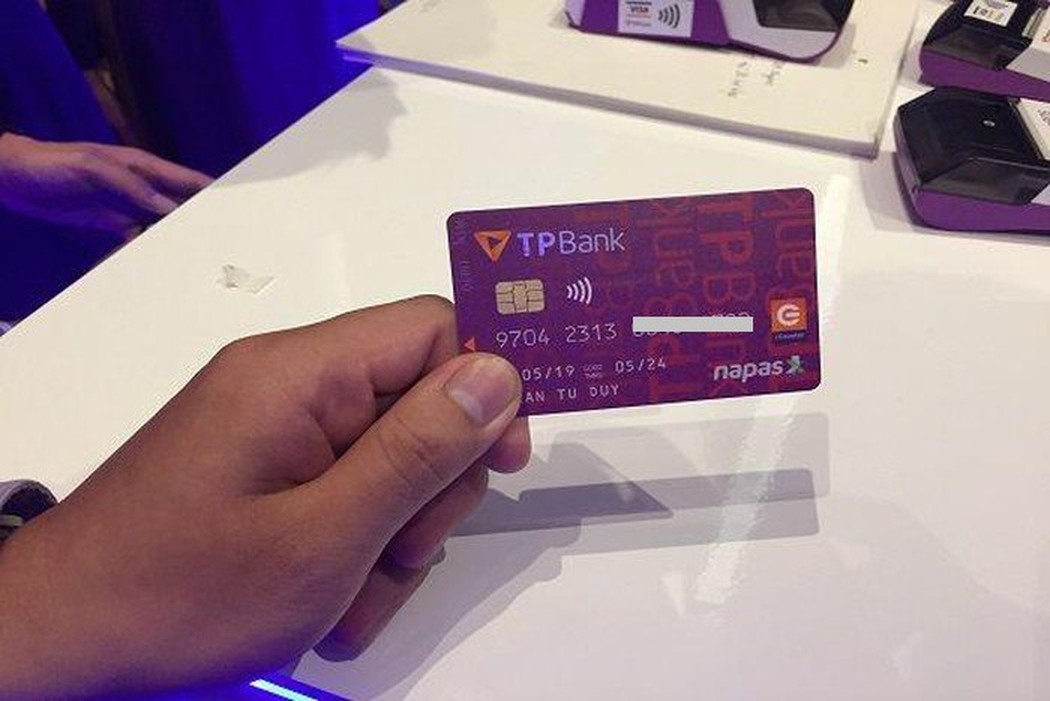
Why you need to use an ATM chip card ?
Increasing safety, high information security, minimizing the risk of fraud, stealing card information (skimming) … are the outstanding advantages that chip technology cards bring. Recently, banks have been offering ATM cards based on domestic VCCS card standards, complying with EMV international standards as well as increasing communication to their customers about this conversion. Why should
Xem chi tiết
100 million in a bank account ‘without wings but flying’
In 30 minutes, the bank account of Mr. Vo Tan Dinh opened at Sacombank was withdrawn 100 million when fraudsters made 35 money transfer transactions. Mr. Vo Tan Dinh said that on the morning of February 18, he went to Sacombank’s transaction office in Bau Bang district (Binh Duong) to deposit VND 105 million into
Xem chi tiết
10 sự kiện công nghệ thông tin tiêu biểu nhất năm 2019
TTO – Cách mạng 4.0, Chính phủ điện tử, xét xử vụ AVG, thử nghiệm mạng 5G… được bình chọn là những sự kiện đứng đầu trong top 10 sự kiện ICT 2019 Năm 2019, Việt Nam đã tuyên bố chiến lược “Make in Vietnam” với mục tiêu chủ động, sáng tạo, thiết kế, tích
Xem chi tiết
MB có thể ứng dụng công nghệ không tiếp xúc Contactless
Ngân hàng Thương mại Cổ phần Quân Đội (MB) cho hay, nhà băng này vừa chính thức phát hành dòng thẻ ghi nợ nội địa áp dụng tiêu chuẩn cơ sở về thẻ chip nội địa VCCS. Cụ thể theo thông tin từ MB, thực hiện đúng Thông tư 41/2018/TT-NHNN của Ngân hàng Nhà nước
Xem chi tiết
Agribank tích cực đẩy nhanh chuyển đổi thẻ từ sang thẻ chip
Chuyển đổi thẻ thanh toán nội địa từ thẻ từ sang thẻ chip là một trong những giải pháp trọng tâm của Ngân hàng Nông nghiệp và Phát triển nông thôn Việt Nam (Agribank), tuân thủ theo Đề án phát triển thanh toán không dùng tiền mặt giai đoạn 2016 -2020 của Thủ tướng Chính
Xem chi tiết
NAPAS and Vietbank launched domestic prepaid cards with contactless payment in traffic
Vietnam Thuong Tin Bank (Vietbank) and Vietnam National Payment Joint Stock Company (NAPAS) have just officially launched Vietbank NAPAS prepaid cards. This is a line of domestic prepaid cards with chips issued by Vietbank with contactless payment feature in multi-application traffic applying the basic standard of local chip cards of the State Bank. At the
Xem chi tiết