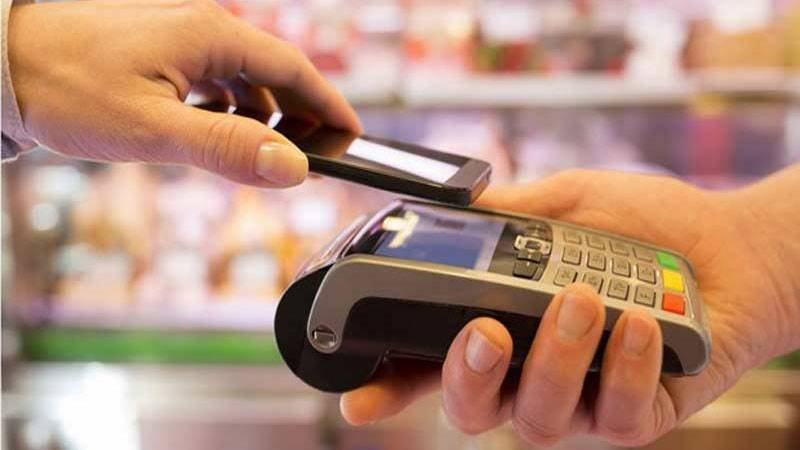
The SBV Governor has just issued Directive No. 01 / CT-NHNN on organizing the implementation of key tasks of the banking industry in 2020, in which the requirement to promote non-cash payment – a key solution in Resolution 02 of the Government.
According to the Directive, implementing the Resolution of the National Assembly on the socio-economic development plan in 2020, the Resolution No. 1 and 02 of the Government, the Governor of the State Bank requires units under the SBV and credit institutions. , foreign bank branches fully grasp the Government’s motto of action in 2020 as “Discipline, integrity, action, responsibility, creativity and efficiency” to well implement monetary management solutions. and banking operations aimed at controlling inflation, stabilizing macro-economy, supporting economic growth, ensuring safety and healthy development of the system of credit institutions.
An outstanding content of the Directive is to promote non-cash payments.
At the recent industry conference, Governor Le Minh Hung said that the SBV has worked closely with the Ministry of Information and Communications and is waiting for the Ministry of Justice’s permission to deploy Mobile Money in 2020.
Once again, at the first Directive in the new year, the head of the SBV asked the banking industry to step up non-cash payments, especially via bank payments for public services; to ensure stable, safe and efficient payment systems and intermediary payment services.
“Innovating and completing information technology infrastructure, applying modern technology to develop digital banking services; enhancing security, safety and confidentiality in banking operations”, the Directive stated.
Reportedly, Resolution 02 of the Government has determined that promoting non-cash payment is one of the central areas of reform to further improve the business environment and enhance national competitiveness.
The resolution requires ministers and heads of ministerial-level agencies to direct the provision of at least 30% of online public services under their jurisdiction at level 4; allowing people and enterprises to pay without using cash by many different means; integrate into the national public service portal according to the schedule; accelerate the method of receiving dossiers and returning results of handling administrative procedures through public postal services.
Resolution 02 also assigned the State Bank to lead and coordinate with the Ministry of Justice and relevant agencies to study and propose the Prime Minister to issue a Decision on the pilot use of telecommunications accounts to pay for services. with small value (Mobile-Money), piloting new payment service models while there is no law to timely ensure management, especially for cross-border payment activities. gender. Completed in the fourth quarter of 2020.
Along with that, summarizing and evaluating the results of the implementation of the scheme to develop non-cash payment in Vietnam for the period of 2016-2020 promulgated under the Prime Minister’s Decision No. 2545 / QD-TTg of 2016; propose measures to promote non-cash payment in the coming time. Completed in the fourth quarter of 2020.
According to the SBV, by the end of October 2019, the number of ATMs reached more than 18,900 with POS reaching 282,900, the number of cards in circulation reached 98.2 million cards (up by 17.3%; 44.5% respectively). and 15.8% over the same period in 2018).
The average transaction value via interbank electronic payment system (IBPS) reached nearly 375 trillion dong / day (equivalent to 17 billion USD / day); The value of transactions through POS reached 491 trillion VND; via mobile phones reached VND 4,264 trillion; via the Internet reached VND 17,729 trillion (an increase of 66.3%, 221.2% and 36.6% over the same period of 2018).
Credit growth is about 14%, bad debt is below 2%
Also in Directive 01, the Governor of the State Bank stated clearly the direction of operating monetary policy proactively, flexibly, prudently, coordinating synchronously with fiscal and other macroeconomic policies to control inflation. average of less than 4%, maintain macroeconomic stability, support targeted economic growth, stabilize money and foreign exchange markets.
In 2020, the total payment means orientation will increase by 13%; credit increased by about 14%, adjusted to suit the situation and the actual situation. To implement monetary and credit solutions according to the motto of extending credit along with safety, efficiency and ensuring capital supply for the economy.
Along with that, drastically and effectively implementing the Scheme on restructuring the system of credit institutions associated with dealing with bad debts in the 2016-2020 period (according to Decision 1058 / QD-TTg of the Prime Minister), focus on handling bad debts of credit institutions to ensure the safety of banking activities; strive for 2020, bringing the NPL ratio to the balance sheet to below 2%; the NPL ratio of credit institutions, bad debts sold to Vietnam Asset Management Company (VAMC) and debts that have implemented debt classification measures to below 3% (excluding bad debts of weak commercial banks).
The SBV continued to improve the legal framework, mechanisms and policies in accordance with international practices and standards; ensure a uniform legal documents system, better meet the requirements of state management of monetary and banking activities in the coming period. Implement drastically the Development Strategy of Vietnam’s Banking Industry until 2025, with orientations to 2030.
Along with that, promoting administrative reforms ensures to exceed the targets and tasks under the overall state administrative reform program and administrative reform plan of the State Bank for the period 2016-2020, contributing to improving improve the business environment, improve national competitiveness. To strive to maintain in the top ministries and branches in the ranking of administrative reform index (Par Index) by 2020; maintain the credit access index among the top 25 countries.
(Source: Government Newspaper)
Tin tức khác

SCB triển khai chuyển đổi thẻ thanh toán CHIP nội địa chuẩn VCCS
Với định hướng trở thành ngân hàng bán lẻ đa năng, hiện đại, Ngân hàng TMCP Sài Gòn (SCB) không ngừng ứng dụng công nghệ vào việc nâng cao chất lượng sản phẩm dịch vụ và gia tăng sự an toàn, bảo mật, nhằm mang đến cho Khách hàng những trải nghiệm tuyệt vời nhất.
Xem chi tiết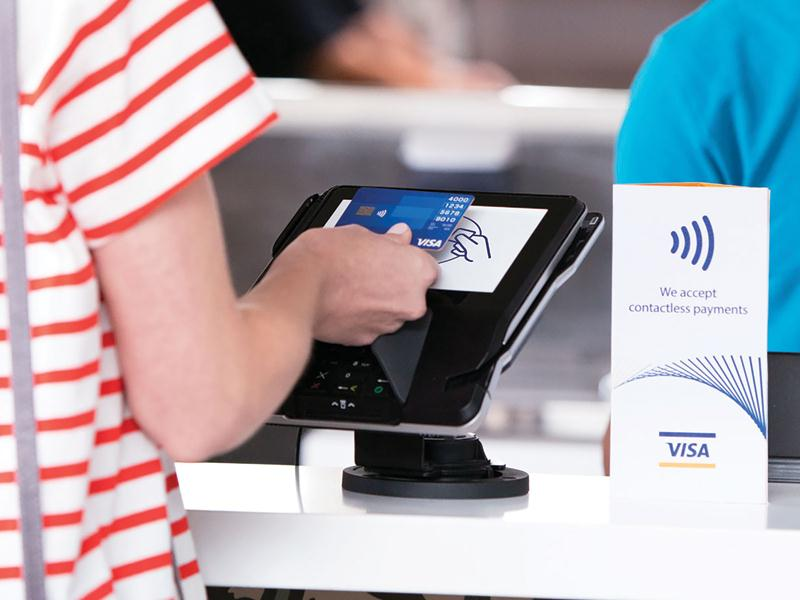
Đảm bảo an ninh thanh toán số của Việt Nam
Bùng nổ thanh toán không dùng tiền mặt Những năm vừa qua, Việt Nam đã chứng kiến sự bùng nổ của các hình thức thanh toán không tiền mặt, bao gồm thẻ tín dụng, dịch vụ Internet Banking, ví điện tử và các ứng dụng thanh toán kỹ thuật số khác. Người tiêu dùng Việt
Xem chi tiết
Chip-mounted citizen identification: Who must exchange?
As the previous information has given, the citizen’s identity will be changed to a new model with a chip in the near future. At that time, did all people have to change to this new card model? Expected to issue citizen ID with chip in 11/2020 Recently, the Prime Minister has signed Decision No. 1368
Xem chi tiết
Có gì mới trong thẻ bảo hiểm y tế điện tử năm 2020?
Như tin đã đưa trước đó, từ 01/01/2020, cơ quan bảo hiểm xã hội tiến hành cấp thẻ bảo hiểm y tế (BHYT) điện tử cho người tham gia. Vậy loại thẻ này có đặc điểm gì nổi bật? Thẻ bảo hiểm y tế điện tử nhận diện bằng khuôn mặt Chậm nhất đến ngày
Xem chi tiết
LAUNCHING CHIP ATM TECHNOLOGY WITHOUT CONTACT
Contactless ATM Chip Card “officially launched with many outstanding utilities, bringing optimum convenience and safety for users: – Card information is encrypted in security in Chip, protecting customers from fraud and fraudulent transactions; – Make payment easier and faster with “Touch payment” technology – Certified with VCCS Chip card standard * (* VCCS: Chip card
Xem chi tiết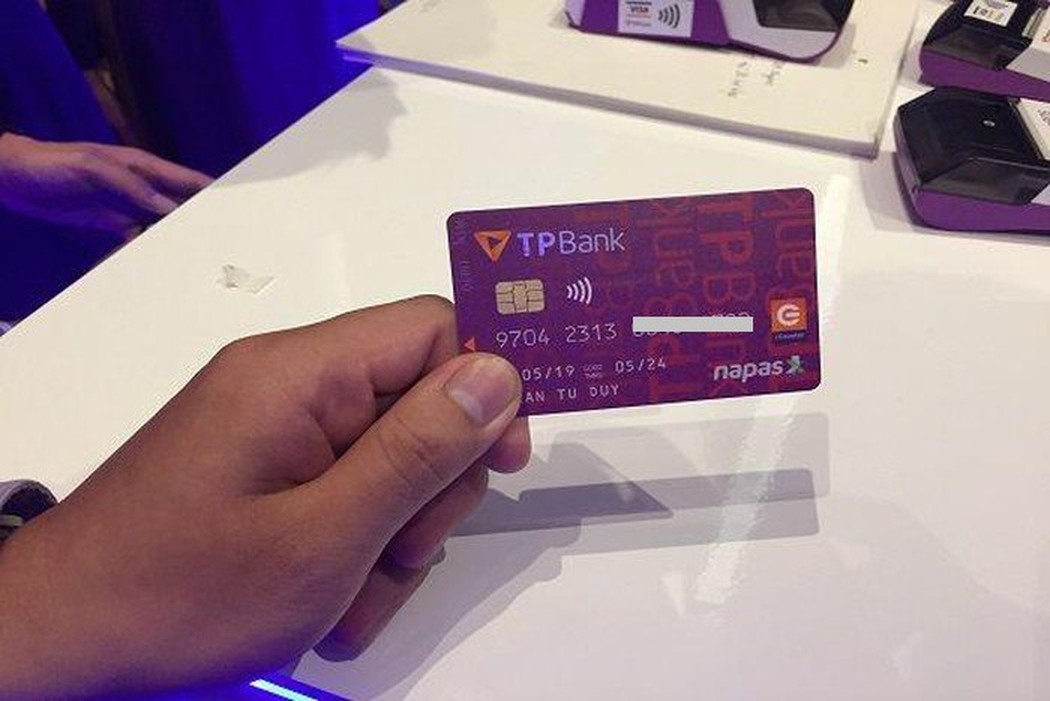
Vì sao cần phải sử dụng thẻ chip ATM
Tăng cường an toàn, bảo mật thông tin cao, hạn chế tối đa rủi ro về gian lận, lấy cắp thông tin thẻ (skimming)… là những ưu điểm vượt trội mà thẻ công nghệ chip mang lại. Thời gian gần đây, các ngân hàng đang cấp tập triển khai áp dụng thẻ ATM theo chuẩn
Xem chi tiết