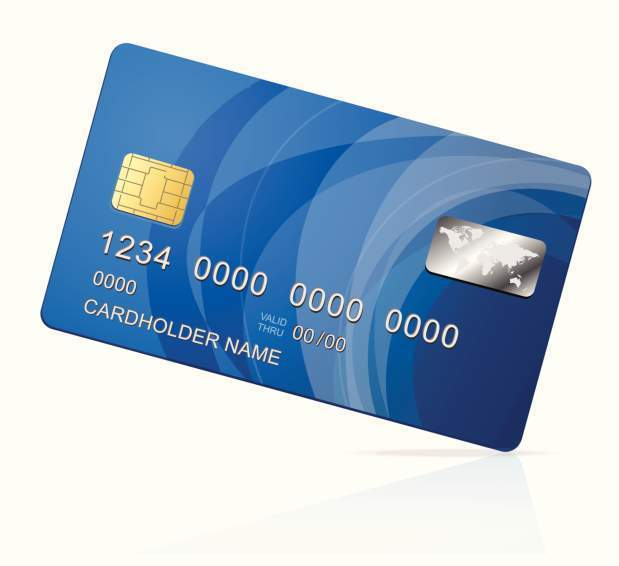
The roadmap for converting a magnetic card to a domestic chip card of banks has been issued by the State Bank of Vietnam since 2018. Specifically, as of December 31, 2019, at least 30% of domestic cards issued by payment service-providing organizations must be converted into chip cards; By December 31, 2016, 100% of chip cards issued by banks as well as payment service providers must be converted to chip cards. As noted, banks in the city are actively converting the right route.
In fact, there have been many card fraud so far that many people are confused about the security of bank cards. The situation of the card account suddenly “evaporating” several million, even hundreds of million, or the cardholder and card are in Vietnam but credit cards are still used simultaneously in foreign countries … happened. Therefore, converting a magnetic card into a domestic chip card is a strategic goal of the State Bank in the direction of saving costs for society, convenience for people, and limiting the risk of fraud. Faking in card payment.
According to TS. Nguyen Thanh Dat, a lecturer at the Banking Department, University of Economics (Da Nang University) explained that the traditionally widely used magnetic card in Vietnam contains all the information fixed under the black magnetic strip, may “leak” information of cardholders. Contrary to a magnetic card, the chip card contains an electronic chip on the surface of the card, with the processor as a miniature and completely independent computer. Each time a chip card is used for payment, the electronic chip generates a unique and never-repeated transaction code. In case the card is stolen, the fake card will not work because the stolen transaction code cannot be used again, the card will be rejected.
It is noted that most commercial banks issue chip technology cards early, but only apply to international debit and credit cards. From May 28, 2019, a number of banks such as Vietcombank, Vietinbank, Sacombank … started to release domestic chip cards according to EMV international standards. For old cards being magnetic cards, banks also have a conversion plan and will notify customers of the new card conversion time, chip card registration process and procedures.
Mr. Hoang Thanh Hai, Director of Saigon Thuong Tin Commercial Joint Stock Bank (Sacombank) Da Nang Branch said, Sacombank started applying EMV chip with the advantage of helping to optimize the security of card information and enable payment transactions. contact; serve as an important platform for integrating and applying non-cash payment services and services for services such as health, education, transportation, insurance and public services. Although not a chip card is absolutely safe, according to statistics in some markets, the rate of counterfeiting transactions has decreased sharply when switching from a magnetic card to a chip card.
To prepare for the conversion road to domestic chip cards, many banks have upgraded ATM, EDC / POS systems to accept chip card payments, improving security and convenience for card customers. Doan Phuc, Deputy Director of the Bank for Agriculture and Rural Development (Agribank) Danang Branch, said Agribank has also integrated contactless technology for both international and domestic cards. Therefore, customers do not need to swipe the card or insert the card into the slot on the POS machine anymore, just by holding the card to glide, the device can read the information on the card thanks to the built-in antenna.
However, many cardholders are also concerned with such a modern chip card technology, how will the conversion fee from magnetic card to chip card be calculated. Because, the user’s card is basically not damaged, lost and still used normally in transactions. According to Mr. Doan Phuc, up to now, there has been no official document of the parties regarding regulations on card conversion fee. Therefore, depending on the policies of the State Bank of Vietnam in the future, as well as the resources of each bank to regulate the conversion fee to local chip cards.
(Source: Danang Newspaper)
Tin tức khác

Conversion of electronic health insurance card: What do people get?
During the transition period to electronic cards, Vietnam Social Insurance still ensures full benefits of patients From January 1, 2020, the Vietnam Social Insurance agency will issue an electronic health insurance card with a chip attached to the participants of health insurance instead of paper cards. Also from this point, the Ministry of Health has
Xem chi tiết
Vietbank Digital: Towards a society without cash
Vietbank Digital is directing users to switch to a cashless payment society, while contributing to preventing the spread of the covid epidemic 19. Exempting all registration fees, annual fees, account management fees and reducing interbank transfer fees along with contactless payment technology, Vietbank Digital is directing users to switch to a cashless payment society. It
Xem chi tiết The bank is racing using chip card technology
Banks are racing to use the technology to convert magnetic cards to chip cards. Accordingly, customers receive many benefits from domestic chip cards. Technology is constantly updating Switching cards from magnetic to chip technology is a requirement for commercial banks in the period 2020-2021. Ms. Nguyen Hong Van – Director of Vietcombank Card Center said
Xem chi tiết
VPBank and Visa cooperated with Shopee to launch credit cards
VPBank Shopee credit cardholders will enjoy many benefits such as free shipping, refund, online gift collection … The card opening process is 100% digitized, users can register right on the Shopee app and are provided with a virtual card by VPBank to spend after only one to 2 hours. VPBank – Shopee cardholders will enjoy
Xem chi tiết
Chuyển đổi thẻ từ sang thẻ chip: Gia tăng tiện ích và bảo mật cho khách hàng
Theo công bố của Ngân hàng Nhà nước (NHNN) Việt Nam, từ ngày 31-3-2021, các ngân hàng sẽ dừng phát hành thẻ ATM từ để chuyển đổi sang thẻ ATM chip, nhằm gia tăng tiện ích và bảo mật cho khách hàng. Trao đổi với phóng viên Báo Đồng Nai về vấn đề này, Phó giám đốc
Xem chi tiết Chuyển đổi thẻ từ sang thẻ chip: Gia tăng bảo mật, an toàn khi dùng thẻ
Dưới sự chỉ đạo của Ngân hàng Nhà nước, Hội thẻ Ngân hàng Việt Nam (VBCA) phối hợp với CTCP Thanh toán quốc gia Việt Nam (NAPAS) chính thức ra mắt sản phẩm thẻ chip nội địa. Báo Đầu tư Chứng khoán có cuộc trao đổi với ông Trần Công Quỳnh Lân, Phó tổng giám
Xem chi tiết