“The bank has not shown the abnormal handling process to convince customers. There is no organization that protects the interests of customers,” Basico’s lawyer said.
The comment was shared by lawyer Tran Minh Hai, Chairman of Banking Professional Training JSC, CEO of Basico Law Company, on the sidelines of the seminar “Credit Card Market – The race between banks and opportunities for consumers ”recently organized by BizLIVE in Ho Chi Minh City.
What do you think about many users who are not interested in credit cards in particular and cards in general?
There are three main issues. One is undeniable in terms of technology. Credit cards in particular and cards in general have a common fact that the physical cards being issued are mostly magnetic cards. This point is very backward, because users have not reacted violently, but in the world they have switched to chip cards.
Chip cards and flashcards are different from each other in terms of safety.
Currently, there are many systems including state-owned commercial banks or joint stock banks, but the predecessors are state-owned banks, which have a very large network, a large number of card issuance but still use magnetic cards. There have been many incidents that happened because of backward technology issues.
The second problem is that if you look at the utility of the card, everyone likes it, with low interest rates, a grace period …, but in the end the user concern is the insecurity. Suddenly reported loss of money in the account, suddenly someone withdraws money … Which is true or false, gain or loss is not in the customer factor but in the banking aspect. Because the trace is also the bank, the control that holds in hand verifies the truth is the bank. Customers are completely passive.
The bank has not shown the abnormal handling process to convince customers. No organization stands to protect the rights of its customers. That is the main reason why people open their cards timidly.
There are also a number of other limitations I think stem from the lack of transparency in the market.
Recently, there have been cases of customers using credit cards and surprisingly with the “shock” calculation method of HSBC. How do you rate interest rates, how to calculate penalty interest rates with credit cards of many banks today?
Credit card loans are unsecured, extremely risky, and extremely risky. Secondly, credit cards are preferential with a duration of about 40 days without interest payment …
On the credit side here is the bank, before the loan with high risk, nature of concessions, of course one must impose sanctions on customers with signs of violations. The purpose is not to get people to pay a fine, but to prevent customers from re-offending.
Maybe so customers will find it offensive, but if viewed positively, it is a reminder for customers.
But is it possible that the calculation of interest and penalty at the time of opening the credit card advisory card has not clearly communicated with the user?
It is time for the card market to be more methodical. In fact, there are rules regarding credit card activity.
Specifically, Circular 39 stipulates that when banks use sample contracts and general terms of transaction, they must be publicly posted first, secondly there must be evidence that customers have been disseminated all information. service. But most of the time, it is very difficult for people to get information.
In addition, Article 405 of the Civil Code states that cases of sample transactions and general terms of agreement require listing, publicity and explanation. So if the bank does not explain it, any customer has the right to sue. But the problem is that the users themselves do not stand up to the lawsuit, and at the same time there is no organization protecting the rights of users.
Looks abroad. For example, in the Singapore market, if a customer comes to a transaction, there are a series of terms, the bank will give the customer an agreement on information dissemination between the bank and the customer. So the first day the customer will be informed by the bank, we have this process if you become a card customer, you will have this and that … The customer takes the study then the bank and the customer Signed confirmation has been popular bank, then signed a credit contract.
(Source: bizlive)
Tin tức khác

Baoviet Bank converts magnetic cards to domestic chip cards
The digitization of domestic cards of Baoviet Bank aims to ensure transaction safety for customers, and prevent fraud and fraud. From September 14, Baoviet Bank completed the conversion of magnetic cards to domestic chip cards. Compared with magnetic cards, the domestic chip card line fully meets the elements of international EMV standards, the bank said.
Xem chi tiết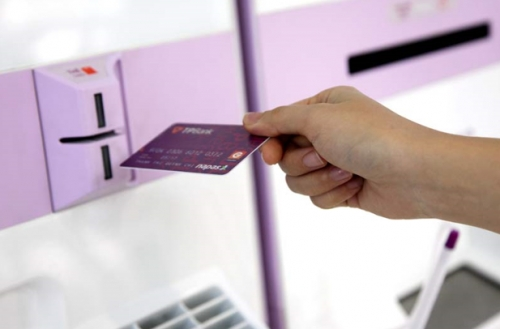
TPBank sớm “về đích” chuyển đổi thẻ chip nội địa
TPBank là ngân hàng đầu tiên chính thức hoàn tất chuyển đổi hệ thống, cho phép phát hành và chấp nhận thẻ chip nội địa tại Việt Nam. Theo TPBank, toàn bộ hệ thống ATM, mPOS plus của ngân hàng này đã hoàn tất chuyển đổi chấp nhận thẻ chip nội địa, thẻ chip contactless cho
Xem chi tiết
Ngân hàng phải báo cáo định kì kết quả chuyển đổi thẻ từ sang thẻ chip
NHNN đề nghị các tổ chức phát hành, thanh toán, chuyển mạch thẻ điện tử…nghiêm túc tổ chức triển khai áp dụng tiêu chuẩn cơ sở thẻ chip nội địa. Ngân hàng nhà nước Việt Nam (NHNN) vừa có văn bản đề nghị các tổ chức phát hành thẻ, tổ chức thanh toán thẻ, tổ
Xem chi tiết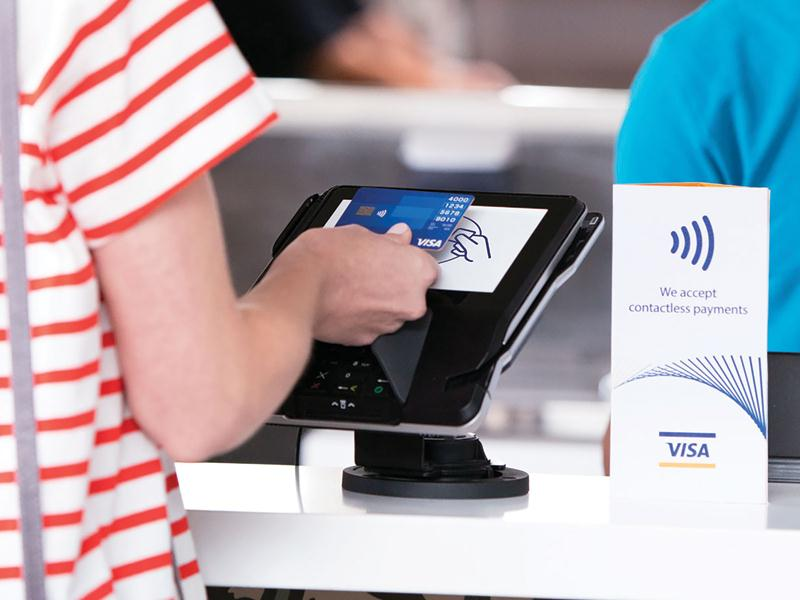
Đảm bảo an ninh thanh toán số của Việt Nam
Bùng nổ thanh toán không dùng tiền mặt Những năm vừa qua, Việt Nam đã chứng kiến sự bùng nổ của các hình thức thanh toán không tiền mặt, bao gồm thẻ tín dụng, dịch vụ Internet Banking, ví điện tử và các ứng dụng thanh toán kỹ thuật số khác. Người tiêu dùng Việt
Xem chi tiết
Cashless payments increasingly prevail
After years of getting used to cashing out, many people have turned to non-cash payments. It is forecasted that this trend will increasingly prevail in 2020 when 63% of adults in Vietnam have a bank account. Vietnam National Payment Company (Napas) said that in 2019 Napas switch systems grew 80.2% in the total number of
Xem chi tiết
Investing in CHIP cards is an investment for the future
That is the affirmation of Ms. Nguyen Tu Anh, Chairman of the Vietnam National Payment Joint Stock Company (Napas) with the Securities Investment Review. There is an opinion that the card development speed will slow down due to the emergence of new electronic ecosystems, what do you think about this? According to statistics of the
Xem chi tiết