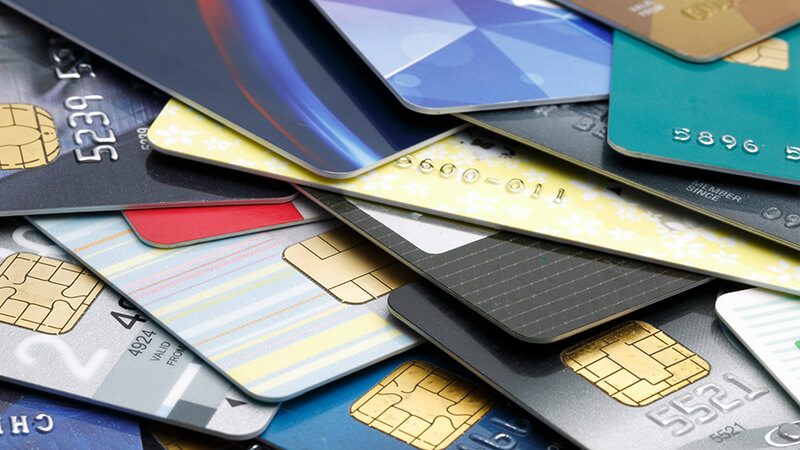
A smart card, chip card, or integrated circuit card (ICC) is a pocket card typically the size of a credit card that contains an integrated circuit capable of storing and processing data. information. It can act as an identification card, perform information authentication, store data or be used in card applications. There are two main types of smart cards. Memory cards contain only non-volatile memory components, and may have some specific security functions. The microprocessor card contains volatile memory and microprocessor components. Cards are made of plastic, usually PVC, sometimes ABS. The card may contain a hologram to avoid scams.

The first automated chip tag was invented in 1968 by German rocket scientist Helmut Gröttrup and his colleague Jürgen Dethloff; This patent was finally granted in 1982. The first use of such cards in large quantities was in France, for public telephone payments using cards or coins in France, beginning in 1983. .’Télécarte). Roland Moreno patented a memory card in 1974. In 1977, Michel Ugon of Honeywell Bull invented the first microprocessor smart card. In 1978, Bull applied for a patent on SPOM (Self Programmable One-chip Microcomputer) which provided the necessary architecture to automatically program a chip on a card. Three years later, the first spending was on a card named “CP8” manufactured by Motorola based on this patent. At that time, Bull had 1200 patents related to smart cards. In 2001, Bull sold their CP8 division and all related patents to Schlumberger. Schlumberger paired their smart card unit with the CP8 and named it Axalto. In 2006, Axalto and Gemplus, the two largest smart card factories in the world at the time, merged together and took the name Gemalto.
Chip integration into all French account cards (Carte Bleue) was completed in 1992. When paying in France with Carte Bleue, the card is inserted into a bank terminal, then re-entered. PIN before payment is accepted. Only a few payment processes are accepted without a PIN declaration (such as the payment of tolls in small amounts). Smart card-based electronic payment systems (in which the account balance is stored directly on the card’s chip, not needing to be stored on an external account at the bank, this allows for allowing terminals to decide whether to accept payments from cards or not without having to connect to a central bank) has been tested in Europe since the mid-1990s, especially in Germany (Geldkarte ), Australia (Quick), Belgium (Proton), France (Moneo), Netherlands (Chipknip and Chipper), Switzerland (“Cash”), Norway (“Mondex”), Sweden (“Cash”), Finland Lan (“Avant”), English (“Mondex”), Danish (“Danmønt”) and Portuguese (“Porta-moedas Multibanco”). The smart card boom started in the 1990s, with the introduction of SIMs used in GSM mobile phone equipment in Europe. With mobile networks expanding across Europe, smart cards are becoming more and more popular.
In 1993, international payment giants such as MasterCard, Visa, and Europay agreed to work together to develop a technical standard for the use of smart cards in payment cards in both account cards. and credit cards. The first version of this EMV system was released in 1994. In 1998, a more reliable version was released. EMVco, the company responsible for the long-term maintenance of this system, upgraded the standard in 2000 and again most recently in 2004. EMV company’s goal is to assure organizations finance and dealers that technical standards, although developed, must remain compatible with the 1998 version. With the exception of a few countries like the US, there has been significant progress worldwide in building EMV-compliant point-of-sale devices as well as in issuing credit and debit cards. meet EMV’s technical requirements. For example, a national payments association of a certain country, in association with MasterCard International, Visa International, American Express and JCB, develops detailed implementation projects to ensure satisfactory usage for many different account types.
Smart cards with contactless communication have become increasingly popular in payment and ticketing applications, such as in public transport ticketing. Currently, Visa and MasterCard have agreed to implement a version in the US (2004 – 2006). Looking at the whole world, traffic toll collection systems using contactless smart cards are now being deployed a lot. Various standards appear in different locations and are often incompatible, although Philips MIFARE cards currently have a significant market share in both the US and Europe. Smart cards are now starting to be used in projects to make identity cards as well as licenses at regional, national or global levels. There are more and more projects on making citizen cards, driver’s licenses, and patient cards on the basis of smart cards. For example, in Malaysia, the national identity card project, called MyKad, is a compulsory card for all citizens. This ID card has 8 different applications and serves up to 18 million users. Contactless smart cards are now being integrated into ICAO biometric passports to enhance security internationally.
Contact smart card: A contact smart card has a contact area, including several gold-plated contacts, and has an area of about 1 square centimeter. When inserted into the reader, the chip on the card communicates with the electronic contacts and allows the machine to read information from the chip and write information on it. The card applies the standards ISO/IEC 7816 and ISO/IEC 7810. The card has no battery, working power will be supplied from the card reader.
Contactless smart card: is a card with a chip on it that communicates with the card reader through RFID induction technology (with data rates from 106 to 848 kbit/s). These tags only need to be placed near an antenna to carry out data transmission and reception. They are often used in situations where data transmission is very fast or when cardholders need to keep their hands free, such as in public transport systems, where they can be used without taking the card out of the wallet.
The communication standard for contactless smart cards is ISO/IEC 14443, released in 2001. It specifies two types of contactless cards (“A” and “B”), allowing communication over distances up to 10 cm. There are also a few other standards such as ISO 14443 type C, D, E and F which have been phased out by the International Organization for Standardization. Another standard for smart cards is ISO 15693, which allows information at distances up to 50 cm. A related contactless technology is RFID (radio frequency identification). In certain cases, it could be used in similar applications to a contactless smart card, such as electronic toll collection. Conventional RFID devices do not contain writable memory or microprocessors like smart cards. There are cards that include both communication types that allow contact and contactless access on the same card. For example, Porto’s multi-app traffic card, called Andante, uses one chip for both contact and contactless. Like contactless smart cards, contactless cards don’t have a battery. Inside the card is an inductor that is capable of detecting some radio signal, rectifying the signal, and then using it to power the chip on the card.
Applications
Security for computers
The Mozilla Firefox web browser can use smart tags to store certificates for secure browsing. Some disk encryption systems, such as FreeOTFE, can use smart cards to securely hold encryption keys, and also to add an extra layer of encryption to the most important parts of the disk that need to be secure. . Smart cards are also used to authenticate and allow access to computers without the need to use any other means such as passwords, etc.
Finance
Applications of smart cards in the financial sector include: credit cards or ATM cards, fuel cards, SIM cards for mobile phones, TV cards for pay channels, cards for public phones public or public transport.
Smart cards can also be used as electronic wallets. Chips on smart cards can be pre-loaded with an amount that can be spent at parking lots and vending machines. Some examples are Proton, Geldkarte, Chipknip and Mon€o. The German Geldkarte card also includes a buyer’s age check to allow the purchase of cigarettes at vending machines.
For ID cards or similar cards
Used in digital identity cards. In this application, the smart card is used as a proof for verification. Driving license system using smart card: Driving license using smart card will store and update violation information and unpaid fine amount of the driver. It also stores the cardholder’s personal information, license type and number, as well as a photo of the cardholder. In addition, emergency information such as blood type, allergies, and biometrics (fingerprints) is also stored in the chip if the cardholder requests it. Apply in the ID card of the population. In Vietnam, we are also applying chip-based ID cards.
Source: Wikipedia
Tin tức khác

Cơ hội đẩy mạnh phổ cập thanh toán không dùng tiền mặt
Trước biến cố dịch bệnh thanh toán online đã chứng minh lợi thế và đây là “cơ hội” để phát triển các loại hình thanh toán không dùng tiền mặt. Việt Nam có tận dụng được cơ hội này hay lại bỏ lỡ? Thời cơ đặc biệt Theo Bộ trưởng Bộ Thông tin và Truyền
Xem chi tiết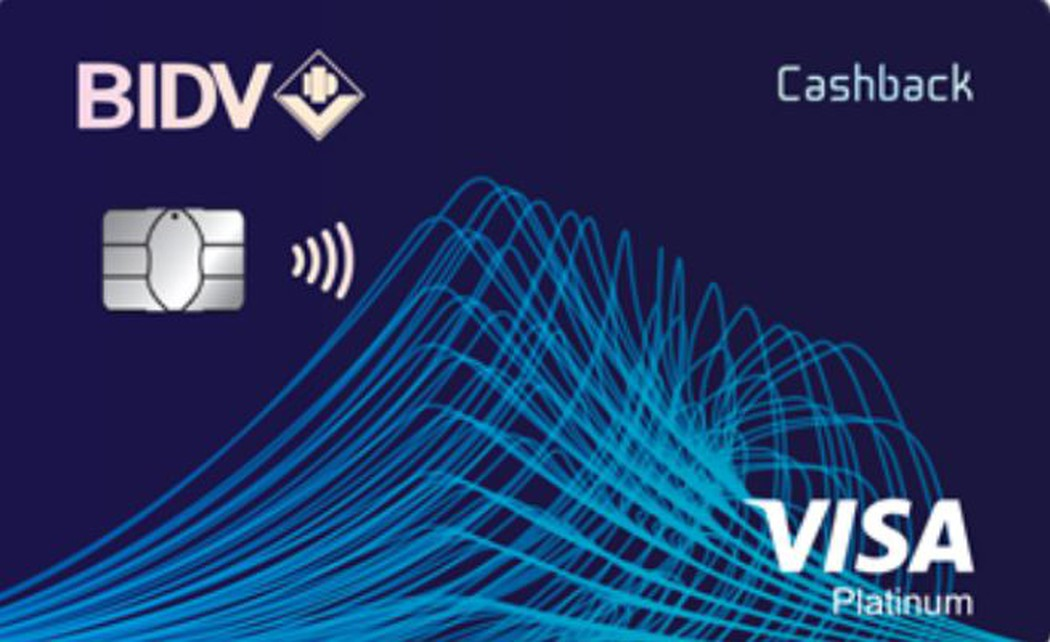
Payment trends Contactless card to the throne
With many utilities and high security, contactless cards (contactless cards) are forecast to be the payment trend in the near future, especially in the context of COVID-19 epidemic situation is complicated and concerns. about spreading the disease when using cash The World Health Organization (WHO) recommends using contactless payment – contactless or using smartphone applications
Xem chi tiết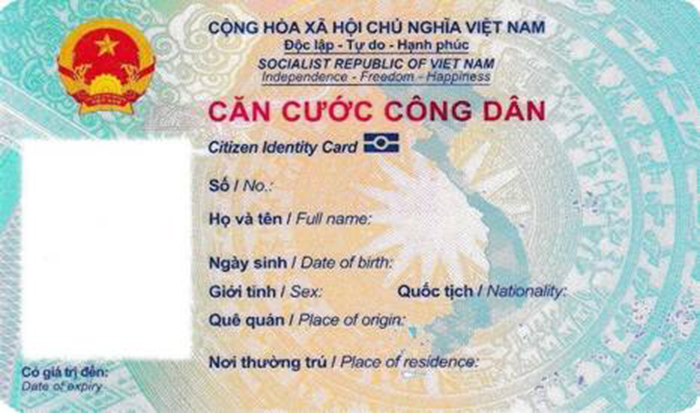
Regulations on the model of citizen’s identity card attached to electronic chips
The form of a Citizen Identification Card (CCCD) under Circular No. 06 has an electronic chip and stores basic information of citizens, with two languages in Vietnamese and English. Circular No. 06/2021 / TT-BCA on the model of citizen’s identity card (Circular 06), including 05 articles and takes effect from January 23, 2021, signed by
Xem chi tiết
Convert magnetic card to chip card: Increase utility and security for customers
According to the State Bank of Vietnam (SBV), from March 31, 2021, banks will stop issuing magnetic ATM cards to convert to ATM chip cards, in order to increase convenience and security for customers. row. Talking to Dong Nai Newspaper’s reporter on this issue, Deputy Director of the State Bank of Vietnam, Dong Nai branch
Xem chi tiết
Công nghệ thanh toán không tiếp xúc giúp phòng chống Covid-19
Ngân hàng Vietbank áp dụng công nghệ thanh toán không tiếp xúc cho các chủ thẻ nhằm đảm bảo an toàn cho khách hàng và cộng đồng trong Covid-19. Theo các chuyên gia, trong bối cảnh dịch bệnh hiện nay, thanh toán không tiếp xúc, không dùng tiền mặt nên được khuyến khích và thúc đẩy nhằm
Xem chi tiết
Thẻ chip bắt đầu thay thẻ từ
Các NH chuyển đổi trong đợt đầu, gồm Vietcombank, VietinBank, BIDV, Agribank, Sacombank, TienphongBank và An Bình, với số lượng thẻ ATM chiếm khoảng 70% tổng số thẻ trên cả nước, chưa kể một số NH khác cũng đang đăng ký chuyển đổi với Công ty CP Thanh toán quốc gia VN (Napas). Việc chuyển
Xem chi tiết