Many countries around the world have been converting smart card usage into many different service industries such as Sim cards integrated payment in telecommunications, applications in automating bus ticket payment. , tram in the transport, electronic identity cards in the field of state management or the type of payment card of the banking industry ….
With more and more applications in various industries, smart card market is growing rapidly in the past few years. Smart cards are used most in telecommunications as a SIM card. However, applications in many other fields such as transportation, government, financial services are also invested and deployed because of the outstanding advantages of smart cards such as large data storage capacity, fast processing. Quick and effective data security methods.
According to RNCOS’s “Card Market Forecast to 2012” report, smart cards grew more than 10% in 2010 compared to 2009, in which the market was largely held by four major companies, Gemalto, Oberthur, Sagem Orga (Ingenico) and Giesecke & Devrient. Also according to this report, the number of smart card projects also increased worldwide with a high degree of diversity and high technology demand.
Moreover, the economic boom and high technical requirements in the field of digital security also increase the level of demand for smart cards. According to a study, the smart card market will achieve double-digit growth (CAGR of about 12%) between 2011 and 2013.
In the banking sector, the EMV card alliance (Euro Pay, MasterCard and VISA) is the foundation for many investment banks to deploy smart card issuance solutions. Around the world, countries have transitioned to the EMV system for a long time. Europe changed in 1996, typically France and England. Asia – like Japan and South Korea also conducted from 2003-2004. In Southeast Asia – Malaysia and Singapore were the first countries to convert their card payment systems to the EMV standard since 2005, followed by Thailand, Indonesia, Philippines and Vietnam. According to EMVCo, by the end of the first quarter of 2011, about 1.2 billion EMV chip cards have been issued and 18.7 million POS points accept EMV cards in operation worldwide. These figures are equivalent to 40.1% of the total number of payment cards in circulation and 71% of the number of POS installed globally.
Also according to this report, the expected average growth rate of contactless card technology from 2011 to 2013 is about 24% covering many different areas such as mobile payment, transportation or digital proof of goverment.
Tin tức khác
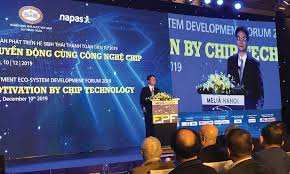
Forum on developing electronic payment ecosystem 2019 “Moving with chip technology”
On December 10, 2019 in Hanoi, Vietnam Economic Times, Vietnam National Payment Company (NAPAS) and the Payment Department – The State Bank chaired the organization of the Forum on payment ecosystem development. Electronic 2019 with the theme “Motion with CHIP technology” (EPF 2019). Deputy Prime Minister Vu Duc Dam, Deputy Minister of Health Truong Quoc
Xem chi tiết
Digital conversion must come with security risks
Banks are actively converting magnetic cards to chip cards, and it is expected to complete the conversion next year, according to the State Bank’s schedule. According to Mr. Nguyen Trong Duong, Deputy Director of Information Security Department (Ministry of Information and Communications), along with the explosion of technology 4.0, the gaps causing cybersecurity insecurity are
Xem chi tiết
Switch to chip card soon so you don’t lose money when using an ATM card
The conversion of all ATM cards by magnetic technology to chip technology with higher security to minimize the risk of losing money is being urgently deployed by commercial banks. Warning many still stolen data at ATM (skimming) Recently, despite repeated warnings, a series of cases of attaching equipment to steal card information at ATMs and
Xem chi tiết
TPBank tiên phong ứng dụng công nghệ số cho sản phẩm thẻ
Sở hữu nhiều phương thức xác thực bảo mật giúp giao dịch an toàn, nhanh chóng, quy trình xử lý tinh gọn…, TPBank đang khẳng định vị thế tiên phong trong xu hướng thẻ công nghệ số trên thị trường thẻ Việt Nam. PIN điện tử, phương thức xác thực 3D Secure hay tính năng
Xem chi tiết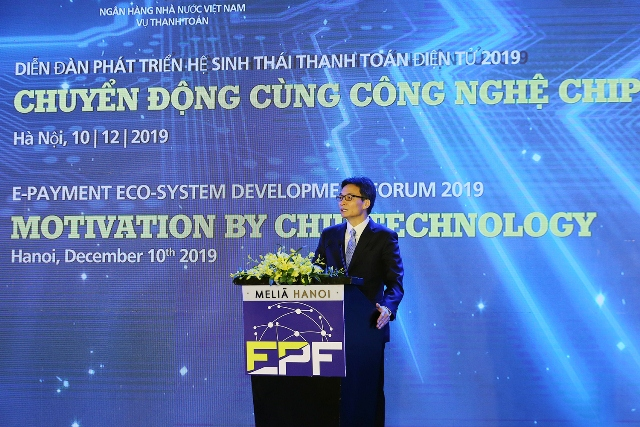
Phó Thủ tướng Vũ Đức Đam: Y tế và giáo dục phải triển khai thanh toán không dùng tiền mặt trước 2020
Phó Thủ tướng Vũ Đức Đam cho biết, Chính phủ đã có chỉ đạo các ngành như thuế, bảo hiểm, viễn thông, điện phải áp dụng thanh toán không dùng tiền mặt…; trong đó hai lĩnh vực là giáo dục và y tế phải triển khai trước năm 2020. Tại Diễn đàn phát triển Hệ
Xem chi tiết
Máy POS (Point of Sale) là gì? Các cách thanh toán qua máy POS
Máy POS (tiếng Anh: Point of Sale) là các máy chấp nhận thanh toán thẻ, máy POS sẽ kết nối Internet với ngân hàng tiến hành thanh toán khi có yêu cầu từ khách hàng. Máy POS (Point of Sale) Khái niệm Máy POS trong tiếng Anh là Point of Sale. Máy POS (Point of Sale) là các
Xem chi tiết