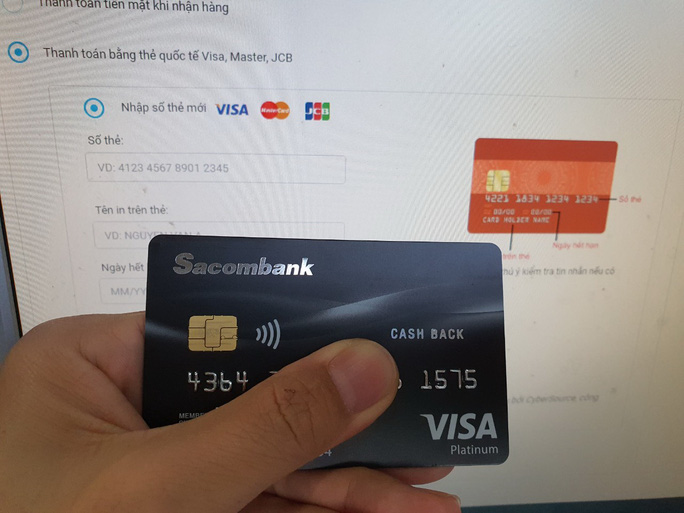
The time of the Covid-19 pandemic spread was a difficult period for both the economy in general and the banking and financial sector in particular, but it also created an opportunity to promote the growth of electronic payment. . Financial institutions, banks and Fintech companies that take advantage of this difficult period to turn into creative opportunities, meeting the needs of society will be able to achieve significant achievements and increase market share. and competitiveness.
Covid-19 can change the way consumers choose payment methods
Some experts say the corona virus can cling to banknotes the same way it can exist on other surfaces, such as door handles and handrails. As a precaution, the Federal Reserve Bank of America (Federal Reserve) has increased the minimum retention period for dollars coming from Asia and Europe to the United States to 10 days (the previous minimum was 5 days. ). Banks in China, where the disease started, were ordered to disinfect cash before making it available to the public in an effort to slow the spread of the virus. The World Health Organization (WHO) has recommended that consumers avoid using cash and instead switch to contactless payments to prevent the spread of Corona virus. This WHO recommendation came after China and South Korea began to segregate and disinfect used banknotes, which are known to carry viruses and bacteria.
Analysts say that the psychology of those who think that cash is not clean can promote the adoption of electronic payment methods. The fear of a new virus may be enough to make conservative consumers see the appeal of mobile payments. On the other hand, online options from traditional banks can be used more. When people areolate themselves, they can also avoid going to bank branches. While the impact of the Corona virus is still unclear, the case of India can provide a hint of what an unexpected macroeconomic event could cause people to change their payment behavior. Electronic payments in India soared following the cash crisis in 2016. Nicolas Crouzet, Associate Professor of Finance at Northwestern University’s Kellogg School of Management, and Filippo Mezzanotti, assistant professor of finance at Kellogg, said how the crisis shows how quickly and strongly consumers can change their behavior. The number of nationwide electronic payment transactions has increased by 150%, then doubled every week for three consecutive weeks. The use of contactless payment methods such as e-wallets can also contribute to supporting the government in tracking the contacts between people at risk of Corona virus with the community, but this has not been shown on reality. Some researchers argue that this capability could make users concerned about privacy and suggest creating government-issued cryptocurrencies.
The bank strengthens to provide digitized products and services online
Before it comes to promoting the development of new payment methods, banks need to proactively communicate with customers about ways to maintain transactions while keeping the spread of the epidemic. Many banks have done this by sending emails or announcing on fanpage in social networks, instructing customers to use existing transaction channels safely. Payment technology companies are no exception. PAR, a subsidiary of Par Tech Technology Corporation, advised restaurant operators to clean POS terminals to protect customers and employees from corona virus outbreaks. They give very detailed instructions from wearing gloves, unplugging the power to how to use the appropriate solutions to clean the terminal.
In addition to the measures to maintain the traditional transaction channels, most banks do not forget to introduce customers to electronic transactions such as internet banking, mobile banking and guide customers how to safely and securely conduct transactions. show and report fraudulent tricks. But the most important thing is probably towards the future, developing services, introducing new products and services to attract customers as well as show interest and outstanding competitiveness.
In Singapore, DBS Bank has digitized 11 popular trade finance processes to reduce reliance on direct exchanges and provide customers with 50 free FAST transactions per month to cut the need for processing. Check processing directly. Along with these moves, to help train users on how to use digital tools, the bank is launching webinars and customizing technical guides as well as digitizing training courses. of DBS SME Academy.
On March 17, India’s ICICI Bank just announced the launch of ‘ICICIStack’ – a comprehensive set of digital banking services and APIs (application programming interfaces) to ensure the banking experience. Do not interrupt when the customer is advised to remain indoors to avoid infection. ICICIStack provides nearly 500 services that meet almost all customer banking service requirements. This list includes opening a digital account (instant savings and current account opening), lending solutions (instant personal loans, instant credit cards, instant home loans, car loans instant, business loans), digital payment solutions (UPI payments – India’s unified payment interface, pay bills with Bharat Bill Payment System), payments Investment (Term Savings, PPF Public Savings Fund, NPS National Pension System and consultation by artificial intelligence for other investments), Insurance (Term Insurance and Health Insurance digital) and care solutions (protect lives, health, cars and homes).
Anup Bagchi, CEO of ICICI Bank, said that they have developed ICICIStack to provide customers with all digital banking services from a single platform over the past few years. ICICIStack is the result of a roadmap of development and pioneering the development of digital solutions and the capacity to realize the vision of the Digital India program. Before the outbreak of Corona virus, ICICI Bank added a number of new features and services to create a package of solutions to enable customers to experience uninterrupted banking services.
Anup Bagchi added: “I believe in its current form, ‘ICICIStack’ is the bank’s most comprehensive digital infrastructure available because it facilitates retail customers as well as merchants and homes. retailers, professionals, Fintechs, startups, e-commerce companies and businesses, nationwide can continue all their banking transactions with digital and from a remote location, which No need for a branch or a bank transaction office. In the recent links with Fintech payment too, there is a wide range of services, APIs and high volume handling capabilities available in the ‘ICICI Stack’, enabling quick integration overnight. ”
Moreover, ICICIStack offers the first digital service that allows immediate opening of savings accounts with term savings or instant PPF Public Savings Funds.
A new ICICI retail customer can get the benefits of ICICIStack by opening an instant savings account without having to visit a branch. A business entity that is not a customer of ICICI yet, can download ‘InstaBIZ’ – the bank’s mobile application for businesses and enjoy the convenience of using ICICIStack. The application can register to open a payment account immediately and select the account number itself – this number is displayed immediately. In addition, business entities have easy access to batch collection and payment services through various digital regimes, automated bank reconciliation, and can do most of the work. All import and export transactions such as money transfer at home and abroad.
Fintech companies are also making efforts to expand the market
On the other hand, we all know that payment today is no longer the exclusive service of banks. So Fintech companies are also making great efforts to expand the market. While the Covid-19 epidemic broke out, Alipay introduced a system that encourages developers to create small programs that can help users cope with the impact, including by meeting different needs. of people living and working at home, while minimizing the need for physical contact with service providers. Within a week, more than 1200 developers responded, creating 181 small programs on the Alipay app that allow online communication services across China, including grocery delivery, legal advice and health, logistics and public service. For example, the small program that provides free medical advice provided by AliHealth receives an average of 700,000 daily visits. A Beijing-based startup called Meicai, helping connect farmers with restaurants and directly with consumers, has launched a small program that attracts 800,000 new users. Under the three-year plan, Alipay will partner with 50,000 independent software vendors to help 40 million service providers digitize their operations. Companies will receive help with payment, fraud, fund management, marketing, KYC, acquisitions, maintenance, and customer acquisition.
In the UK, Zeux – a licensed financial institution, launched its Easy Access Money Pot mobile payment solution in January 2020. This is an alternative to savings accounts guaranteed by two financial institutions, Zeux Ltd and Wecash, with interest rates up to 5% per year. Zeux’s way of setting up savings accounts is widespread and common in Asian countries, similar to Alipay’s “Yu’e Bao”. Zeux’s single mobile app platform has a lot of features, allowing customers to contactless payment by mobile phone, managing all their payment transactions, grouped by groups for easy tracking. , offering high savings rates, investment options and affordability everywhere with free crypto wallets, domestic and international transfers – these are competitive and attractive high customer.
It is not known what new services will be able to survive and develop in the near future, but one thing we can be sure of is that e-payment will grow strongly and replace payment methods. traditional. The outbreak of the Covid-19 epidemic spread was a difficult period for both the economy in general and the banking and financial sector in particular, but it also created an opportunity to promote the growth of electronic payment. Financial institutions, banks and Fintech companies that take advantage of this difficult period to turn into creative opportunities, meeting the needs of society will be able to achieve significant achievements and increase market share. and competitiveness.
-Source: Financial and monetary markets-
Tin tức khác
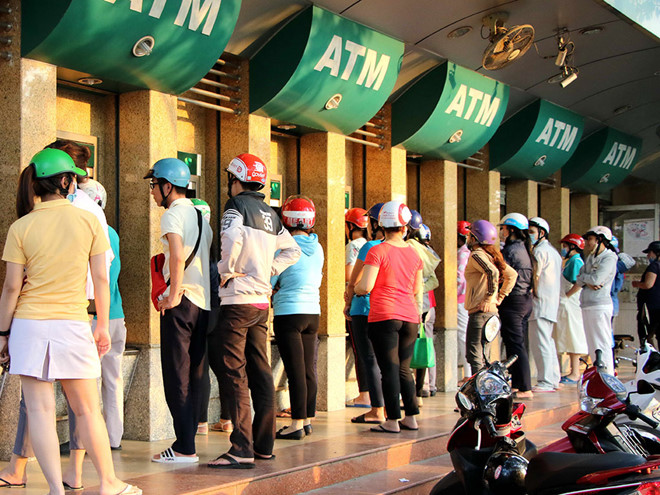
The people’s habit of withdrawing cash from ATMs has changed
According to a report by Vietnam National Payment Joint Stock Company (Napas), many people are more accustomed to spending through cards, banking applications, instead of cash withdrawals. If in 2018, 62% of people use bank cards to withdraw cash, this figure has decreased to 42% in 2019. Data from Napas shows that people tend to
Xem chi tiết
TPBank tiên phong ứng dụng công nghệ số cho sản phẩm thẻ
Sở hữu nhiều phương thức xác thực bảo mật giúp giao dịch an toàn, nhanh chóng, quy trình xử lý tinh gọn…, TPBank đang khẳng định vị thế tiên phong trong xu hướng thẻ công nghệ số trên thị trường thẻ Việt Nam. PIN điện tử, phương thức xác thực 3D Secure hay tính năng
Xem chi tiết
Chuyển đổi thẻ chip như… chạy điền kinh ở SEA Games 30
Các ngân hàng Việt đang bắt đầu chạy đua chuyển đổi thẻ từ sang thẻ chip. Sự chuyển đổi này không chỉ thực hiện yêu cầu của Ngân hàng Nhà nước là phải hoàn thành trong năm 2020, mà còn để chiếm lĩnh khách hàng, vốn đang thay đổi thói quen tiêu dùng từng ngày.
Xem chi tiết
Thẻ ATM công nghệ chip có gì ưu việt hơn so với công nghệ từ?
Tăng cường an toàn, bảo mật thông tin cao, hạn chế tối đa rủi ro về gian lận, lấy cắp thông tin thẻ… là những ưu điểm vượt trội mà thẻ công nghệ chip mang lại. Thời gian gần đây, các ngân hàng đang cấp tập triển khai áp dụng thẻ ATM theo chuẩn thẻ
Xem chi tiết
Chuyển đổi thẻ chip – một trong những mục tiêu lớn của Ngân hàng Nhà nước
Theo lộ trình của NHNN quy định tại Thông tư số 41/2018/TT-NHNN, đến cuối năm 2020, có 100% ATM và thiết bị chấp nhận thẻ tại điểm bán đang hoạt động tại Việt Nam của tổ chức thanh toán thẻ phải tuân thủ tiêu chuẩn cơ sở về thẻ chip nội địa. Những chiếc thẻ
Xem chi tiết
Điều cần biết khi thay thẻ bảo hiểm y tế giấy bằng thẻ điện tử
Từ năm 2020, thẻ bảo hiểm y tế giấy như hiện nay sẽ được thay thế bằng thẻ điện tử. Theo lộ trình, chậm nhất ngày 1-1-2020, Cơ quan bảo hiểm xã hội (BHXH) phải thực hiện phát hành thẻ bảo hiểm y tế (BHYT) điện tử cho người tham gia BHYT. Theo BHXH Việt
Xem chi tiết