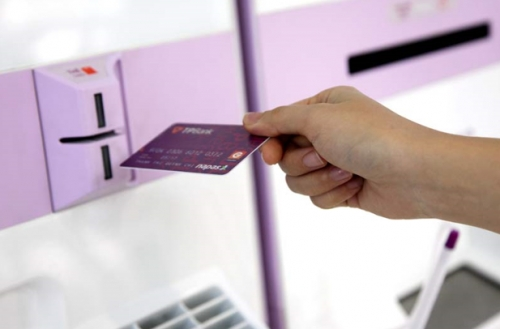
Enhancing safety, high information security, minimizing the risk of fraud, card information theft … are the outstanding advantages that chip technology cards bring.
Recently, banks have been offering ATM cards based on domestic VCCS card standards, complying with EMV international standards as well as increasing communication to their customers about this conversion.
Have you ever wondered why switching to a chip technology ATM card when your magnetic technology ATM card is still working?
So what is the EMV chip technology card and what are the benefits to this card?
Why use ATM card chip technology?
Magnetic cards have a relatively low level of information security because the information stored on the magnetic strip on the back of the card is not encrypted.
When customers insert a card into an ATM or swipe a card on a POS machine, the information stored in the magnetic strip will be read by the readers in the machine, so with just a common magnetic swipe device, an intruder can easily. easy to steal card information, then it is also easy to create fake cards with copied information, at the same time attaching sneaky devices to record the PIN operation of customers, and that is enough for crooks. Can steal money from customers’ accounts. This is a fairly common crime, often called skimming.
But with EMV standard chip cards, electronic chip-attached cards are designed to prevent skimming fraud thanks to the ability to store and encrypt information with high security.
Chip cards help minimize skimming.
Accordingly, the EMV chip will generate new data every time the customer makes a transaction. When you use the EMV chip technology card at a card reader, the card will generate a unique encryption string just for that transaction.
This encryption cannot be used for another transaction because it is created from a combination of information contained in the chip and information contained in the card reader.
That means you will not have to worry about the card information being copied because it is encrypted, combined with your own PIN, the risk of fraud is minimized.
A successful EMV card transaction will go through a complex two-way authentication step from the card receiving device to the payment bank, via Napas card payment gateway and the issuing bank. Only when approved by all relevant organizations, will the transaction be successful.
Which bank has the best ATM card issuance fee?
According to information from Napas, there are currently 7 commercial banks coordinating with Napas successfully deploying the issuance and acceptance of domestic chip card payment.
In particular, Tien Phong Commercial Joint Stock Bank (TPBank) is the pioneer bank that has started the pilot implementation since October 2018 and officially issued to all ATM customers with EMV chip technology from June 1, 2019. , with the name of Smart ATM Card 24/7.
Not only that, the Bank has also completed the conversion and upgrading so that all ATMs, POSs, LiveBanks will accept domestic chip cards.
Mr. Nguyen Hung, TPBank’s General Director, said that TPBank applied these modern digital technology solutions on ATM cards to minimize the risks that may occur to cardholders as well as the desire to bring the Best digital experience for customers.
TPBank ATM chip card issuance fee is only 25% of the market fee.
At the request of the state bank, in 2019, banks must convert at least 30% of the cards from domestic chip cards, and the deadline for a complete conversion to chip card technology is the end of 2021. .
One of the major challenges for this transition is the large cost, not only of the high cost of infrastructure upgrades to meet the new standard, but also due to the higher price of chip cards. 5-7 times compared with a magnetic card, making both customers and banks hesitant to spend money to transfer.
However, TPBank said that it will seriously comply with the requirements of the State Bank on the card conversion schedule. “It is expected that by the end of 2019, about 35% – 40% of TPBank’s domestic cards will use standard chip cards, and we strive to complete the conversion to chip cards for all customers in 2020,” he said. Hung share more.
According to statistics, currently, the fee of issuing EMV chip ATM technology at banks is quite high. Particularly at TPBank, in order to encourage and support customers to convert cards, TPBank accepted to cover losses, collect a relatively low issuance fee, only 50% of the production cost, and only about 25% of the applicable fee. popular use in the market.
Owning 24/7 Smart ATM card, customers can not only experience new, more secure chip cards for transactions at traditional ATMs and POSs, but also can be used at LiveBank, banking models. automatically of TPBank to look up accounts, withdraw money, deposit money, perform money transfer, deposit, online savings… at any time.
In particular, all cash withdrawal transactions with TPBank domestic cards at ATMs of most banks, as well as transactions of depositing and withdrawing money at TPBank LiveBank in Vietnam are free.
Customers can register to issue ATM Smart 24/7 24/7 and receive the card right after 5 minutes at LiveBank, just need to have ID card / Citizen card or passport.
(Source: Educational newspaper)
Tin tức khác

Ứng dụng của thẻ chip thông minh trong lĩnh vực giao thông: Vietbank triển khai thẻ xe buýt thông minh
Hành khách có thể sử dụng thẻ xe buýt thông minh để thanh toán liên thông cho tất cả các phương tiện giao thông công cộng khác nhau trong tương lai. Ngân hàng Vietbank vừa tổ chức sự kiện công bố triển khai thành công dự án thẻ thanh toán thông minh cho hoạt động
Xem chi tiết
Thẻ Visa ảo định danh điện tử: sản phẩm ngân hàng số ưu việt lần đầu tiên ra mắt
Trong thời đại 4.0 đang phát triển mạnh mẽ hiện nay, ngành tài chính – ngân hàng cũng đang tích cực chuyển đổi, đặc biệt là việc ứng dụng những thành tựu mới nhất của công nghệ, phát triển thanh toán điện tử và ngân hàng số. Không thể phủ nhận, ngân hàng số đang
Xem chi tiết
VPBank and Visa cooperated with Shopee to launch credit cards
VPBank Shopee credit cardholders will enjoy many benefits such as free shipping, refund, online gift collection … The card opening process is 100% digitized, users can register right on the Shopee app and are provided with a virtual card by VPBank to spend after only one to 2 hours. VPBank – Shopee cardholders will enjoy
Xem chi tiết
Electronic payment with public services: Benefit both ways
Techcombank is a typical commercial bank going early and comprehensively, leading the promotion of electronic payment channels, increasing utilities for people. At the beginning of 2020, the Governor of the State Bank of Vietnam (SBV) issued Directive No. 01 / CT-NHNN requiring the banking industry to speed up non-cash payments, especially via bank payment for
Xem chi tiết
RA MẮT THẺ CHIP ATM CÔNG NGHỆ KHÔNG TIẾP XÚC
Thẻ Chip ATM công nghệ không tiếp xúc” chính thức ra mắt với nhiều tiện ích vượt trội, mang lại sự tiện lợi và an toàn tối ưu cho người dùng: – Thông tin thẻ được mã hóa bảo mật trong Chip, bảo vệ khách hàng tránh khỏi các giao dịch gian lận và giả
Xem chi tiết
Xu hướng thẻ thông minh trên thế giới
Rất nhiều nước trên thế giới đã và đang chuyển đổi sử dụng thẻ thông minh (smartcard) vào nhiều ngành dịch vụ khác nhau như thẻ Sim tích hợp thanh toán trong viễn thông, các ứng dụng trong việc tự động hóa thanh toán vé xe bus, tàu điện trong giao thông, chứng minh thư điện tử trong lĩnh
Xem chi tiết