Many online shopping fans come across a 3D-Secure security system specifically developed for Visa international payment systems and then for MasterCard users. But what is 3D-Secure? How to connect it? What are its advantages and disadvantages? Is it possible to ignore it? Does he save from the intrigue of intruders?
Where can I find 3D-Secure system?
The pages of the online stores are full of signs, advertisements and attractive promotions and discounts. And here everything is clear: the owners of these virtual websites use all possible means to attract new customers’ attention and retain old customers.
Obviously it is rarely possible to refuse attractive promises and discounted prices; furthermore, to purchase, you simply enter the details of your plastic card. But is it safe to shop online? What is 3D-Secure on bank cards? How does it work? And can he protect you from unauthorized theft of your account?
What is 3D-Secure system?
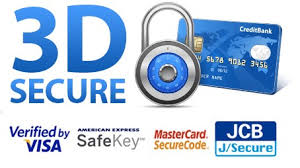
3D-Secure is a special security protocol used to authorize credit or debit cardholders while making payments via the Internet.
This technology helps protect merchants and banks from fraudulent transactions. However, it does not guarantee the money safety of plastic card holders.
How the 3D-Secure protocol works
Having a general knowledge of what 3D-Secure is, it’s easy to guess how it works. For example, you have decided to buy a fashionable clutch in an online accessory store, operating under the aforementioned security protocol. You have added an item to your basket and you see pop-ups asking you to do the following:
enter your payment card number;
specify an expiration date (issue date (rarely) and expiration date (more often);
abbreviated name of the cardholder;
indicates the digits of the security code CVC2 (indicated on the back of the card).
And then, there’s an automatic redirect to the page of your issuing bank (the credit institution that issued and maintained this card), where you’ll need to enter the additional security code. It is 3D-Secure. Moreover, this code can be obtained in the following ways:
by message sent by the bank to the contact number of the mobile cardholder;
by using special tags of code or device once;
by writing a permanent code, previously installed and known only to cardholders and banks.
How to connect 3D-Secure
Not all banks use a similar security system, most often due to the high cost of services. In particular, this applies to small credit institutions. The so-called bank veterans (large banks with well-developed retail networks), on the contrary, adhere to this protocol and use it regularly.
In most banks that support security systems, 3D-Secure is connected by default, meaning immediately when receiving and activating a bank card. In other cases, to connect the protocol card holder needs to describe their desires in the established form.
For this, as a rule, you will need a passport and credit card information. In some financial institutions, connecting to security systems is done manually by the customer. This is done using mobile banking or the Internet (providing the availability of IT equipment and access to the Network).
What are the advantages and disadvantages of the system
The main advantage of the system is that all the data entered by the customer to identify him only remains on the server of his issuing bank and does not go to the online store. The second important plus is the use of one-time passwords for authentication sent by banks. But there is an important drawback. Even such a password can be stolen and redirected to attackers with the help of a special virus or spyware that appears on your phone or tablet while viewing. or download any information online.
And, finally, add a minus point. 3D-Secure – the system is not required, so not all online stores can work with it.
How to bypass the security system
As it turns out, a seemingly serious security system has some shortcomings, allowing an attacker to easily ignore it. In particular, most of the “card villains” when they steal card data are trying to make purchases in online stores that do not support the security protocol. Recall that for it to work, it is not only supported by the seller, but also by your issuing bank.
When paying for goods in such stores, usually just enter the card number and code located on the back of the card. By the way, some sellers, trying to protect their customers from stolen communications and money from cards, use a bit of difficult reception. They apply to the issuing bank with a request to block a small amount of money in the buyer’s account; and then the cardholder should call the bank again, answer a series of clarification questions for identification; Listen to the exact number of the lock and call a representative of the online store.
How to avoid collisions with scammers
As you can see, the 3D-Secure system cannot guarantee 100% for all participants. However, this does not mean that every cardholder can prevent unauthorized theft of their own money. On the contrary, everything is in your hands. It is sufficient to follow simple safety rules.
First of all, try to regularly update your antivirus program on the IT service provider that you make the card payment. Second, try not to go, and especially not buy on strange websites, because scammers often organize fake websites to steal money from credit cards.
Third, set separate limits for your credit card and download the appropriate mobile banking application to fully control your account status. Fourthly, carefully read the text of messages sent from banks and security systems. And finally, immediately contact the bank if your phone stops capturing the operator network, this shows the possibility of re-issuing the Sim card.
Now that you know what 3D-Secure is, you are familiar with the pros and cons of this system.
-Source: /vie.kagutech.com/-
Tin tức khác
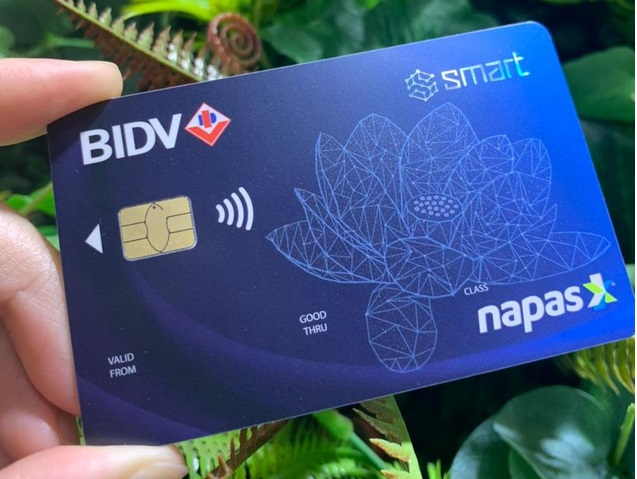
Thẻ Chip nội địa BIDV Smart – tấm thẻ thông minh chính thức đến tay người tiêu dùng
Hội tụ đầy đủ những công nghệ thẻ tiên tiến nhất trên thế giới, thẻ BIDV Smart hứa hẹn thay đổi thói quen sử dụng thẻ nội địa của người Việt. Trong xã hội bùng nổ về Công nghệ, những sản phẩm công nghệ được gọi tên là thông minh trở nên hấp dẫn trong
Xem chi tiết
Ngân hàng ứng dụng nhận diện khuôn mặt trong các giao dịch
Nhận diện khuôn mặt, xác thực vân tay là 2 trong số những giải pháp số hóa đang được các ngân hàng đẩy mạnh trong thời gian này. Thay vì lấy số, ngồi chờ, tự tay điền các mẫu giấy, xuất trình các giấy tờ tùy thân, anh Nguyễn Ngọc Anh có thể dễ dàng
Xem chi tiết
The bank is racing using chip card technology
Banks are racing to use the technology to convert magnetic cards to chip cards. Accordingly, customers receive many benefits from domestic chip cards. Technology is constantly updating Switching cards from magnetic to chip technology is a requirement for commercial banks in the period 2020-2021. Ms. Nguyen Hong Van – Director of Vietcombank Card Center said
Xem chi tiết
Bạn đã biết tới quẹt thẻ không tiếp xúc?
Thanh toán không tiếp xúc ra đời góp phần tăng tính bảo mật và an toàn thông tin của khách hàng trong quá trình giao dịch, hạn chế việc khách hàng bị lợi dụng. Tiếp nối xu hướng thanh toán bằng QR Code, Thanh toán không tiếp xúc (Contactless Payment) là phương thức thanh toán
Xem chi tiết
TPBank pioneered the application of digital technology to card products
Possessing a variety of security authentication methods to ensure safe, fast transactions, streamlined processing, etc., TPBank is affirming its leading position in the digital card trend in the Vietnamese card market. Electronic PIN, 3D Secure authentication method or contactless payment feature are digital technologies applied by Tien Phong Commercial Joint Stock Bank (TPBank) several years
Xem chi tiết
Electronic payment without cash in medical examination and treatment is still inadequate
Non-cash payment in general and electronic payment in particular are an indispensable trend of the era, showing a civilized and modern society, bringing great benefits. However, the non-cash electronic payment for medical examination and treatment in Vietnam is still inadequate. People are not familiar with electronic payments Recently, the health sector has promoted the application
Xem chi tiết