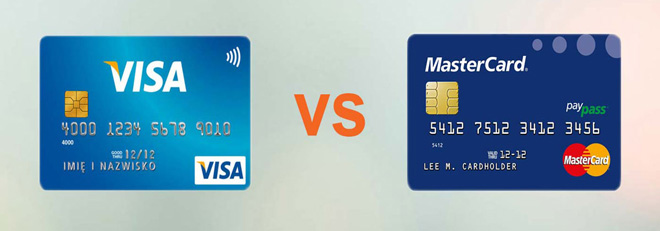
Mastercard and Visa cards are two popular international payment cards lines in the world today. But what is the difference between a Mastercard and a Visa card that is so popular? Join us in the article below.
1. Differentiate Mastercard from Visa card
Visa card is an international payment card issued by Visa International Service Association in San Francisco, California, USA in association with the issuing banks. On the card there is a VISA icon located in the right corner.
MasterCard credit card is an international payment card issued by MasterCard Worldwide, based in Purchase, New York, USA in conjunction with the issuing banks. On the card is a MasterCard icon located in the right corner.
MasterCard and Visa cards are used as an alternative to cash. You can use your card to withdraw cash, make online purchases or make payments at merchants worldwide.
Mastercard and Visa cards are distinguished by the similarities and differences below.
1.1. The similarities between Mastercard and Visa cards
1.1.1. All are international payment cards
International payment card is a card used to make transactions worldwide. Whether you are in Vietnam or in the US, as long as it supports one of the international payment cards you have, all payments are simple and fast without using cash. International payment cards also have many types, of which Mastercard and Visa are the two most popular cards today.
1.1.2. Distributed into two types of cards: credit and debit cards
Mastercard and Visa cards have two main lines of credit and debit cards.
Debit card is a payment card with the function of making payment transactions within the balance of money in the card and is not allowed to spend in excess of that amount. The spending amount is deducted directly from your deposit account.
Credit cards are payment cards that allow you to spend first and pay later. The cardholder is given an “advance” by the bank for an amount called a credit line to pay without having a available balance. The cardholder will be required to return this amount to the bank by the due date indicated on the monthly statement of transactions. Credit cards allow you to make payments for domestic and foreign services.
1.1.3. There are two functions: withdrawal and payment
Owning a Mastercard credit card or Visa credit card, you can withdraw cash for consumption. Pay online, pay when shopping at supermarkets, restaurants, hotels … or use banking services even when abroad.
The 3-digit card verification code (CVC) is on the upper right of the signature strip at the back of the card.
1.2. Differences between Mastercard and Visa cards
1.2.1. Card structure
Each type of bank card is designed differently to be easily distinguished. Mastercard and Visa cards have the following differences in card structure:
About the company logo, in the right corner of the Visa card is the words “VISA” with large font size. The word “VISA” is white or blue in a white rectangular frame, at the end of the letter V there is a bit of yellow. With the Mastercard, in the right corner is the striking white “Masters Card” in the middle or below the two orange and red circles interlocking.
In terms of security characters, the Visa card security characters are the letter V (or CV, PV, RV), the Mastercard card is the letter M and the letter C are nested. Security characters are imprinted, which you can see when looking at the corner of the card containing the Visa / Mastercard logo in purple light.
1.2.2. Company supply
MasterCard is operated by MasterCard Worldwide.
Visa cards are provided by the Visa International Service Association.
1.2.3. Popularity
For each region, Mastercard and Visa cards will have different levels of usage. In the Americas, people prefer to use Mastercard, Asia has a smaller number of visa card users, while in Europe the use of these two cards is equivalent.
1.2.4. Security
Mastercard uses modern EMV chip technology, Visa cards are secured by 3D Secure technology.
2. Advantages and disadvantages of Mastercard and Visa cards
Before choosing to register either Mastercard and Visa cards, let’s take a look at some of the pros and cons of these two cards.
2.1. Advantages
2.1.1 Payment globally
As a rule, when you go abroad you will only be allowed to bring 7000 $ cash, this amount may not be enough if you travel or long-term business trips. But if you have a Mastercard or a Visa card, you don’t need to exchange foreign currencies. Moreover, the spending will not be limited and all payment needs, shopping and entertainment abroad will be solved quickly.
Mastercard and Visa have millions of merchants worldwide, wherever you are, you can complete your transaction.
2.1.2. Online payment on foreign networks
These two cards provide online payment services for online shopping globally. Find online websites that support payment with reputable Mastercard and Visa cards to buy your favorite products.
2.1.3. High security
When lost or stolen, you only need to notify the bank to lock your account to avoid generating unwanted transactions. This is an advantage over cash, because if you lose money the likelihood of losing it is very high.
2.2. Defect
2.2.1. Credit card needs financial proof
To open a credit card for both Mastercard and Visa cards, you need to prove your financial and income requirements of the bank where you plan to open the card. It is not difficult to prove financially to employees, just payrolls and labor contracts. But with subjects like small businesses and business households, the procedure will be relatively troublesome.
2.2.2. Limited from Visa cards
There are several areas in the Americas that do not accept Visa card payments. Therefore, you should bring your Mastercard card for convenient transactions when traveling or working in this area.
In addition, there are a number of banks now offering incentive programs exclusively for Mastercard credit cards. For example, opening a Mastercard credit card at VPBank will give you free annual fee for the first year.
2.2.3. Limited from Mastercard
According to statistics, in Asia the percentage of Visa card users is slightly better. So when visiting and working in Asia, you should bring extra Visa card.
Source: https: //cards.vpbank.com.vn/tin-tuc/1/chia-se/the-mastercard-khac-gi-voi-the-visa.46/-
Tin tức khác
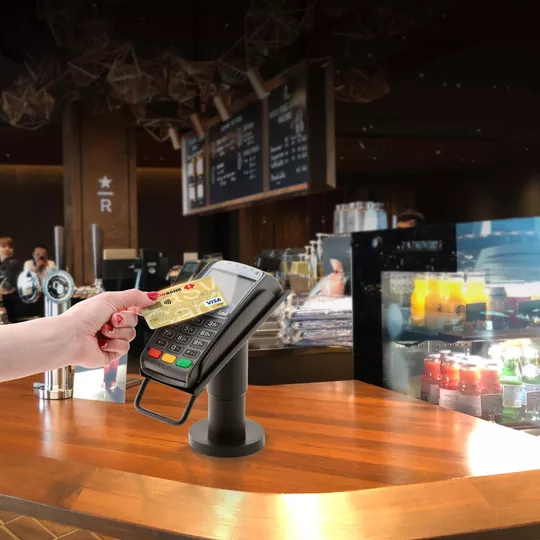
Contactless debit card payments grew sharply
The popularity of contactless payments has boosted the value of debit card transactions by 18.5% in December – the peak shopping month of the year-end season. Statistics from the Central Bank show that debit card transactions at PoS points increased by nearly 20% to 4.8 billion euros in December, compared to the same period last
Xem chi tiết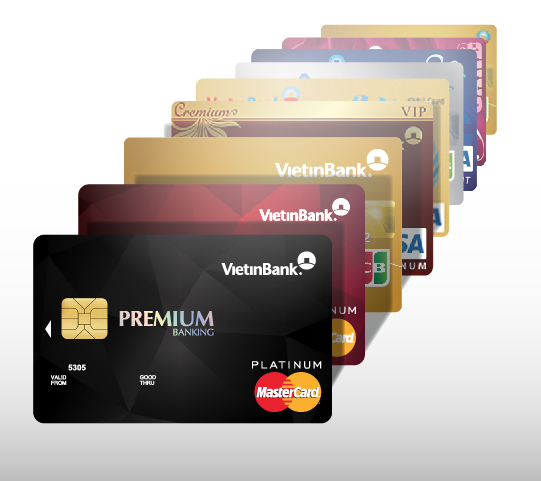
Reducing international card fees will promote non-cash payments in Vietnam
According to the Vietnam Banking Association, currently, Vietnamese banks are paying for Visa and MasterCard 3-4 fees per transaction. The situation of “superposition charge” partly affects the card business of banks, hindering the process of promoting non-cash payment. According to statistics, currently Vietnamese banks are paying for Visa, MasterCard 3-4 charges per transaction. The situation
Xem chi tiết
Bustling conversion of magnetic cards to chip cards
The change from magnetic card to chip card will limit the situation of criminals stealing card data to make fake cards to withdraw money … “The cost to produce a chip card is about 8 to 10 times higher than that of making a card, so with the existing number of existing customers using our
Xem chi tiết
Thẻ chip chuẩn EMV: Tổng quan những điều cần biết
Thẻ ATM sử dụng công nghệ chip điện tử kết nối thanh toán chuẩn EMV đã chính thức ra mắt tại 7 ngân hàng thương mại tại Việt Nam. Để giúp bạn đọc sử dụng thuận tiện, an toàn, thoibaonganhang.vn giới thiệu một số thông tin và những lưu ý đối với sản phẩm này.
Xem chi tiết
Chuyển đổi số phải đi kèm bảo mật rủi ro
Các ngân hàng đang tích cực chuyển đổi thẻ từ sang thẻ chip, và dự kiến sẽ hoàn tất việc chuyển đổi trong năm sau, theo lộ trình của Ngân hàng Nhà nước. Theo ông Nguyễn Trọng Đường, Phó cục trưởng Cục An toàn thông tin (Bộ Thông tin và Truyền thông), cùng với sự
Xem chi tiết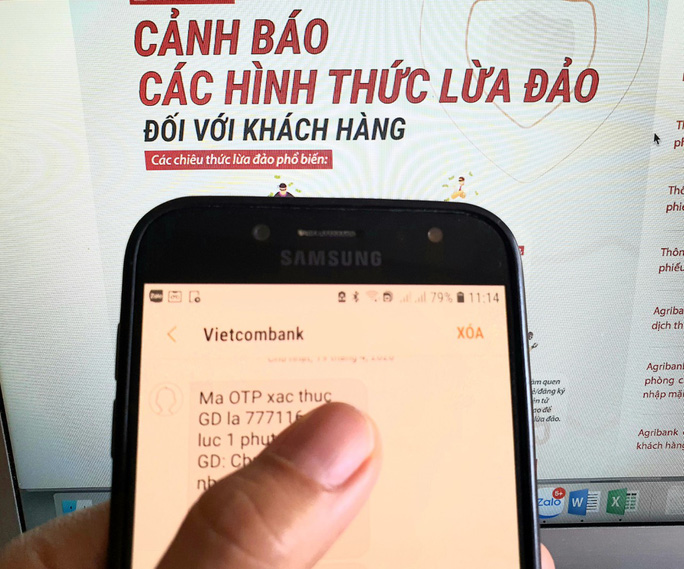
Thêm ngân hàng cảnh báo chiêu lừa đánh cắp tiền trong tài khoản
Dù các ngân hàng liên tục cảnh báo thủ đoạn của tội phạm công nghệ cao lừa đánh cắp mã OTP, yêu cầu đăng nhập website giả mạo ngân hàng để chiếm đoạt tiền của khách hàng, nhưng vẫn có không ít người bị sập bẫy. Agribank vừa tiếp tục cảnh báo các thủ đoạn
Xem chi tiết