Vietnam has 41 banks with the current number of magnetic cards at about 75 million; nearly 280,000 POS machines – most of them have complied with the Chip Card Standard (EMV) and the upgrade to support the local chip card standard is not too complicated.
Safety, security, multi utilities
According to EMVCo data, as of the fourth quarter of 2018, the global rate of EMV Card-present card transactions accounted for 73.6% and the conversion to chip cards is an inevitable trend. For example, Malaysia completed the conversion to chip cards by the end of 2018. Even though it has converted chip cards according to national standards, recently, Malaysia has continued to carry out the conversion according to the common EMV standard. Or in the US, the country has conducted a switch to chip cards within the past 3 years.
In Vietnam, besides gradually changing from a magnetic card to a chip card, payment methods in the form of waving cards, swiping phones, scanning QR codes … or contactless also thrive in 2 years ago. According to a Visa study, during the period of July 1, 2017 – May 31, 2018, the growth rate of the number of contactless transactions in Vietnam reached 44% per month. Transaction speed with contactless Visa cards increased by 43% every month over the same period.
In addition, a survey of consumers’ payment attitudes received positive results, when more than half of Vietnamese had known contactless payment technology, 30% of them had used and over 2 / 3 is willing to try this form of cash replacement in the future.
This shows that the conversion of magnetic cards to chip cards will continue to be promoted in the future, especially when the magnetic card technology is quite outdated, criminals can easily attach devices (skimming) on. ATMs to steal data, fake cards, withdraw money like some cases happened in the past. Therefore, it is indispensable to apply technology to limit security risks and banks have plans to convert magnetic cards into chip cards.
Mr. Nguyen Quang Minh, Deputy General Director of Napas said: “The conversion of magnetic cards to chip cards will limit the risk of copying and stealing card information to make counterfeit cards to withdraw money at ATMs today. Statistics show that the rate of counterfeit transactions dramatically decreased when switching from a magnetic card to a chip card. ”
In addition, Mr. Minh shared, replacing magnetic cards with chip cards brings many benefits, such as making payment transactions safer and more secure, and opening favorable conditions for banks. Develop new and modern payment features for domestic card products, increase the competitiveness of payment cards in the Vietnamese market.
Nevertheless, Mr. Minh recommends that, according to the experience of the previous countries, the biggest difficulty is that the conversion process is prolonged, exceeding the initial set roadmap, leading to asynchronous and untreated infrastructure. thoroughly manage security and anti-fraud issues in payment transactions. Therefore, the participants need to commit to the conversion closely following the schedule given by the State Bank.
The legal corridor is ready
Talking to Securities Investment, Mr. Minh said that the banking industry is one of the leading sectors in proactively applying the achievements of the 4.0 Technology Revolution to improve service quality and increase utilities for customers, promote cashless payments. Besides, with the legal framework ready, this will be a platform for modern banking trends to strongly develop in the coming time.
Specifically, on October 5, 2018, the Governor of the SBV signed Decision No. 1927 / QD-NHNN announcing the technical requirements for domestic payment cards using contactless and contactless chip technology in Vietnam. basic standards (TCCS) for domestic chip cards (referred to as TCCS for domestic chip cards). The application of chip card standards will increase many features and utilities for customers, making an important contribution to the promotion of cashless payment, thanks to changes in technology, safety level, security compared to previous magnetic cards.
In order to complete the legal framework for applying the TCCS on domestic chip cards as a basis for credit institutions to implement, on December 28, 2018, the Governor of the SBV issued Circular No. 41 / TT-NHNN on amendments. , supplementing a number of articles of Circular No. 19/2016 / TT-NHNN of June 30, 2019, providing for bank card activities (Circular 41), including: Card issuers and organizations Card payment institutions must comply with the TCCS on domestic chip cards when issuing cards when having BINs issued by the State Bank and applicable to ATMs and card-accepting devices at the point of sale of card payment organizations; stipulate the roadmap for conversion from magnetic to chip cards for card issuers and card payment.
On March 13, 2019, the SBV issued Official Letter No. 1524 / NHNN-TT requesting card issuers, card payment organizations, card switching organizations and active clearing organizations to make active card transactions. , seriously organize the application of TCCS on domestic chip cards according to the conversion roadmap specified in Circular 41; request the aforesaid entities to ensure the card operation is continuous, stable and safe while ensuring the legitimate rights and interests of the cardholder during the conversion process. The State Bank also encourages card issuers and card payment organizations to complete the implementation of the TCCS on domestic chip cards ahead of schedule.
In fact, service businesses have introduced “swipe” and “touch” technology in payment activities, especially for small and micro enterprises and individual business households due to the relatively low implementation cost. This will improve sales and service quality. For example, in the last 1 -2 years, consumers have applied a non-touch payment method through Samsung Pay, QRPay, … at restaurants, supermarkets and retail units.
Mr. Minh said that currently, Napas is supporting the implementation of chip card conversion for the first 7 banks namely Vietcombank, VietinBank, BIDV, Agribank, TPBank, Sacombank and ABBank including the implementation of card and card issuance systems. Accept tokens, applications to connect with Napas.
“Vietnam has 41 banks with the current number of magnetic stripe cards is about 75 million; 280,000 POS devices, most of them have complied with EMV standards and the upgrade to support the local chip card standard is not too complicated, ”Mr. Minh said, adding that Napas continues to support new suppliers. in the field of cards and card acceptance equipment to evaluate and offer products that comply with local VCCS chip card standards. Since then, banks can quickly and easily select the available products, in order to save time and conversion costs.
(Source: Securities Investment Review)
Tin tức khác

Phòng tránh dịch Covid-19: Miễn, giảm phí thanh toán điện tử
Tiếp tục các giải pháp thiết thực hỗ trợ người dân, doanh nghiệp phòng tránh dịch viêm đường hô hấp cấp (dịch virus nCoV/Covid-19), Ngân hàng Nhà nước đã áp dụng chính sách miễn, giảm phí dịch vụ thanh toán. Tiếp tục các giải pháp thiết thực hỗ trợ người dân, doanh nghiệp phòng tránh
Xem chi tiết
Things to know when replacing paper health insurance cards with electronic cards
From 2020, the current paper health insurance card will be replaced by electronic cards. According to the roadmap, at the latest on January 1, 2020, the social insurance agency (social insurance) must issue an electronic health insurance card (health insurance) for participants of health insurance. According to Vietnam Social Insurance, an electronic health insurance card
Xem chi tiết
Đặc điểm và lợi ích của thẻ BHYT điện tử
Bạn đọc hỏi: Gần đây, chúng tôi được thông tin sẽ dùng thẻ bảo hiểm y tế (BHYT) điện tử. Vậy thẻ BHYT có lợi ích như thế nào và người dùng có mất chi phí làm lại thẻ? Người già không thạo công nghệ thông tin có sử dụng được thẻ? Về vấn đề
Xem chi tiết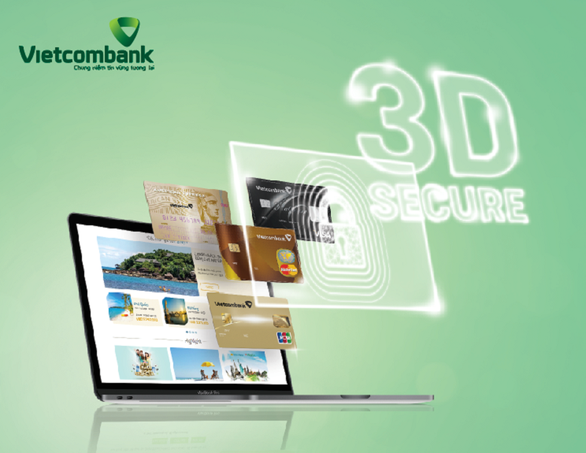
3D-Secure – công nghệ bảo mật an toàn cho giao dịch thẻ
Với những ưu điểm vượt trội an toàn – bảo mật – thuận tiện, 3D-Secure đã được đông đảo chủ thẻ của Vietcombank đón nhận và sử dụng. Thời gian qua, Ngân hàng TMCP Ngoại thương VN (Vietcombank) đầu tư mạnh mẽ cho hệ thống công nghệ, ưu tiên sử dụng hạ tầng và ứng
Xem chi tiết
Công nghệ thanh toán không tiếp xúc giúp phòng chống Covid-19
Ngân hàng Vietbank áp dụng công nghệ thanh toán không tiếp xúc cho các chủ thẻ nhằm đảm bảo an toàn cho khách hàng và cộng đồng trong Covid-19. Theo các chuyên gia, trong bối cảnh dịch bệnh hiện nay, thanh toán không tiếp xúc, không dùng tiền mặt nên được khuyến khích và thúc đẩy nhằm
Xem chi tiết
Gần 150.000 máy POS phải nâng cấp để đáp ứng tiêu chuẩn thẻ chip mới
Theo quy định của NHNN, trong năm 2019, các ngân hàng phải nâng cấp 50% số máy POS hiện có. Lúc này, nhiều ngân hàng đang phải gấp rút tìm cách giải bài toán chi phí. Không đọc được thẻ chip, phải quẹt thẻ từ, những chiếc máy có tuổi đời gần chục năm bắt buộc
Xem chi tiết