Upgrading the card issuing system will have to go along with the upgrade of the switching system. Banks have to invest more, but they have to accept because this is an indispensable demand, in line with the general trend of countries around the world, contributing to ensuring security, safety, information security, preventing prevent frauds in card issuance and payment activities …
In 2018, the number of payment transactions made via bank cards reached nearly 230 million transactions (up 19% compared to 2017) with a total transaction amount of VND 592,000 billion. Increasing payment through bank cards brings many benefits to the society, but for payment service providers, there are more potential risks, especially when debit and credit cards In Vietnam, most of them are still flashcards.
According to experts, this is the technology of the 70s, and criminals today can use high technology to offer many ways to copy data in it. Some risks can come from this type of card such as card fraud, card fraud, use of electronic chips or reading devices to directly steal card information to pay, withdraw / transfer money … card counterfeiting is done through the theft of personal information and card information by skimming (using a card machine with a swipe card with an encryption function to steal card information), stealing information on bill card, skimming on ATM, using spyware to steal information … The transition from magnetic card to chip card to ensure security and safety is becoming increasingly urgent.
In order to complete the legal framework to apply the Internal Standard (TCCS) on domestic chip cards as a basis for credit institutions to implement, the Governor of the SBV issued Circular No. 41/2018 / TT-NHNN amended and supplemented. a number of articles of Circular No. 19/2016 / TT-NHNN regulating banking card activities, including requirements: Card issuers (PHTs), card payment organizations (TTTs) must comply with TCCS regarding the domestic chip card when issuing a card when having a BIN (bank identification code) issued by the State Bank and applicable to ATMs and card acceptance devices at point of sale of TTT organizations; Regulations on the roadmap for conversion from magnetic cards to chip cards for PHT and TTT.
According to Mr. Nghiem Thanh Son – Deputy Director of Payment Department (SBV), Circular 41 has set out a specific roadmap for 3 years (2019, 2020, 2021) with the conversion to domestic chip cards of Bank. Specifically, by December 31, 2019, at least 30% of domestic cards issued by payment payment service providers must be converted to chip cards; by December 31, 2020, at least 60% of domestic cards issued must be converted into chip cards; and by December 31, 2021, 100% of chip cards issued by banks as well as payment service providers must be converted to chip cards.
Most recently, in the middle of March 2019, the State Bank issued Official Letter No. 1524 / NHNN-TT proposing PHT organizations, TTT organizations, switching cards, clearing electronic transactions to take initiative and seriously. organize the application of TCCS on domestic chip cards according to the conversion roadmap specified in Circular 41; request the aforesaid entities to ensure the card operation is conducted continuously, stably and safely, and at the same time ensure the legitimate rights and interests of the cardholder during the conversion process. The State Bank also encouraged PHT and TTT organizations to complete the application of TCCS on domestic chip cards ahead of schedule.
Up to now, only TPBank has announced to complete the conversion of the entire ATM card system, POS payment gateway to chip cards ahead of schedule compared to the requirements of the State Bank. TPBank will officially issue all new customers for ATM chip cards from May 15, 2019. This is the first bank to officially complete the system conversion, allowing the issuance and acceptance of local chip cards in Vietnam. In 2019, the bank is also expected to meet over 30% of the conversion needs of customers using old cards to ATM chip cards.
Although not yet issued domestic chip cards, but in many other banks, the launch of international payment chip cards is also increasing trend. In March 2019, Kienlongbank officially launched Kienlongbank international debit card JCB chip technology according to EMV international standards. In early January 2019, Agribank issued contactless chip cards of VISA-VISA PayWave brand.
Previously, in December 2018, ABBank launched ABBank Visa Contactless card product combining international card line (ABBank Visa) and contactless technology (Contactless); Vietcombank also launched the first card product to use contactless payment technology according to international standards (EMV Contactless); BIDV with BIDV Visa Infinite international credit card (chip card technology) …
Experts shared that the conversion from magnetic card to chip card, banks will have to accept a small amount of expenses, which can be 15-20 times higher than that of magnetic cards; must upgrade the card acceptance device, internal switching system of each bank for compatibility.
As such, upgrading the card issuing system will have to go along with upgrading the switching system. Banks have to invest more, but they have to accept because this is an indispensable need,
consistent with the general trend of countries around the world, contributing to ensuring security, safety, information security, preventing frauds in card issuing and payment activities …
According to experts, this is the technology of the 70s, and criminals today can use high technology to offer many ways to copy data in it. Some risks can come from this type of card such as card fraud, card fraud, use of electronic chips or reading devices to directly steal card information to pay, withdraw / transfer money … card counterfeiting is done through the theft of personal information and card information by skimming (using a card machine with a swipe card with an encryption function to steal card information), stealing information on bill card, skimming on ATM, using spyware to steal information … The transition from magnetic card to chip card to ensure security and safety is becoming increasingly urgent.
In order to complete the legal framework to apply the Internal Standard (TCCS) on domestic chip cards as a basis for credit institutions to implement, the Governor of the SBV issued Circular No. 41/2018 / TT-NHNN amended and supplemented. a number of articles of Circular No. 19/2016 / TT-NHNN regulating banking card activities, including requirements: Card issuers (PHTs), card payment organizations (TTTs) must comply with TCCS regarding the domestic chip card when issuing a card when having a BIN (bank identification code) issued by the State Bank and applicable to ATMs and card acceptance devices at point of sale of TTT organizations; Regulations on the roadmap for conversion from magnetic cards to chip cards for PHT and TTT.
According to Mr. Nghiem Thanh Son – Deputy Director of Payment Department (SBV), Circular 41 has set out a specific roadmap for 3 years (2019, 2020, 2021) with the conversion to domestic chip cards of Bank. Specifically, by December 31, 2019, at least 30% of domestic cards issued by payment payment service providers must be converted to chip cards; by December 31, 2020, at least 60% of domestic cards issued must be converted into chip cards; and by December 31, 2021, 100% of chip cards issued by banks as well as payment service providers must be converted to chip cards.
Most recently, in the middle of March 2019, the State Bank issued Official Letter No. 1524 / NHNN-TT proposing PHT organizations, TTT organizations, switching cards, clearing electronic transactions to take initiative and seriously. organize the application of TCCS on domestic chip cards according to the conversion roadmap specified in Circular 41; request the aforesaid entities to ensure the card operation is conducted continuously, stably and safely, and at the same time ensure the legitimate rights and interests of the cardholder during the conversion process. The State Bank also encouraged PHT and TTT organizations to complete the application of TCCS on domestic chip cards ahead of schedule.
Up to now, only TPBank has announced to complete the conversion of the entire ATM card system, POS payment gateway to chip cards ahead of schedule compared to the requirements of the State Bank. TPBank will officially issue all new customers for ATM chip cards from May 15, 2019. This is the first bank to officially complete the system conversion, allowing the issuance and acceptance of local chip cards in Vietnam. In 2019, the bank is also expected to meet over 30% of the conversion needs of customers using old cards to ATM chip cards.
Although not yet issued domestic chip cards, but in many other banks, the launch of international payment chip cards is also increasing trend. In March 2019, Kienlongbank officially launched Kienlongbank international debit card JCB chip technology according to EMV international standards. In early January 2019, Agribank issued contactless chip cards of VISA-VISA PayWave brand.
Previously, in December 2018, ABBank launched ABBank Visa Contactless card product combining international card line (ABBank Visa) and contactless technology (Contactless); Vietcombank also launched the first card product to use contactless payment technology according to international standards (EMV Contactless); BIDV with BIDV Visa Infinite international credit card (chip card technology) …
Experts shared that the conversion from magnetic card to chip card, banks will have to accept a small amount of expenses, which can be 15-20 times higher than that of magnetic cards; must upgrade the card acceptance device, internal switching system of each bank for compatibility.
As such, upgrading the card issuing system will have to go along with upgrading the switching system. Banks have to invest more, but they have to accept because this is an indispensable demand, in line with the general trend of countries around the world, contributing to ensuring security, safety, information security, preventing prevent frauds in card issuance and payment activities …
(According to the Banking Times)
Tin tức khác
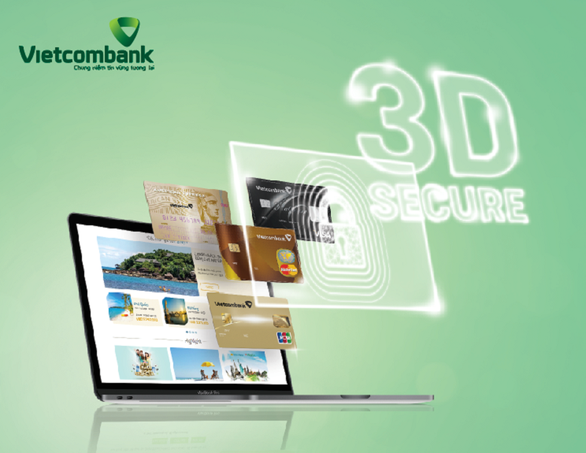
VIETCOMBANK LAUNCHED SECURE 3D SECURITY FOR INTERNATIONAL DEBIT CARD
In order to enhance the security when paying online by card, from October 1, 2019, Vietcombank officially implemented the 3D Secure security feature for international debit cards. So far, Vietcombank has implemented 3D Secure for all international credit and debit card products bearing the Visa / Mastercard / Amex / JCB brands issued by Vietcombank.
Xem chi tiết
Để không mất tiền trong thẻ ATM
Chuyển đổi từ thẻ ATM công nghệ từ sang thẻ chip để hạn chế tối đa rủi ro mất tiền Dù liên tục cảnh báo nhưng hàng loạt vụ gắn thiết bị đánh cắp thông tin thẻ (skimming) tại máy ATM, lừa người dùng để lấy mật khẩu, mã OTP rồi chiếm đoạt tiền vẫn
Xem chi tiết
Converting magnetic cards to chip cards: Increases security
The roadmap for converting a magnetic card to a domestic chip card of banks has been issued by the State Bank of Vietnam since 2018. Specifically, as of December 31, 2019, at least 30% of domestic cards issued by payment service-providing organizations must be converted into chip cards; By December 31, 2016, 100% of chip
Xem chi tiết
COVID-19: Cơ hội cho các dịch vụ thanh toán không dùng tiền mặt đột phá
Theo thống kê của Công ty Cổ phần Thanh toán Quốc gia Việt Nam (NAPAS), đến năm 2020, số lượng giao dịch chuyển tiền nhanh 24/7 đã vượt qua số lượng giao dịch rút tiền ATM và chiếm gần 66,6% tổng số lượng giao dịch mà hệ thống NAPAS xử lý. Ngày 13/11, Công ty
Xem chi tiết
Nguy cơ mất tiền trong ATM gia tăng vì chậm chuyển thẻ từ sang thẻ chip
Việc chuyển đổi thẻ từ sang thẻ chip ở Việt Nam diễn ra khá chậm chạp. Điều này vô hình chung đã tiếp tay cho tội phạm trộm tiền từ thẻ ATM. Hiện nay, các ngân hàng Việt Nam đang “chạy đua” chuyển đổi thẻ từ sang thẻ chip. Sự chuyển đổi này không chỉ
Xem chi tiết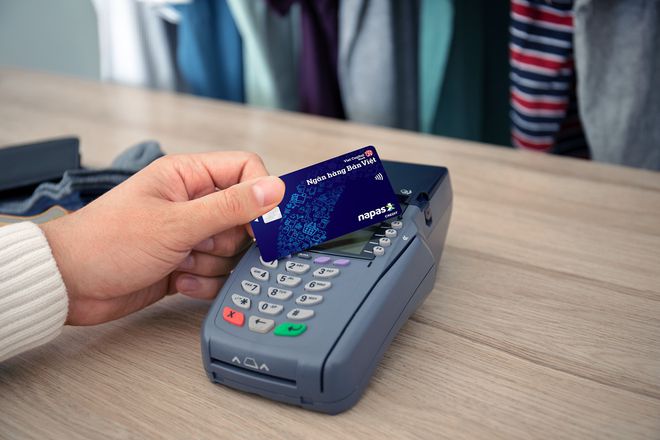
Stop issuing tape ATM cards
On March 31, credit institutions will terminate the issuance of magnetic ATM cards according to the roadmap of converting bank cards to domestic chip cards. According to the roadmap specified in Circular 22/2020 of the State Bank amending Circular 19/2016 regulating banking card operations, for card issuers from March 31st, stop issuing magnetic tape ATM
Xem chi tiết