Many countries around the world have been converting smart card usage into many different service industries such as Sim cards integrated payment in telecommunications, applications in automating bus ticket payment. , tram in the transport, electronic identity cards in the field of state management or the type of payment card of the banking industry ….
With more and more applications in various industries, smart card market is growing rapidly in the past few years. Smart cards are used most in telecommunications as a SIM card. However, applications in many other fields such as transportation, government, financial services are also invested and deployed because of the outstanding advantages of smart cards such as large data storage capacity, fast processing. Quick and effective data security methods.
According to RNCOS’s “Card Market Forecast to 2012” report, smart cards grew more than 10% in 2010 compared to 2009, in which the market was largely held by four major companies, Gemalto, Oberthur, Sagem Orga (Ingenico) and Giesecke & Devrient. Also according to this report, the number of smart card projects also increased worldwide with a high degree of diversity and high technology demand.
Moreover, the economic boom and high technical requirements in the field of digital security also increase the level of demand for smart cards. According to a study, the smart card market will achieve double-digit growth (CAGR of about 12%) between 2011 and 2013.
In the banking sector, the EMV card alliance (Euro Pay, MasterCard and VISA) is the foundation for many investment banks to deploy smart card issuance solutions. Around the world, countries have transitioned to the EMV system for a long time. Europe changed in 1996, typically France and England. Asia – like Japan and South Korea also conducted from 2003-2004. In Southeast Asia – Malaysia and Singapore were the first countries to convert their card payment systems to the EMV standard since 2005, followed by Thailand, Indonesia, Philippines and Vietnam. According to EMVCo, by the end of the first quarter of 2011, about 1.2 billion EMV chip cards have been issued and 18.7 million POS points accept EMV cards in operation worldwide. These figures are equivalent to 40.1% of the total number of payment cards in circulation and 71% of the number of POS installed globally.
Also according to this report, the expected average growth rate of contactless card technology from 2011 to 2013 is about 24% covering many different areas such as mobile payment, transportation or digital proof of goverment.
Tin tức khác

Be cautious of the wave of personal credit default due to the Covid-19 epidemic
The Covid-19 epidemic caused heavy losses to production and business activities, and accordingly, the number of unemployed also increased sharply, all cautious for credit card default may not be redundant. Fall into the “debt net” for using a credit card NTH, a new employee at a joint-stock commercial bank in Hai Ba Trung, Hanoi, said:
More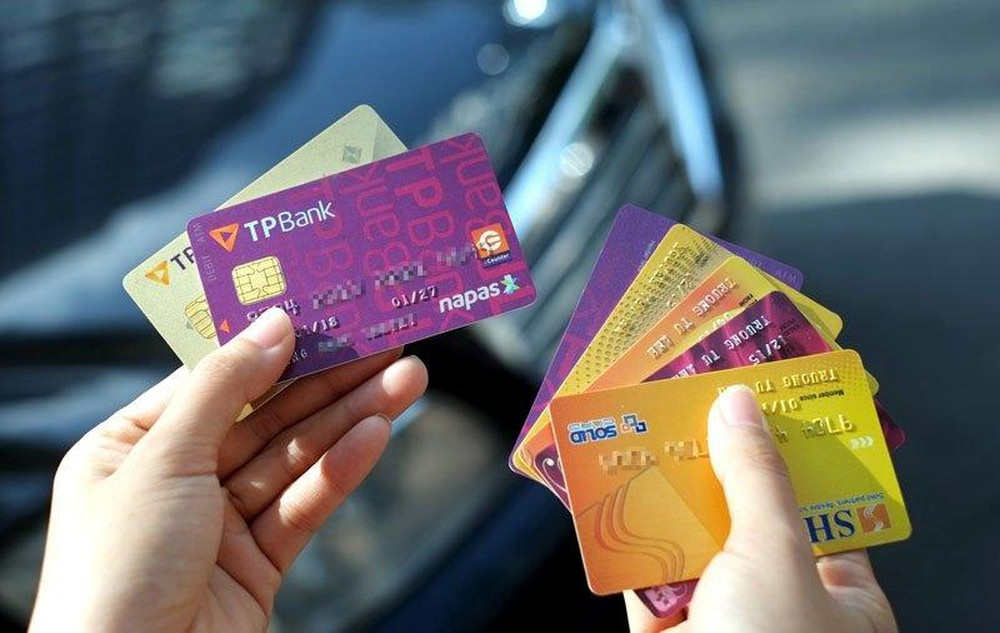
Banks “race” to convert magnetic cards into chip cards
According to the goals set by the Government, by 2020, the rate of non-cash payment must account for more than 30% of the total means of payment in Vietnam. Conversion of magnetic cards to chip cards with safer security technology is a must. The conversion from magnetic stripe to chip card is being implemented by
More
Dịch COVID-19: Ngân hàng Nhà nước triển khai các giải pháp hỗ trợ khách hàng
Ngày 24/2, Ngân hàng Nhà nước Việt Nam ban hành văn bản số 1117/NHNN-TD về việc triển khai các giải pháp hỗ trợ khách hàng do ảnh hưởng của dịch COVID-19. Theo đó, hiện dịch viêm đường hô hấp cấp do chủng mới của virus Corona (dịch COVID-19) diễn biến phức tạp, gây ảnh hưởng
More
Mastercard cam kết đồng hành cùng Việt Nam tạo nên một thế giới không bị giới hạn bởi tiền mặt
Việt Nam đang thực sự vượt lên các nước phát triển hơn như Singapore và Malaysia về việc thanh toán điện tử, với mức ghi nhận sự tăng trưởng thanh toán di động nhanh nhất trên thế giới, từ 37% tại năm 2018 lên 61% trong năm 2019. “Trong vòng 6 năm, quy mô thị
More
Electronic payment without cash in medical examination and treatment is still inadequate
Non-cash payment in general and electronic payment in particular are an indispensable trend of the era, showing a civilized and modern society, bringing great benefits. However, the non-cash electronic payment for medical examination and treatment in Vietnam is still inadequate. People are not familiar with electronic payments Recently, the health sector has promoted the application
More
Domestic credit cards: Increasing convenience for customers, repelling black credit
The advantages of domestic credit cards have attracted customers’ attention and are expected to contribute to repelling black credit. In recent years, the COVID-19 epidemic has had a great impact on the banking and financial market in general and the payment sector in particular. However, this is also an opportunity for non-cash payment services to
More