Promoting cashless payments requires a specific solution, not just propaganda …
“The challenge of slowing the transition from magnetic stripe to chip card, what’s the reason?” is the first issue raised during the discussion at the 2019 Electronic Payment Ecosystem Development Forum: Moving with Chip technology by the Vietnam Economic Times in collaboration with Vietnam National Payment Joint Stock Company. Nam held the morning of December 10.
Banks alone cannot do it
Mr. Nguyen Dinh Thang, Chairman of LienvietPostbank’s Board of Directors, said that the big reason was due to large bank expenses. Investing in old technology requires a period of depreciation, meanwhile, when applying a chip card, the system of technology must change, the terminal system, ATM tree, POS system must change … Those are Huge cost. In addition, changing chip cards back for customers also takes time.
In the same opinion, according to Mr. Tran Cong Quynh Lan, Deputy General Director of Vietinbank, when switching to chip cards, banks have to change a series of machines, the cost of issuing chip cards is also much higher than that of magnetic cards. However, banks have realized that it is necessary to convert and are determined to transfer magnetic cards to chip cards, turning challenges into opportunities. How can chip cards be integrated and synchronized to pay a lot of expenses such as education, health care and insurance, not merely from keeping ATM accounts.
In a more positive view, Mr. Nguyen Quang Hung, General Director of Vietnam National Payment Joint Stock Company (Napas), said that the bank has had a strong movement. As evidence, at the beginning of the year, there was a ceremony to launch chip cards, at that time there were only 7 banks but now Napas and more than 20 banks are willing to convert chip card technology.
By the first quarter of 2020, not only will stop 20 banks and 6 chip card providers, but there will be 26 banks and 10 chip card companies. “These things show that the bank has been very active,” Mr. Hung assessed.
In terms of state management, Mr. Pham Tien Dung, Director of Payment Department, State Bank affirmed that banks cannot develop without our ecosystem. Mr. Dung likened, the ecosystem is like a handshake, the bank presents a hand, the other party also has to hand it out to fit together. For example, carriers also have to fix their information systems, but banks alone cannot do it.
There is a need for drastic government management
Discussing solutions to promote cashless payment, Mr. Nguyen Dinh Thang said that to change, there should be specific solutions. If only propaganda is not allowed.
Besides the solution from the bank to ensure safety, according to Mr. Thang, there is another solution that requires imposition. For example, the Government requires cashless payment, which everyone must use. The ecosystem we have built stores has to change, otherwise it does not grant business licenses. “It is a policy, it needs drastic from the state,” Mr. Thang proposed.
According to Director of Napas, to promote cashless payment, it must take place from two sides, the card issuing bank and retail stores, public payment facilities, and the place where the card is accepted will be completed by the ecosystem. correction. Napas is oriented towards the development of card payment which goes both ways.
“Napas and banks on the one hand convert magnetic cards into chips, on the other hand, with banks go to payment points to accept chip cards. Typically, the signing ceremony today has petrol, hospitals. Toan. All Vietnamese people buy gasoline, 99% use cash, cars use 1 million, motorbikes 50,000 – 80,000 VND. That is what Napas and the bank are looking for a big market like Petrolimex to popularize people to use cards, not just withdraw money, “Mr. Hung said.
Learn from previous countries
Speaking at the Forum, Mr. Nguyen Kim Anh, Deputy Governor of the State Bank of Vietnam, affirmed that converting domestic payment cards from magnetic cards to chip cards is one of the tasks approved by the Prime Minister. approved at the Project on developing non-cash payment. Deploying this task, on October 5, 2018, the Governor of the State Bank of Vietnam issued a set of domestic chip card standards, specifying Vietnam’s domestic card specifications in accordance with EMV international standards, preventing prevent card counterfeiting in physical environment through ATM and POS channels.
Chip cards help banks issuing domestic cards in Vietnam have the potential to expand the payment ecosystem into industries such as transport health, insurance, providing practical benefits and superior experiences for people to use. service.
The State Bank also issued Circular 41 stipulating the roadmap for conversion to chip cards and the conversion route for the card accepting device at the point of sale operating in Vietnam as for the card payment institution. December 31, 2020, and domestic card issuers in circulation 31/12/2021.
The Deputy Governor emphasized that the transition to contactless and non-contact chip technology is still challenging, so the Forum is an opportunity for banks and related organizations to share and discuss the issues. problems around this topic.
The State Bank wants presenters to discuss the trend of lessons learned on the conversion of domestic chip cards from international countries, to overcome the increasing situation of high technology crime, focusing on the market. not implemented yet. The coordination of banks and related units to accelerate according to the issued schedule, ensuring information safety and confidentiality during the card conversion process.
“The State Bank also wants the parties to enhance learning and exchange to promote the Vietnamese card industry in accordance with the world trend to ensure security, safety for sustainable development, and timely application of revolutionary achievements. Industry 4.0, bringing convenience to the people, creating favorable conditions for developers to develop new payment features, opening up opportunities for domestic cards to integrate internationally, “Deputy Governor Nguyen Kim Anh said.
(Source: Vneconomy)
Tin tức khác
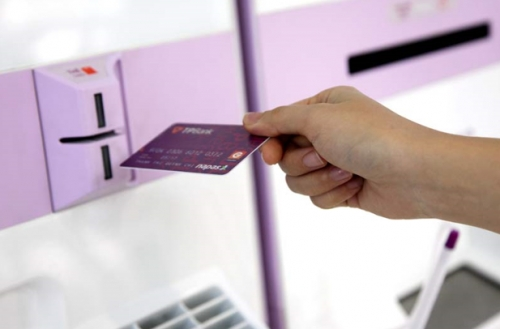
TPBank sớm “về đích” chuyển đổi thẻ chip nội địa
TPBank là ngân hàng đầu tiên chính thức hoàn tất chuyển đổi hệ thống, cho phép phát hành và chấp nhận thẻ chip nội địa tại Việt Nam. Theo TPBank, toàn bộ hệ thống ATM, mPOS plus của ngân hàng này đã hoàn tất chuyển đổi chấp nhận thẻ chip nội địa, thẻ chip contactless cho
More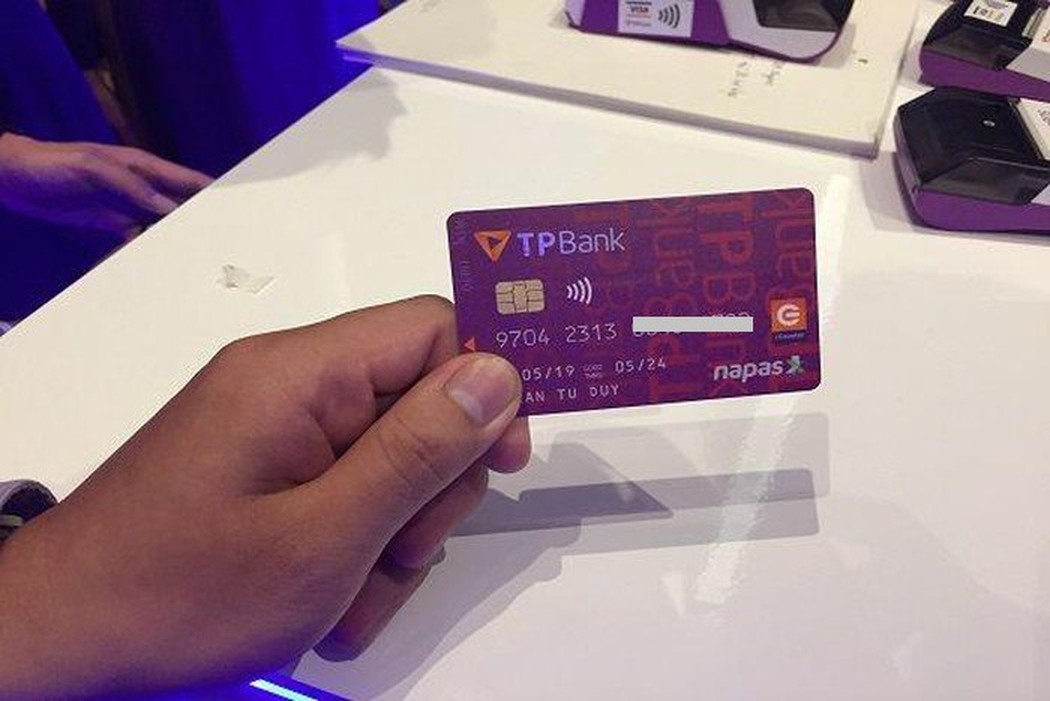
Vì sao cần phải sử dụng thẻ chip ATM
Tăng cường an toàn, bảo mật thông tin cao, hạn chế tối đa rủi ro về gian lận, lấy cắp thông tin thẻ (skimming)… là những ưu điểm vượt trội mà thẻ công nghệ chip mang lại. Thời gian gần đây, các ngân hàng đang cấp tập triển khai áp dụng thẻ ATM theo chuẩn
More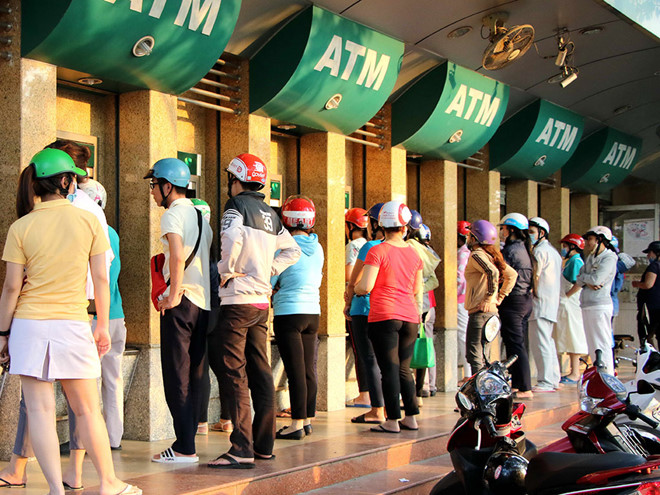
The people’s habit of withdrawing cash from ATMs has changed
According to a report by Vietnam National Payment Joint Stock Company (Napas), many people are more accustomed to spending through cards, banking applications, instead of cash withdrawals. If in 2018, 62% of people use bank cards to withdraw cash, this figure has decreased to 42% in 2019. Data from Napas shows that people tend to
More
Procedures to be issued with chip-attached citizen identification card
As a rule, when people make ID cards, they add chips in 4 convenient and fast steps. According to lawyer Nguyen Van Tien (Hanoi Bar Association), to create favorable conditions for citizens in the implementation of transactions, administrative reform towards the implementation of E-Government, Digital Government, Ministry of Public Security encourage citizens to change to
More
Ho Chi Minh City applies smart payment cards for public transport
Smart payment card for public transport services in Ho Chi Minh City will be applied when Metro Line 1 is put into operation. Smart payment card for public transport services in Ho Chi Minh City will be applied when Metro Line 1 (Ben Thanh – Suoi Tien) is put into operation in 2021. After that,
More
Translation COVID-19 slows down the process of converting magnetic cards to chip cards
Due to the impact of the COVID-19 epidemic, the roadmap for conversion of magnetic cards to chip cards is currently significantly affected, which may be difficult to achieve as planned. Chip card technology using base standards (VCCS) is being invested by banks to focus on safety and integration of utilities for customers when using. However,
More