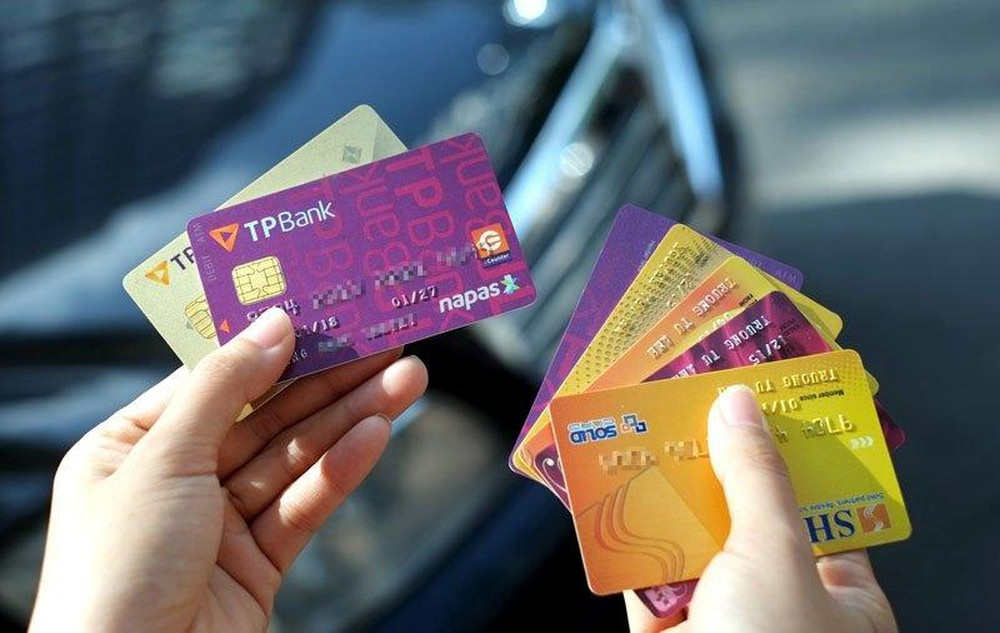
According to the goals set by the Government, by 2020, the rate of non-cash payment must account for more than 30% of the total means of payment in Vietnam. Conversion of magnetic cards to chip cards with safer security technology is a must. The conversion from magnetic stripe to chip card is being implemented by banks “racing” and the goal of 100% conversion by the end of 2021 is entirely feasible.
Converting domestic payment cards from magnetic cards to chip cards is one of the key solutions of the banking industry approved by the Prime Minister in the Project on developing non-cash payment for the period 2016-2020 (Decision Decision 2545 / QD-TTg). Following the Prime Minister’s instructions, based on the current laws and regulations on standards and technical regulations, on October 5, 2018, the Governor of the SBV signed the Decision No. 1927 / QD-NHNN announced Basic set of standards on domestic chip cards; It details the technical requirements of domestic payment cards in Vietnam using contactless and contactless chip technology, compatible with international EMV standards. Next, the SBV Governor issued Circular No. 41/2018 / TT-NHNN dated December 28, 2018, stipulating the roadmap for converting bank cards to cards in compliance with the basic standards for domestic chip cards; Accordingly, the conversion schedule for card payment organizations is until December 31, 2020 and for card issuers as of December 31, 2021.
Domestic chip cards fully meet the technical factors of safety and security according to EMV international standards, limiting risks of fraudulent frauds in card payment, ensuring payment security for customer; serve as an important platform for integrating and applying for non-cash payment services and services for services such as health, education, transportation, insurance and public services. The use of domestic chip card payment with contactless technology for small value transactions will bring a new experience to customers when just one touch of the card to the POS machine can be completed. deal. Issuing banks will set a threshold of payment value without customer authentication for small value transactions.
Currently, Vietnam has 48 domestic card issuers with a total of about 76 million cards, more than 261,000 POS and 18,600 ATMs; most of the POSs have followed the EMV Standard, so deploying local chip cards on devices that accept cards will not be too complicated. According to the plan, by December 31, 2019, commercial banks will convert at least 30% of cards from domestic, 35% of ATM and 50% of existing POS to chip technology. exposed and not exposed. All ATMs and POS on the market ensure compliance with VCCS Standard on 12/31/2020. By December 31, 2021, all domestic cards in circulation of card issuers comply with TCCS on domestic chip cards.
After more than half a year of launching with 7 participating banks, by the end of 2020 the number of banks willing to convert magnetic cards to chip cards has increased to 20. 7 banks participating in the first phase include Vietcombank, VietinBank, BIDV, Agribank, Sacombank, TienphongBank and An Binh, with ATM cards accounting for about 70% of the total number of cards nationwide. General Director of Vietnam National Payment Joint Stock Company (Napas) Nguyen Quang Hung said that by the first quarter of 2020, not only will stop 20 banks and 6 chip card suppliers, but it will reach 26 banks. goods, 10 companies supply chip cards.
According to statistics of the State Bank, by the end of September 2019, the number of cards circulating nationwide was 96.4 million cards with 36 issuers, many different card brands in which, domestic debit cards accounted for overwhelming over 90% of the total circulation card.
According to the roadmap outlined in Circular No. 41/2018 / TT-NHNN, by the end of 2019, 30% of ATM cards in the market (equivalent to over 25 million ATM cards) will have to be converted to chip cards, 35 % of ATMs, 50% of card acceptance devices (POS) at points of sale are in compliance with the local standard on chip card standards; the deadline is December 31, 2021 to convert 100% of domestic cards to chip cards, equivalent to all 75 million ATM cards being converted to chip cards.
With normal ATM cards, users are required to enter a pin on POS when making payment. As for the chip card, users only need to scan through the touch screen of the POS machine to be able to pay. Each chip on the card is like a device that stores and signals. Switching from magnetic stripe cards to chip cards not only limits the crime of stealing card data to create fake cards to withdraw money, but it will also significantly increase the number of customers, which is the basis for promoting the service. develop cashless payments.
According to Deputy Prime Minister Vu Duc Dam, doing well will boost the digital economy. Because chip cards are a multipurpose application on top of which, in addition to payment and financial services, it is possible to apply more connections with other economic sectors to bring multiple applications into technology such as transportation, health insurance, social insurance …
Vietcombank Deputy General Director Dao Minh Tuan said that in May 2019, Vietcombank officially launched domestic chip cards and the goal in 2019 is to convert 30% of the number of domestic chip cards, 30% of ATMs and 50%. % of units accepting POS cards. “Vietcombank currently has about 14 million domestic debit cards circulating in the market, so the conversion cost is huge but in the first phase of conversion we will give it to customers free of charge. For long-term goals, Vietcombank pledged to comply with the State Bank’s regulations on completing 100% conversion of Vietcombank’s domestic cards to chip cards by December 31, 2021 ”.
According to Deputy General Director of ACB Tu Tien Phat, each year ACB plans to spend about VND 400-500 billion on technology, including new trends such as payment and electronic wallets. Currently, 100% of ACB’s ATM systems accept this new card.
ABBank General Director Pham Duy Hieu said: “The investment in a new and modern payment system requires the bank to spend a lot of money on infrastructure, card management systems and equipment systems to accept. However, with the general trend of the global digital economy as well as the implementation of the guidance of the State Bank, we set a goal by mid-2020 to convert 100% of magnetic cards to chip cards. ”
According to Deputy Governor of the State Bank Nguyen Kim Anh, the bank will have to calculate in accordance with its business goals. To compete, banks need to minimize the costs incurred for customers. If any bank charges a high fee, the competitiveness will decrease. The State Bank only provides guidance on the conversion roadmap, as well as technical requirements, basic standards for domestic chip cards …
“The embryo cost of chip cards alone is 7-8 times higher than the embryo costs of magnetic stripe cards. That is not taking into account other costs, but we have considered some free programs for old customers in the period. In the next stage, depending on the policies of the State Bank as well as the goals of the bank, we will have policies to create the best conditions for our customers “- General Director of TPBank Nguyen Hung said.
The set of domestic chip card standards includes contactless and contactless domestic payment card technical specifications, compatible with EMV international standards, so it will support banks to make the conversion effectively. due to the succession of an international card issuance and acceptance infrastructure that is now compatible with the existing EMV. Banks can choose to deploy dual interface cards (both contactless and contactless) in the first phase, reducing a conversion route from the contact chip card to the chip card. No exposure like lessons learned from other countries.
The domestic chip card set of standards is a basic platform for digitizing card information on mobile devices, eventually allowing users to use their smartphones for payment. In the future, the market will receive the “touch” payment trend, customers only need to touch the card or phone to the device to accept POS to complete the payment transaction.
(Source: Securities Times)
Tin tức khác

Nếu không thanh toán thẻ tín dụng có sao không?
Không thanh toán thẻ tín dụng gây ra nhiều hậu quả không tốt cho chủ thẻ, thậm chí chủ thẻ có thể bị truy cứu trách nhiệm dân sự hoặc trách nhiệm hình sự Số lượng người dùng sử dụng thẻ tín dụng ngày càng đông vì đây là hình thức thanh toán tiện lợi
More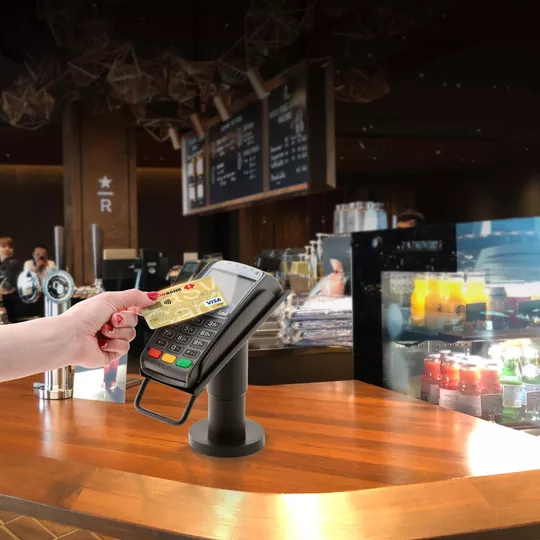
Contactless debit card payments grew sharply
The popularity of contactless payments has boosted the value of debit card transactions by 18.5% in December – the peak shopping month of the year-end season. Statistics from the Central Bank show that debit card transactions at PoS points increased by nearly 20% to 4.8 billion euros in December, compared to the same period last
More
QR code payment – New trend of modern young people
At any location, even without carrying a wallet, cash or bank card, you can confidently pay the bill in a snap with QR code (payment by QR code) via mobile banking. This trend has become a modern payment trend for many young people today. “Very fast, every time I go out to eat and drink,
More
Xu hướng thanh toán Thẻ không tiếp xúc lên ngôi
Với nhiều tiện ích và độ bảo mật cao, thẻ contactless (thẻ không tiếp xúc) được dự báo sẽ là xu hướng thanh toán trong thời gian tới, đặc biệt trước bối cảnh dịch COVID-19 đang diễn biến phức tạp và những lo ngại về lây lan dịch bệnh khi sử dụng tiền mặt Tổ
More
Lướt, vẫy nhẹ thẻ có thể thanh toán trên Vietbank Digital
Trước tình hình diễn biến phức tạp của dịch Covid-19, các giao dịch của Vietbank sẽ chuyển sang online hoặc hạn chế tiếp xúc nhằm đảm bảo an toàn cho bản thân, gia đình và cộng đồng. Vừa qua, ngân hàng TMCP Việt Nam Thương Tín (Vietbank) đã triển khai thành công thẻ CHIP/EMV, ra
More
Điều cần biết khi thay thẻ bảo hiểm y tế giấy bằng thẻ điện tử
Từ năm 2020, thẻ bảo hiểm y tế giấy như hiện nay sẽ được thay thế bằng thẻ điện tử. Theo lộ trình, chậm nhất ngày 1-1-2020, Cơ quan bảo hiểm xã hội (BHXH) phải thực hiện phát hành thẻ bảo hiểm y tế (BHYT) điện tử cho người tham gia BHYT. Theo BHXH Việt
More