Attach security to digital banking In order to ensure smooth, safe and accurate digital banking services, banks have been constantly “racing” to invest in technology to ensure information safety and security. A survey by the Vietnam Cyber Emergency Response Center shows that 100% of credit institutions invest in security solutions, from basic to advanced. From the firewall system, intrusion detection; multi-factor authentication anti-virus system; anti-spam system; data filtering systems … to digital signature technology have all been invested by banks. Deputy Governor of the State Bank of Vietnam (SBV) Nguyen Kim Anh, Head of the SBV’s Fintech Steering Committee, said that banks have actively researched and invested heavily in a number of technology achievements of humanity in products, service, operations and administration. The most prominent is the practical deployment of fundamental digital technologies such as cloud computing, big data analysis, artificial intelligence, applications, solutions such as biometric authentication … to improve efficiency. performance, enriching the customer experience. Most recently, Military Commercial Joint Stock Bank (MB) has used a new security technology for digital banking transactions. Accordingly, users using a different mobile device (not the one they originally registered) will have to scan the QR code to identify the type of transaction and determine the correct owner of the transaction. Translate. In addition, this bank also deployed an online customer identification (eKYC) with a video containing anti-denial biometric information, and the quality of registration was 3 times higher than that of other banks. In particular, the deployment of eKYC electronic identity solution has changed the perception of banking services and is a solution to improve the quality of information security and safety for customers. Recently (January 28), Saigon – Hanoi Commercial Joint Stock Bank (SHB) officially launched the feature of opening an online account on SHB Mobile application via electronic customer identification solution (eKYC). The application automatically identifies the customer’s information and images on the ID papers compared with the pictures of the customer’s face to complete the online identification. After that, customers can register an online account package to transfer money, pay bills and QR Pay, top-up your phone, book air tickets, train tickets, hotel reservations … According to Deputy Governor Nguyen Kim Anh, the implementation of eKYC in establishing relationships with customers for the first time is considered a “gateway” to develop digital banking models. In particular, identifying and verifying customer information in opening payment accounts plays an important role, helping customers to access and use banking services, allowing banks to expand customers. and provide safe, convenient and efficient banking services. Besides, to bring the best convenience and security to customers, Tien Phong Commercial Joint Stock Bank (TPBank) is also the first bank to issue VCCS domestic chip cards as well as accept card payments. domestic chips in Vietnam. In addition, TPBank is also the first bank to apply ePIN electronic PIN to ATM cards. These are optimal solutions to help limit risks and damages from card data theft at ATMs. For this success, the bank has invested heavily in technology in digital banking development. Mr. Nguyen Hung, General Director of Tien Phong Commercial Joint Stock Bank (TPBank) said: Right from the first days of its establishment, TPBank had an orientation to transform digitally into a technology bank, a digital bank, because does not compete with large, long-established banks. TPBank’s motto is to think big, do from small, successfully deploy, and replicate to other fields. How do people think zero conversion is so difficult. However, many experts said that strengthening security technology, ensuring maximum safety for the system and customers is a big problem in the financial market in Vietnam. According to Mr. Nguyen Duc Tuan, the main solutions to ensure information security in the digital transformation process include: Human solutions, need to raise awareness for employees, users, and security departments. information safety, training and training for the team specialized in information security, regularly rehearsing information security. At the same time, “it is necessary to separate the network zones and have a separate protection plan for each network area, establish and protect VPN connections. Establish intrusion prevention systems for information zones, authentication strong and digital signature to ensure online transactions. Maintain monitoring, inspection, and detection of vulnerabilities in development applications, “said Nguyen Duc Tuan. Currently, there are some incidents happening in Vietnam but the servers are located abroad. Therefore, experts say that setting up a national incident response network is a solution that plays a very important role in handling this situation.
In addition, economist Ngo Tri Long pointed out that the structure and purpose of the internet is an open network, so financial transactions can face high security risks. This requires a legal framework for user data security and information security to create a secure and reliable digital transaction system. At the heart of cyber security crime Banks increase investment in information security and safety is an inevitable trend. Because Vietnam is considered a potential market, an opportunity for digital banking with about 72% of the population owning smartphones, more than 130 million mobile subscribers, 51 million mobile internet subscribers, and 3G connectivity. / 4G nationwide, 64 million internet users. However, sharing with the media recently, Major General Nguyen Van Giang, Deputy Director, Department of Cyber Security and High-Tech Crime Prevention and Control, Ministry of Public Security, said that from the beginning of the year until now, There are about 4,000 cases of cyber security attacks, including in the banking sector, such as customers being tricked into losing money through their accounts due to fraud, fraudsters impersonating a bank employee or sending fake bank links. The number of cases where customers are deceived, lost money through their accounts (about VND 100 billion) is increasing, many cases have not been recorded. Meanwhile, Mr. Nguyen Duc Tuan, Acting Director of Vietnam Cyber Emergency Response Center, Department of Information Security (Ministry of Information and Communications) warned that cyber attacks are happening quite commonly. . In particular, the financial sector accounted for about 51% of online frauds in 2019 (in 2018 it was 44.7%). Financial benefit is the main driver of cybercrime, accounting for 86%. Approximately 30% of information security incidents in the financial sector are caused by web application attacks. In particular, recent surveys show that experts point out that the banking industry is facing a number of challenges in cybersecurity when banks, customers, and bank affiliates are all can become a “hole” for cybercriminals to attack. Experts say that if banks do not invest properly in technology systems and solutions, this type of crime will be increasingly increased. Assessing this issue, economist Ngo Tri Long said that the risk of internet security is still one of the obstacles for the development of e-commerce in general and the development of digital banking in particular. . Because the structure and purpose of the internet is an open network, financial transactions can carry high security risks. Source: https://ndh.vn/ngan-hang/them-giai-phap-bao-mat-tang-an-toan-trong-giao-dich-ngan-hang-1285865.html
Tin tức khác
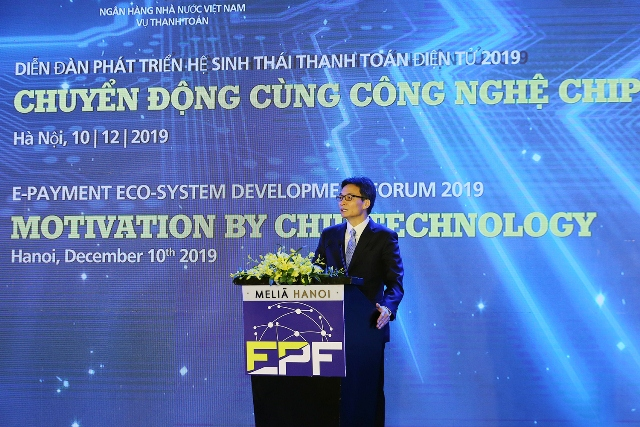
Phó Thủ tướng Vũ Đức Đam: Y tế và giáo dục phải triển khai thanh toán không dùng tiền mặt trước 2020
Phó Thủ tướng Vũ Đức Đam cho biết, Chính phủ đã có chỉ đạo các ngành như thuế, bảo hiểm, viễn thông, điện phải áp dụng thanh toán không dùng tiền mặt…; trong đó hai lĩnh vực là giáo dục và y tế phải triển khai trước năm 2020. Tại Diễn đàn phát triển Hệ
More
Chuyển đổi thẻ BHYT điện tử: Người dân được gì?
Trong giai đoạn chuyển đổi sang thẻ điện tử, BHXH Việt Nam vẫn bảo đảm đầy đủ các quyền lợi người bệnh Từ ngày 1-1-2020, cơ quan BHXH Việt Nam phát hành thẻ BHYT điện tử có gắn chip cho người tham gia BHYT thay cho thẻ giấy. Cũng từ thời điểm này, Bộ Y tế đặt
More
Cashless transactions increased impressively
In the first 6 months of 2020, the total amount and total value of non-cash payment transactions via the NAPAS system increased by 138% and 140.5%, respectively, compared to the same period last year. To contribute to promoting non-cash payments, exchanging with Tuoi Tre, Mr. Nguyen Dang Hung, deputy general director of Vietnam National Payment
More
From 2020, there is no need for personal documents for medical examination and treatment with health insurance
For many years, identity card or other personal documents have been an integral part of medical examination and treatment records of health insurance. However, from next year, when medical examination and treatment, people have been able to ignore this type of paper. Medical examination and treatment procedures with current health insurance According to Article 15
More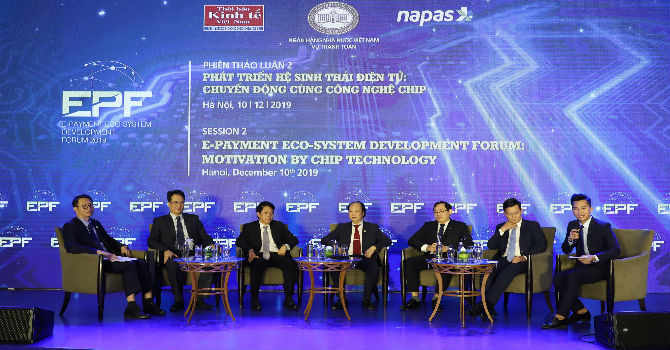
Hai năm nữa mới hoàn thành chuyển đổi sang thẻ chip, Việt Nam có là điểm trũng trên thế giới?
Liệu Việt Nam có bị tụt lại so với thế giới hay không khi tới 2 năm nữa mới hoàn thành chuyển đổi sang thẻ chip, trong khi các nước trên thế giới đã đưa vào sử dụng từ lâu? “Chắc chắn sẽ rất tốn kém” Phát biểu tại Diễn đàn phát triển Hệ sinh
More
Smart card trend in the world
Many countries around the world have been converting smart card usage into many different service industries such as Sim cards integrated payment in telecommunications, applications in automating bus ticket payment. , tram in the transport, electronic identity cards in the field of state management or the type of payment card of the banking industry ….
More