According to the goals set by the Government, by 2020, the rate of non-cash payment must account for more than 30% of the total means of payment in Vietnam. Conversion of magnetic cards to chip cards with safer security technology is a must.
The conversion from magnetic stripe to chip card is being implemented by banks “racing” and the goal of 100% conversion by the end of 2021 is entirely feasible.
By the end of 2019, over 25 million magnetic cards were transferred to the chip
After more than half a year of launching with 7 participating banks, by the end of 2020 the number of banks willing to convert magnetic cards to chip cards has increased to 20. 7 banks participating in the first phase include Vietcombank, VietinBank, BIDV, Agribank, Sacombank, TienphongBank and An Binh, with ATM cards accounting for about 70% of the total number of cards nationwide.
General Director of Vietnam National Payment Joint Stock Company (Napas) Nguyen Quang Hung said that by the first quarter of 2020, not only will stop 20 banks and 6 chip card suppliers, but it will reach 26 banks. goods, 10 companies supply chip cards.
According to statistics of the State Bank, by the end of September 2019, the number of cards circulating nationwide was 96.4 million cards with 36 issuers, many different card brands in which, domestic debit cards accounted for overwhelming over 90% of the total circulation card.
According to the roadmap set out in Circular No. 41/2018 / TT-NHNN, by the end of 2019, 30% of ATM cards in the market (equivalent to over 25 million ATM cards) will have to be converted to chip cards, 35 % of ATMs, 50% of card acceptance devices (POS) at points of sale are in compliance with the local standard on chip card standards; the deadline is December 31, 2021 to convert 100% of domestic cards to chip cards, equivalent to all 75 million ATM cards being converted to chip cards.
With normal ATM cards, users are required to enter a pin on POS when making payment. As for the chip card, users only need to scan through the touch screen of the POS machine to be able to pay. Each chip on the card is like a device that stores and signals.
Switching from magnetic stripe cards to chip cards not only limits the crime of stealing card data to create fake cards to withdraw money, but it will also significantly increase the number of customers, which is the basis for promoting the service. develop cashless payments.
According to Deputy Prime Minister Vu Duc Dam, doing well will boost the digital economy. Because chip cards are a multipurpose application on top of which, in addition to payment and financial services, it is possible to apply more connections with other economic sectors to bring multiple applications into technology such as transportation, health insurance, social insurance …
Urgent completion of targets
Vietcombank Deputy General Director Dao Minh Tuan said that in May 2019, Vietcombank officially launched domestic chip cards and the goal in 2019 is to convert 30% of the number of domestic chip cards, 30% of ATMs and 50%. % of units accepting POS cards.
“Vietcombank currently has about 14 million domestic debit cards circulating in the market, so the conversion cost is huge but in the first phase of conversion we will give it to customers free of charge. Regarding the long-term goal, Vietcombank pledged to comply with the State Bank’s regulations on the completion of the 100% conversion of Vietcombank’s domestic cards to chip cards by December 31, 2021 “- Mr. Dao Minh Tuan informed.
According to Deputy General Director of ACB Tu Tien Phat, each year ACB plans to spend about VND 400-500 billion on technology, including new trends such as payment and electronic wallets. Currently, 100% of ACB’s ATM systems accept this new card.
ABBank General Director Pham Duy Hieu said: “The investment in a new and modern payment system requires the bank to spend a lot of money on infrastructure, card management systems and equipment systems to accept. However, with the general trend of the global digital economy as well as the implementation of the guidance of the State Bank, we set a goal by mid-2020 to convert 100% of magnetic cards to chip cards. ”
One of the issues that banks and customers are concerned about is the cost of changing cards. For banks, the biggest problem when converting magnetic cards to chip cards is not merely the cost of the embryo card but also the cost of devices that accept cards such as ATMs, POS machines, etc.
For customers, if the fee from customers is low, the conversion rate will be very low because for customers who are in the habit of using with low cash-free consumer demand, it will be difficult to switch to using chip cards to pay fees.
According to Deputy Governor of the State Bank Nguyen Kim Anh, the bank will have to calculate in accordance with its business goals. To compete, banks need to minimize the costs incurred for customers. If any bank charges a high fee, the competitiveness will decrease. The State Bank only provides guidance on the conversion roadmap, as well as technical requirements, basic standards for domestic chip cards …
“The billet cost of chip cards alone is 7-8 times higher than the cost of embryos of magnetic cards. That’s not to mention other costs, but we have considered some free programs for old customers in the period. In the next stage, depending on the policies of the State Bank as well as the goals of the bank, we will have policies to create the best conditions for our customers “- General Director of TPBank Nguyen Hung said.
Some banks said it would free conversion for cardholders despite the great cost. However, some other banks said the conversion fee will be based on the relationship between the customer and the bank, not free for the whole. For example, it will only apply to old customers, while new customers will assess their mining level to give the most appropriate price.
(Source: Urban Economics Newspaper)
Tin tức khác

Bustling conversion of magnetic cards to chip cards
The change from magnetic card to chip card will limit the situation of criminals stealing card data to make fake cards to withdraw money … “The cost to produce a chip card is about 8 to 10 times higher than that of making a card, so with the existing number of existing customers using our
More
No contact: Future banking trends
Vietnam has 41 banks with the current number of magnetic cards at about 75 million; nearly 280,000 POS machines – most of them have complied with the Chip Card Standard (EMV) and the upgrade to support the local chip card standard is not too complicated. Safety, security, multi utilities According to EMVCo data, as of
More
Electronic payments spike in Covid-19
Users switch to payment via cards, mobile applications, QR codes … to increase safety and convenience in Covid-19, and enjoy incentives from the bank. Never used a banking application to pay bills, Ms. Thu Hong (District 8, Ho Chi Minh City), surprised by the convenience of this method. “The recent payment of utility bills, for
More
Thêm chốt chặn để an toàn hơn khi thanh toán thẻ
Một số quy định dự kiến được Ngân hàng Nhà nước bổ sung để đảm bảo thanh toán thẻ an toàn và bảo mật hơn. Ngân hàng Nhà nước đang dự thảo sửa đổi Thông tư 47 quy định các yêu cầu kỹ thuật về an toàn bảo mật với trang thiết bị phục vụ
More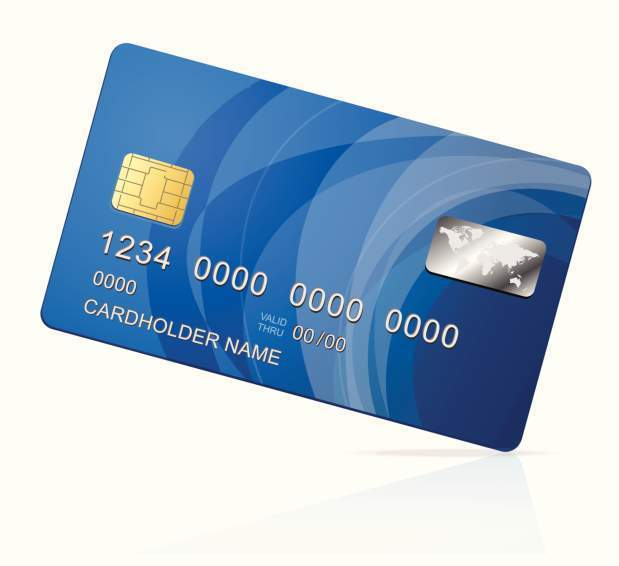
Thẻ chip mở thêm cơ hội đẩy mạnh thanh toán không dùng tiền mặt
Công ty cổ phần Thanh toán quốc gia Việt Nam (Napas) vừa chính thức phát thông tin bắt đầu chuyển đổi thẻ từ sang thẻ chip. Đây là sự nỗ lực trong chỉ đạo điều hành của NHNN Việt Nam cũng như Napas – đơn vị được giao làm đầu mối trong kế hoạch chuyển
More
Payment contactless
Contactless (contactless) by waving, tapping on the POS machine to pay, is a trend of non-cash payment is being used by many people, in addition to local swipe cards, international cards and Payment by QR code via mobile devices. This form is well received not only for its style and convenience, but also for its
More