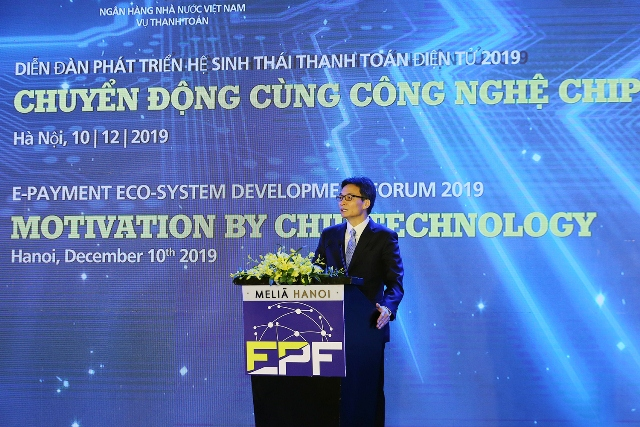
Deputy Prime Minister Vu Duc Dam said that the Government has instructed industries such as tax, insurance, telecommunications and electricity to apply non-cash payments …; in which two fields, education and health, must be implemented before 2020.
At the Forum of developing electronic payment ecosystem 2019 with the topic “Moving with chip technology”, Deputy Prime Minister Vu Duc Dam reiterated the story of Vietnam Post has bravely went straight to the 2G network, even in other countries. nearby free technology transfer is more backward. As a result, Vietnam is one of the pioneers in 2G technology.
“Similarly between current chip and magnetic card technology, if we boldly take a step forward, we will not miss the beat” – Deputy Prime Minister exchanged in the Forum of Electronic Payment Ecosystem Development 2019 .
Deputy Prime Minister said, the Government has directed the sectors such as tax, insurance, telecommunications, electricity to apply non-cash payments …; in which two fields, education and health, must be implemented before 2020.
“Now a lot of farmers and poor people still think that bank accounts are not for themselves, changing this mindset is the duty of the State Bank, the banking system, credit institutions, the media … “, Deputy Prime Minister noted and said that it is necessary to strongly apply technology, proceed to integrate personal information about personal identity, health insurance, social insurance, banking … at the same time, coordinate the contract. ministries among ministries, organizations, enterprises, mobilizing and explaining for people to participate.
“Vietnamese people have a saying that“ money comes with their intestine ”, therefore, the issue of safety and security in payment to the people is the most practical thing. Therefore, in order to promote electronic payment, to take advantage of the digital economic opportunity, we need to attach it to safety and security and make sure the benefits of participation for all citizens “- Deputy Prime Minister Vu Duc Dam to speak.
Experts said that promoting electronic payment towards cashless society is an inevitable development trend in the context of the Fourth Industrial Revolution, creating a double impact that has spurred economic growth. International financial assistance has supported the implementation of a comprehensive financial strategy through the universalization of banking and financial services.
According to the State Bank, as of September 30, the value of payment via POS increased by 36.5% over the same period; the number of cards reached 96.4 million; more than 19,000 ATMs … These are the basis for promoting electronic payment mobile banking and internet banking. However, the transition to chip cards is also new content, there are many challenges and challenges.
The main reason today is due to the large banking costs. Investing in old technology requires a period of depreciation, while when applying a chip card, the system of technology must change, the terminal system, ATM tree, POS system must change.
In addition, when switching to chip cards, banks have to change a series of machines, chip card issuance costs are also much higher than magnetic cards. However, banks have realized that it is necessary to convert and are determined to transfer magnetic cards to chip cards, turning challenges into opportunities with integrated, synchronous payment of many expenses such as education and health. , insurrance…
Up to now, there are more than 20 banks and 6 institutions providing chip cards, expected by the end of the first quarter of 2020, this figure will reach 26 banks, 10 companies providing chip cards …
(Source: Life Health Newspaper)
Tin tức khác

Vietcombank đã chuyển đổi hơn 1 triệu thẻ chip
Bà Nguyễn Hồng Vân – Giám đốc Trung tâm thẻ Ngân hàng TMCP Ngoại thương (Vietcombank) cho biết ngân hàng đã phát hành mới và chuyển đổi gần 1 triệu thẻ Vietcombank Connect24 Chip Contactless (thẻ công nghệ chip và không tiếp xúc). Tính đến ngày 15.2, Vietcombank hoàn thành chuyển đổi 40% ATM đáp ứng tiêu
More
Ngân hàng chuyển mình trong cuộc đua số hóa
Nam A Bank đưa robot, trợ lý ảo phục vụ khách hàng, đồng thời hoàn thiện hệ sinh thái eBanking, mang đến trải nghiệm đa tiện ích cho khách hàng. Trong bối cảnh công nghệ phát triển, ứng dụng ngân hàng số là lựa chọn tất yếu của các nhà băng, nhằm cung cấp những
More
“Đã đến lúc thị trường thẻ Việt Nam cần phải bài bản hơn”
“Ngân hàng hiện chưa cho thấy quy trình xử lý bất thường thuyết phục được khách hàng. Không có tổ chức nào đứng ra bảo vệ quyền lợi cho khách hàng”, luật sư của Basico nêu. Nhận định trên được luật sư Trần Minh Hải, Chủ tịch CTCP Đào tạo Nghiệp vụ Ngân hàng, Giám đốc
More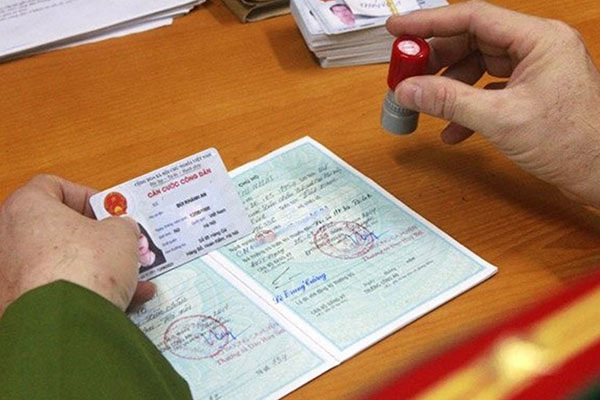
Thẻ CCCD gắn chip cần áp dụng công nghệ tiên tiến, bảo đảm an ninh
Bộ trưởng Bộ Công an sẽ quyết định mẫu, chất liệu thẻ căn cước công dân có gắn chip điện tử. Theo yêu cầu của Thủ tướng, thẻ cần áp dụng công nghệ tiên tiến, đảm bảo an ninh, an toàn. Thẻ căn cước công dân gắn chip điện tử sẽ hỗ trợ chuyển đổi
More
Thanh toán không dùng tiền mặt qua Napas tăng 48%
Cơ cấu giao dịch thông qua hệ thống NAPAS có sự dịch chuyển từ chuyển mạch ATM sang thanh toán liên ngân hàng tăng lên 48%. Tại Hội nghị tổng kết hoạt động năm 2019 của Công ty Cổ phần Thanh toán Quốc gia Việt Nam (NAPAS), ông Nguyễn Quang Hưng, Tổng Giám đốc NAPAS
More
The risk of losing money in ATMs increases because of slow transfer of magnetic cards to chip cards
The conversion of magnetic cards to chip cards in Vietnam is quite slow. This invisible medium has helped criminals steal money from ATM cards. Currently, Vietnamese banks are “racing” to convert magnetic cards to chip cards. This transformation not only fulfills the requirement of the State Bank (SBV) to be completed in 2020, but also
More