“The bank has not shown the abnormal handling process to convince customers. There is no organization that protects the interests of customers,” Basico’s lawyer said.
The comment was shared by lawyer Tran Minh Hai, Chairman of Banking Professional Training JSC, CEO of Basico Law Company, on the sidelines of the seminar “Credit Card Market – The race between banks and opportunities for consumers ”recently organized by BizLIVE in Ho Chi Minh City.
What do you think about many users who are not interested in credit cards in particular and cards in general?
There are three main issues. One is undeniable in terms of technology. Credit cards in particular and cards in general have a common fact that the physical cards being issued are mostly magnetic cards. This point is very backward, because users have not reacted violently, but in the world they have switched to chip cards.
Chip cards and flashcards are different from each other in terms of safety.
Currently, there are many systems including state-owned commercial banks or joint stock banks, but the predecessors are state-owned banks, which have a very large network, a large number of card issuance but still use magnetic cards. There have been many incidents that happened because of backward technology issues.
The second problem is that if you look at the utility of the card, everyone likes it, with low interest rates, a grace period …, but in the end the user concern is the insecurity. Suddenly reported loss of money in the account, suddenly someone withdraws money … Which is true or false, gain or loss is not in the customer factor but in the banking aspect. Because the trace is also the bank, the control that holds in hand verifies the truth is the bank. Customers are completely passive.
The bank has not shown the abnormal handling process to convince customers. No organization stands to protect the rights of its customers. That is the main reason why people open their cards timidly.
There are also a number of other limitations I think stem from the lack of transparency in the market.
Recently, there have been cases of customers using credit cards and surprisingly with the “shock” calculation method of HSBC. How do you rate interest rates, how to calculate penalty interest rates with credit cards of many banks today?
Credit card loans are unsecured, extremely risky, and extremely risky. Secondly, credit cards are preferential with a duration of about 40 days without interest payment …
On the credit side here is the bank, before the loan with high risk, nature of concessions, of course one must impose sanctions on customers with signs of violations. The purpose is not to get people to pay a fine, but to prevent customers from re-offending.
Maybe so customers will find it offensive, but if viewed positively, it is a reminder for customers.
But is it possible that the calculation of interest and penalty at the time of opening the credit card advisory card has not clearly communicated with the user?
It is time for the card market to be more methodical. In fact, there are rules regarding credit card activity.
Specifically, Circular 39 stipulates that when banks use sample contracts and general terms of transaction, they must be publicly posted first, secondly there must be evidence that customers have been disseminated all information. service. But most of the time, it is very difficult for people to get information.
In addition, Article 405 of the Civil Code states that cases of sample transactions and general terms of agreement require listing, publicity and explanation. So if the bank does not explain it, any customer has the right to sue. But the problem is that the users themselves do not stand up to the lawsuit, and at the same time there is no organization protecting the rights of users.
Looks abroad. For example, in the Singapore market, if a customer comes to a transaction, there are a series of terms, the bank will give the customer an agreement on information dissemination between the bank and the customer. So the first day the customer will be informed by the bank, we have this process if you become a card customer, you will have this and that … The customer takes the study then the bank and the customer Signed confirmation has been popular bank, then signed a credit contract.
(Source: bizlive)
Tin tức khác

“Chip hoá” để hạn chế rủi ro
Nâng cấp hệ thống phát hành thẻ sẽ phải đi cùng với việc nâng cấp hệ thống chuyển mạch. Ngân hàng phải đầu tư thêm, song họ phải chấp nhận vì đây là nhu cầu tất yếu, phù hợp với xu thế chung của các quốc gia trên thế giới, góp phần đảm bảo an ninh,
More
Chấp nhận ‘đội’ chi phí để khách hàng trải nghiệm dùng thẻ chíp
Theo yêu cầu của Ngân hàng Nhà nước (NHNN), đến cuối năm 2019, ít nhất 30% số thẻ ATM, 50% thiết bị chấp nhận thẻ (POS) tại điểm bán hàng đang lưu hành trên cả nước phải tuân thủ tiêu chuẩn cơ sở về tiêu chuẩn thẻ chíp nội địa. Tuy nhiên, vấn đề lớn
More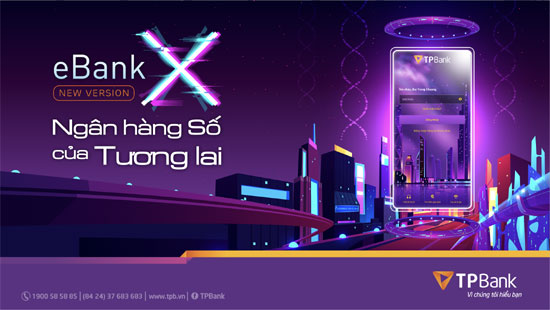
TPBank chi chục triệu đô nâng cấp ứng dụng eBank
Nhà băng gọi phiên bản internet banking mới là nền tảng ngân hàng số tương lai, tích hợp nhiều công nghệ mới như AI, machine learning… eBank X – phiên bản Internet Banking mới nhất của TPBank chính thức đưa vào hoạt động từ ngày 6/12. Bản nâng cấp mới được giới thiệu có nhiều
More
Promote chip cards, expand the cashless ecosystem
The efficiency brought about by the application of chip technology to the development of economic industries and the daily necessities of human life has been proven from reality. The current problem of Vietnam is that if we do not boldly take a step forward, we will miss the beat … Chip card development: Efforts from
More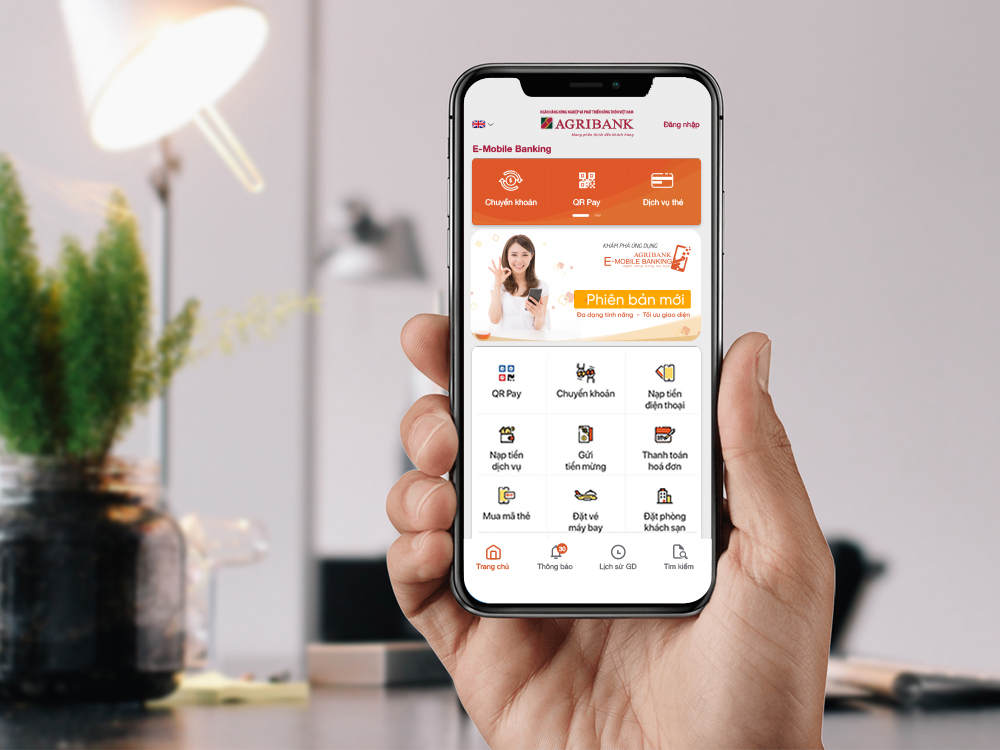
Pay with contactless and cashless Agribank to avoid Covid-19 epidemic
Before the situation of coronary pneumonia, there are complicated developments, Agribank encourages customers to do online transactions via e-banking services Internet Banking, E-Mobile Banking or using Visa / Master cards with non-touch technology. to avoid the risk of infection. Agribank E-Mobile Banking With multi-utility banking application installed on mobile devices connected to the Internet, at
More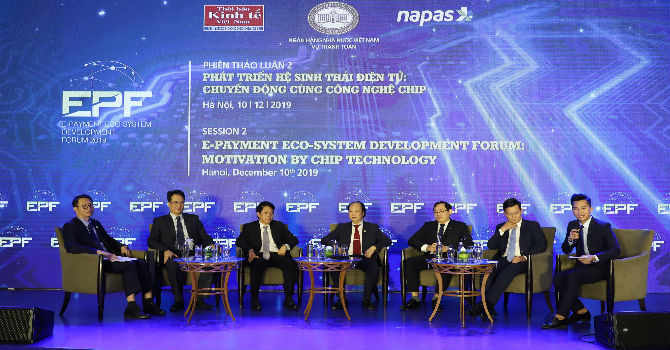
“Electronic payment helps fight money laundering and anti-corruption”
“Electronic payment helps fight money laundering and anti-corruption” That is the affirmation of Deputy Prime Minister Vu Duc Dam in the Forum of developing electronic payment ecosystem in 2019 with the theme “Moving with chip technology” by the State Bank, National Payment Joint Stock Company. Vietnam (Napas) and Vietnam Economic Times have just organized. According
More