Many countries around the world have been converting smart card usage into many different service industries such as Sim cards integrated payment in telecommunications, applications in automating bus ticket payment. , tram in the transport, electronic identity cards in the field of state management or the type of payment card of the banking industry ….
With more and more applications in various industries, smart card market is growing rapidly in the past few years. Smart cards are used most in telecommunications as a SIM card. However, applications in many other fields such as transportation, government, financial services are also invested and deployed because of the outstanding advantages of smart cards such as large data storage capacity, fast processing. Quick and effective data security methods.
According to RNCOS’s “Card Market Forecast to 2012” report, smart cards grew more than 10% in 2010 compared to 2009, in which the market was largely held by four major companies, Gemalto, Oberthur, Sagem Orga (Ingenico) and Giesecke & Devrient. Also according to this report, the number of smart card projects also increased worldwide with a high degree of diversity and high technology demand.
Moreover, the economic boom and high technical requirements in the field of digital security also increase the level of demand for smart cards. According to a study, the smart card market will achieve double-digit growth (CAGR of about 12%) between 2011 and 2013.
In the banking sector, the EMV card alliance (Euro Pay, MasterCard and VISA) is the foundation for many investment banks to deploy smart card issuance solutions. Around the world, countries have transitioned to the EMV system for a long time. Europe changed in 1996, typically France and England. Asia – like Japan and South Korea also conducted from 2003-2004. In Southeast Asia – Malaysia and Singapore were the first countries to convert their card payment systems to the EMV standard since 2005, followed by Thailand, Indonesia, Philippines and Vietnam. According to EMVCo, by the end of the first quarter of 2011, about 1.2 billion EMV chip cards have been issued and 18.7 million POS points accept EMV cards in operation worldwide. These figures are equivalent to 40.1% of the total number of payment cards in circulation and 71% of the number of POS installed globally.
Also according to this report, the expected average growth rate of contactless card technology from 2011 to 2013 is about 24% covering many different areas such as mobile payment, transportation or digital proof of goverment.
Tin tức khác
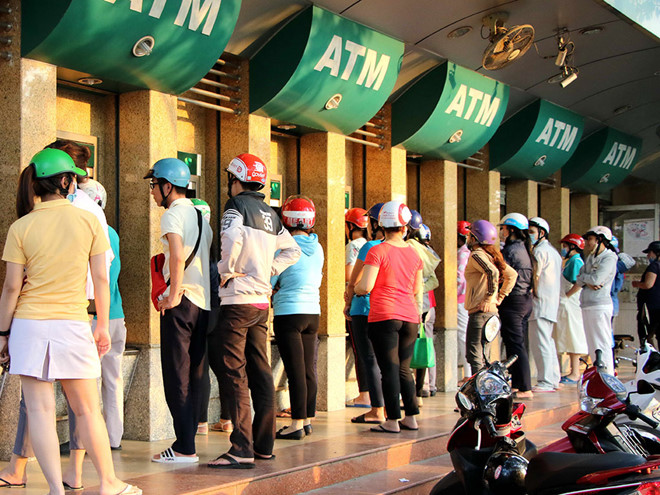
Thói quen rút tiền mặt từ ATM của người dân thay đổi
Theo báo cáo của Công ty Cổ phần thanh toán Quốc gia Việt Nam (Napas), nhiều người dân đã quen hơn với việc chi tiêu qua thẻ, ứng dụng ngân hàng, thay vì rút tiền mặt. Nếu như năm 2018, có 62% người dân dùng thẻ ngân hàng để rút tiền mặt, con số này
More
VIETCOMBANK TRIỂN KHAI TÍNH NĂNG BẢO MẬT 3D SECURE CHO THẺ GHI NỢ QUỐC TẾ
Nhằm tăng cường bảo mật khi thanh toán trực tuyến bằng thẻ, từ ngày 01/10/2019, Vietcombank chính thức triển khai tính năng bảo mật 3D Secure cho thẻ ghi nợ quốc tế. Như vậy đến nay, Vietcombank đã triển khai 3D Secure cho tất cả các sản phẩm thẻ tín dụng và ghi nợ quốc tế mang các thương hiệu Visa/Mastercard/Amex/JCB
More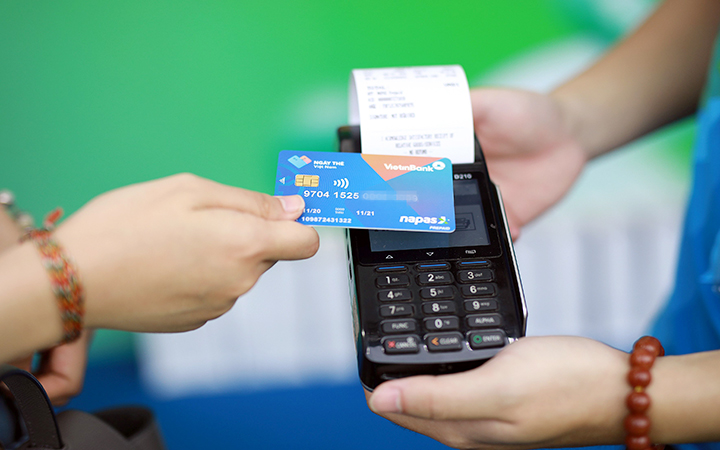
Actively convert magnetic cards to chip cards
The current trend in the world is to convert to chip cards to enhance security and security for bank cards. Vietnam can also not be out of this trend when banks are making positive moves, applying domestic chip card standards throughout the system. Increased utility and safety for the card According to the roadmap set
More
Tốn hàng ngàn tỷ chuyển đổi hơn 76 triệu thẻ ATM
Các ngân hàng thương mại sẽ phát hành thẻ ATM làm bằng công nghệ chip thay cho thẻ từ. Vậy, chi phí chuyển đổi thẻ lên đến hàng ngàn tỷ đồng, khách hàng hay ngân hàng sẽ gánh? Công ty cổ phần thanh toán quốc gia Việt Nam (Napas) cùng với 7 ngân hàng là
More
Vietcombank continues to offer free conversion from magnetic stripe card to chip card
Conversion of cards from technology to chip technology is a requirement for commercial banks (commercial banks) in the period of 2020-2021. This is the opinion of Ms. Nguyen Hong Van – Director of Vietcombank’s Card Center when discussing the bank’s plans and the challenges of implementing chip cards. As a pioneer bank and the implementation
More
VIB ra mắt giải pháp công nghệ thẻ hàng đầu Smart Card
Ngân hàng VIB vừa trở thành ngân hàng đầu tiên đưa về Việt Nam bộ ba công nghệ tích hợp cho thẻ tín dụng, khẳng định sự tiên phong đi đầu và sự đầu tư nghiêm túc, bài bản của VIB nhằm đưa ra những xu hướng thẻ mới nhất cho khách hàng dùng thẻ.
More