Before the event of online payment epidemic, it proved the advantage and this is an “opportunity” to develop non-cash payment methods. Does Vietnam take advantage of this opportunity or miss it?
Special opportunity
According to Minister of Information and Communications Nguyen Manh Hung, the Covid-19 translation is posing a great challenge for the country, because many activities have been delayed. But challenges also come with opportunities. There are opportunities that only when challenges arise. The Covid-19 epidemic is spread by contact, which is a great opportunity to develop non-cash payment.
From the Lunar New Year to the year of the Lunar New Year (ie, from the onset of the Covid-19 outbreak and the exemption and reduction of fees), the total number of non-cash payment transactions via the financial switching system of The State Bank of Vietnam increased 76% over the same period in 2019. In particular, the amount of transactions worth less than VND 500,000 increased from 21% to 25% of the total number of transactions. The total value of transactions increased 124% over the same period in 2019. This shows the increasing trend of using online transactions and non-cash payment instruments.
In fact, when the disease broke out, Vietnamese people were conscious of switching to non-cash payment to ensure safety and limit the spread and transmission. This is a “golden opportunity” for Vietnam’s payment sector because the awareness of the people has been raised. Will Vietnam take this opportunity to popularize non-cash payments or miss?
Decision 149 / QD-TTg on the National Comprehensive Financial Strategy up to 2025 with orientation to 2030 was approved by the Prime Minister on January 22, 2020. Specifically, enterprises will be allowed to participate in the market of financial switching and clearing electronic. This is considered a solution to open the field of monopoly, create competition, help reduce costs, increase utilities, accelerate the cashless payment process.
According to Lawyer Truong Thanh Duc, currently in the field of financial switching with electronic clearing, only Vietnam National Payment Joint Stock Company (NAPAS) is the only provider of payment infrastructure for dozens of banks. domestic and international goods in Vietnam. Meanwhile, the trend of moving to non-cash payment is increasing. If only relying on the current switching system, it is very difficult to increase transaction processing speed, accelerate the comprehensive financial universalization nationwide. Having more businesses participating in the market will certainly create strong competition, help reduce costs, increase utilities, accelerate the cashless payment process.
Vietnam’s cashless payment is still very low. Statistics show that this rate is only over 20%. Vietnam’s electronic payment system only partially meets the needs of people in urban areas, while rural areas still lack. The low coverage of high-cost service providers is a major barrier for the poor and low-income people to access to formal financial services.
Live firm before the event
To promote universal non-cash payments nationwide, it is necessary to go through the network of correspondent banking networks, fintech companies, Mobile Money services, e-wallets and other modern payment channels. . In the current context, the resources and efforts of all sectors, fields, both public and private, should be concentrated, creating effective solutions to promote comprehensive finance in Vietnam.
“Opportunities” have come, the trend of switching to non-cash payments is increasing very fast. Having a good switching system, connecting with multi channels can meet the needs of the market. But the reality in Vietnam has not. If not meet the infrastructure, the needs of the people will slow down the development of electronic payment in particular and the economy in general.
Revolution 4.0 makes new payment types appear more and more, consumer habits therefore change rapidly, but also requires higher, especially in terms of transaction speed and fees. If the switching service infrastructure is still slow to innovate, cashless payments are unlikely to make a breakthrough.
Allowing more businesses to participate in the financial switching and clearing market is a solution to help develop infrastructure and promote new types of payment. The development of financial services will promote the development of e-commerce, promoting non-cash payment methods.
Experts said that the State Bank should soon allow technology and telecommunications enterprises to participate in this market to promote new types of payment.
Leaders of the Ministry of Information and Communications also suggested that the Government and state management agencies should consider and quickly decide on a number of policies that are still considering non-cash payments, mobile money, etc. .
When cashless payments grow, all residents and businesses will benefit. Especially the group of people living in rural areas, remote areas; the poor, the low-income people; small and medium enterprises, household production and business. It has great significance in terms of socio-economic development, helping to increase “resistance”, “flexibility”, creativity, quick adaptation, quick recovery, before unpredictable events such as Covid-19 translation.
– According to Vietnamnet –
Tin tức khác
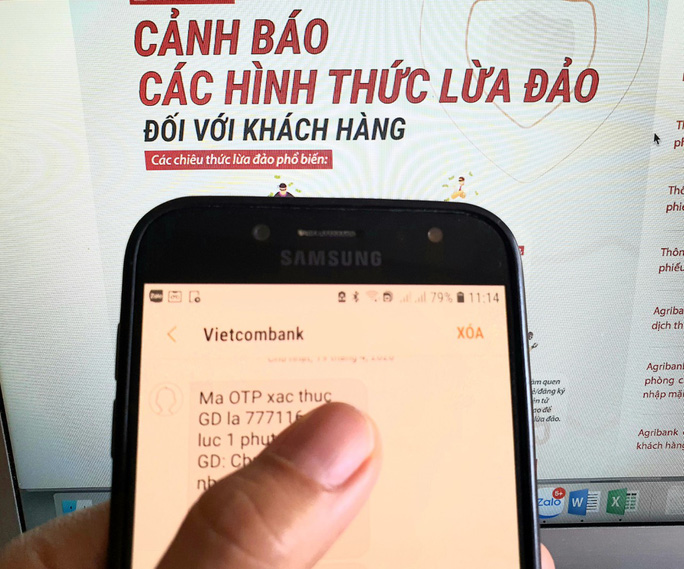
Add a bank alert trick trick to steal money in the account
Although banks have repeatedly warned of high-tech criminals cheating on OTP codes, requiring login to fake bank websites to steal customers’ money, there are still many people trapped. Agribank has continued to warn tricks of branding, website, relatives, bank officials, postal staff, law enforcement agencies … with many scenarios to steal customers’ account information. ,
Xem chi tiết Cơ hội đẩy mạnh phổ cập thanh toán không dùng tiền mặt
Trước biến cố dịch bệnh thanh toán online đã chứng minh lợi thế và đây là “cơ hội” để phát triển các loại hình thanh toán không dùng tiền mặt. Việt Nam có tận dụng được cơ hội này hay lại bỏ lỡ? Thời cơ đặc biệt Theo Bộ trưởng Bộ Thông tin và Truyền
Xem chi tiết
Lướt, vẫy nhẹ thẻ có thể thanh toán trên Vietbank Digital
Trước tình hình diễn biến phức tạp của dịch Covid-19, các giao dịch của Vietbank sẽ chuyển sang online hoặc hạn chế tiếp xúc nhằm đảm bảo an toàn cho bản thân, gia đình và cộng đồng. Vừa qua, ngân hàng TMCP Việt Nam Thương Tín (Vietbank) đã triển khai thành công thẻ CHIP/EMV, ra
Xem chi tiết
Giảm rủi ro giao dịch thanh toán phòng dịch COVID-19
Thực hiện Chỉ thị số 01/CT-NHNN của Thống đốc Ngân hàng Nhà nước (NHNN) yêu cầu ngành Ngân hàng đẩy mạnh thanh toán không dùng tiền mặt, đặc biệt là thanh toán qua ngân hàng đối với các dịch vụ công, cho đến thời điểm này, Techcombank đang là ngân hàng thương mại điển hình
Xem chi tiết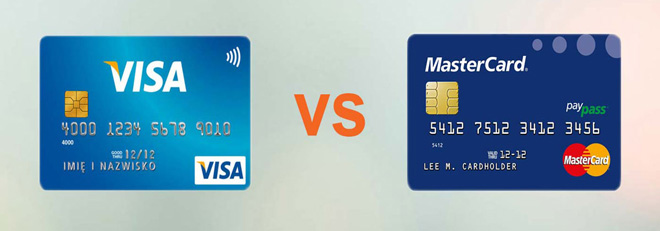
Thẻ Mastercard khác gì với thẻ Visa? Nên sử dụng loại thẻ nào?
hẻ Mastercard và thẻ Visa là 2 dòng thẻ thanh toán quốc tế rất được ưa chuộng trên thế giới hiện nay. Thế nhưng thẻ Mastercard khác gì với thẻ Visa mà nó được nhiều người tin dùng đến vậy? Hãy cùng chúng tôi tìm hiểu trong bài viết dưới đây. 1. Phân biệt thẻ Mastercard với
Xem chi tiết
COVID-19 Translation: The State Bank implements solutions to support customers
On February 24, the State Bank of Vietnam issued Document No. 1117 / NHNN-TD on the implementation of customer support solutions due to the impact of the COVID-19 epidemic. Accordingly, the current acute respiratory infection due to the new strain of Corona virus (outbreak of COVID-19) is complicated, affecting production and business activities, thereby affecting
Xem chi tiết