The efficiency brought about by the application of chip technology to the development of economic industries and the daily necessities of human life has been proven from reality. The current problem of Vietnam is that if we do not boldly take a step forward, we will miss the beat …
Chip card development: Efforts from regulatory authority
A quick survey at the Development Forum of electronic payment ecosystem 2019 “Converting with chip technology”, in 4 countries Indonesia, Japan, Malaysia and South Korea, which countries have switched to chip cards the fastest?
The answer of nearly 200 guests present at the forum mainly focused on Korea, but the correct answer is Malaysia.
“This is a mandatory requirement of the regulator, specifically here Malaysia Central Bank to convert to chip cards,” said Dang Tuyet Dung, Visa Director in Vietnam and Laos. Choose the right answer.
Speaking at the forum, Mr. Nguyen Kim Anh, Deputy Governor of the State Bank of Vietnam (SBV), said that converting domestic payment cards from magnetic cards to chip cards is one of the tasks approved by the Prime Minister. in the scheme of developing non-cash payments for the period 2016-2020.
Deploying this task, on October 5, 2018, the Governor of the State Bank of Vietnam issued a set of local standards on domestic chip cards detailing domestic payment card technical requirements in Vietnam, compatible with international EMV standards, effectively preventing the risk of fraud, card counterfeiting in physical environment via ATM / POS channels and making card payment safer and more reliable for Vietnamese consumers.
In particular, Vietnam’s chip card standard with dual-interface card technology (Dual-Interface) including contact and non-contact is the most modern chip card technology, currently comparable with advanced countries that have been deployed before. like the UK, Australia, Singapore or Malaysia.
“Besides, the application of chip cards helps banks issuing domestic cards in Vietnam have the potential to expand the payment ecosystem to other service sectors such as healthcare, education, transportation and insurance. ., bringing practical benefits and superior transaction experience to people using the service, ”Mr. Kim Anh said.
In the legal aspect, the Deputy Governor added that the SBV also issued Circular 41/2018 providing regulations on the roadmap for converting bank cards to chip cards in compliance with the basic standards for domestic chip cards.
Accordingly, the conversion schedule for devices accepting cards at point of sale operating in Vietnam (such as ATM, POS …) is until December 31, 2020 and for domestic cards in circulation is 12/31/2021.
Mr. Tran Cong Quynh Lan, Deputy General Director of VietinBank further informed, chip card is an inevitable development trend of card payment.
In many countries around the world, the transition to full chip card use was made a few years ago.
According to EMVCo data, as of the fourth quarter of 2018, the global rate of CHIP EMV Card-present card transactions accounted for 73.6%, showing that the conversion of using chip cards is happening quickly. Information at the forum said that an increase of 1% of chip card users could increase by 4% of GDP.
Referring to the benefits of chip cards to customers, Mr. Lan shared, firstly, that is information security. By encrypting the information on the chip card, the processing mechanism is different from the magnetic card to help prevent fraud and copying of card information.
Therefore, customers can feel secure when using chip card than magnetic card. Secondly, the payment is made quickly and easily.
Especially, with the chip card with non-contact function, one-touch transactions bring convenience, enhance customer experience and help enhance the habit of not using cash.
“In addition, through memory, chip cards can store personal information, insurance information, application information to connect payments to areas, aiming to become a versatile card in the future. lai, ”said Mr. Lan.
Still need more drastic moves
Speaking at the forum, Deputy Prime Minister Vu Duc Dam recalled that about 30 years ago, the world had GSM technology, countries in Asia such as Thailand and Malaysia used similar technology and were ready to transfer. No money for Vietnam.
However, we have considered, refusing to go straight to GSM technology. As a result, when deploying GSM 2G, Vietnam is one of the pioneering and fruitful countries.
Deputy Prime Minister shared that on that day, citizens of Hanoi and Ho Chi Minh City had phone booths, in yellow form, magnetic cards were from Malaysia and used green cards, chip cards from Germany – France cooperated.
There are similar ideas, phones use magnetic cards similar to typing and photocopying then mailing, while phones using chip cards use fax machines to move everywhere (because there is no Internet).
“Are we the same now? Between chip and magnetic card technology, we can talk about technology, but certainly if you boldly move straight forward, you will not miss the beat. I can say that we are also late now, ”the Deputy Prime Minister said.
There are still difficulties for Vietnam, said Greg Pote, president of the Asian Association of Payment and Identity Industry (APSCA), saying that in order to apply chip cards, it is necessary to have the infrastructure to meet the needs. bridge; need points to accept both contact and non-contact cards, and there is a need for network transformation and expansion, appropriate policies for banks,
“In the application of chip card technology, Vietnam faces challenges such as learning from a successful transition from neighboring countries; communication, education for consumers or agencies, banks, retail units …
It is a long journey that requires the persistence and strong determination of the stakeholders, but this is an irresistible trend ”, Ms. Dang Tuyet Dung shared.
According to Deputy Prime Minister Vu Duc Dam, promoting cashless payment is not as simple as it used to be to increase the circulation of capital throughout the society, not to let money die, not just a matter of transparency. fight against money laundering, corruption, and if done well, it will boost Internet economy.
“Vietnam has drastically implemented salary payment via bank accounts. Now many farmers and poor people still think that having an account is something that is not for us, so this is the task of all of us, including credit institutions and the media.
We have to step up the technology, get all the information integrated, from identity, insurance, health … to the bank that must be connected and connected.
And to do that, we still have to try a lot, including considering the time and the program that all poor people must have smartphones. To mobilize and explain people to participate “, Deputy Prime Minister emphasized.
At present, bank cards have become a popular means of payment for Vietnamese people, focused on developing banks, enhancing features and utilities, and achieving high growth rates. (In the first 9 months of 2019, the value of transactions via POS increased by 36.5% over the same period in 2018).
According to the SBV, as of the end of September 2019, the number of cards circulating nationwide reached over 96.4 million cards, with 56 issuers with many different card brands, of which Domestic debt still accounts for over 90% of the total circulation card …
In addition, the infrastructure for card payment is invested and expanded by banks, with over 18,900 ATMs and over 275,600 POS terminals installed.
The strong development of infrastructure and card services has significantly increased the number of customers, the number of bank accounts and served as a basis to promote new, modern and applied electronic payment services and means. high technology comes as e-wallets, Mobile Banking, Internet Banking …, thereby meeting the increasing payment needs of customers, contributing to promoting e-commerce development, consistent with the trend of the bar. regional and world math.
“In previous years, the Government had clearly instructed that the payment of taxes, insurance, and telecommunications power was made without cash. Earlier this year, the Government requested two more industries related to people, especially education and health to also implement electronic payment … to further expand the cashless ecosystem, “Deputy Prime Minister. positive.
(Source: Securities Investment Review)
Tin tức khác

Smart card trend in the world
Many countries around the world have been converting smart card usage into many different service industries such as Sim cards integrated payment in telecommunications, applications in automating bus ticket payment. , tram in the transport, electronic identity cards in the field of state management or the type of payment card of the banking industry ….
Xem chi tiết
Thẻ từ đang dần bị “khai tử”
Đã có rất nhiều ngân hàng thương mại thực hiện phát hành thẻ chip nội địa cho khách hàng và thay thế dần các thiết bị chấp nhận thẻ Các ngân hàng (NH) thương mại sắp phải phát hành thẻ nội địa mới phải là thẻ chip, thay vì thẻ từ như hiện nay nhằm bảo đảm
Xem chi tiết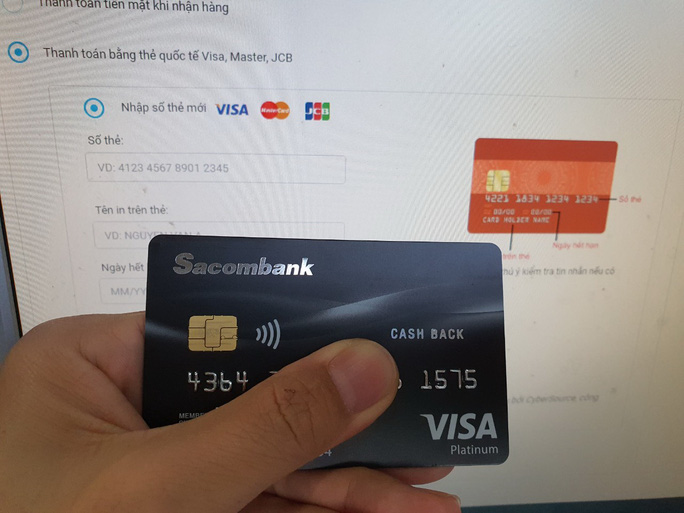
Đại dịch Covid-19 tạo cơ hội thúc đẩy sự phát triển của thanh toán điện tử
Thời gian đại dịch Covid-19 lây lan là giai đoạn khó khăn cho cả nền kinh tế nói chung và lĩnh vực tài chính ngân hàng nói riêng nhưng nó cũng tạo ra cơ hội thúc đẩy sự tăng trưởng của các hình thức thanh toán điện tử. Tổ chức tài chính ngân hàng và
Xem chi tiết
All 6 types of papers are about to change, the people of the country benefit
In the coming time, it is expected that there will be a “revolution” involving a series of important papers for each citizen – a new step in the efforts to reform administrative procedures of the authorities. permission. 1. Identity of the citizen attached to the chip The Law on Citizen’s Identity stipulates that, starting from
Xem chi tiết
Từ hôm nay, thẻ ATM phát hành trên thị trường phải là thẻ chip
TTO – Kể từ hôm nay 31-3, các ngân hàng không phát hành thẻ nội địa mới là thẻ từ nữa để chuyển sang phát hành thẻ chip. Việc ngừng phát hành thẻ ATM từ nhằm tuân theo quy định tại thông tư số 22 về sửa đổi, bổ sung một số điều của thông
Xem chi tiết
Đầu tư cho thẻ CHIP là đầu tư cho tương lai
Đó là khẳng định của bà Nguyễn Tú Anh, Chủ tịch Hội đồng quản trị Công ty cổ phần Thanh toán Quốc gia Việt Nam (Napas) với Báo Đầu tư Chứng khoán. Có ý kiến cho rằng, tốc độ phát triển thẻ sẽ chững lại do xuất hiện những hệ sinh thái điện tử mới,
Xem chi tiết