E-payment creates opportunities for people to become more involved in the banking sector, not to miss the opportunities provided by the digital economy.
This is an issue exchanged by Deputy Prime Minister Vu Duc Dam in the Forum of Developing E-payment Ecosystem 2019 with the topic ‘Moving with chip technology’ by the State Bank, National Payment Joint Stock Company. Vietnam (Napas) and Vietnam Economic Times will be held on December 10, in Hanoi
According to the data of the State Bank, as of September 30, the value of payment via POS increased by 36.5% over the same period; the number of cards reached 96.4 million; more than 19,000 ATMs … These are the basis for promoting electronic payment mobile banking and internet banking. However, the transition to chip cards is also new content, there are many challenges and challenges.
The main reason now is due to high bank costs. Investing in old technology requires a period of depreciation, while when applying a chip card, the technology system must change, the terminal system, the ATM tree, the POS system must change.
In addition, when switching to chip cards, banks have to change a series of machines, chip card issuance costs are also much higher than magnetic cards. However, banks have realized that it is necessary to convert and are determined to transfer magnetic cards to chip cards, turning challenges into opportunities with integrated, synchronous payment of many costs such as education and health. , insurrance…
Up to now, there are more than 20 banks and 6 organizations providing chip cards, expected by the end of the first quarter of 2020, this figure will reach 26 banks and 10 companies providing chip cards.
Deputy Governor of the State Bank Nguyen Kim Anh also said that promoting electronic payment towards cashless society is an inevitable development trend in the context of the Fourth Industrial Revolution, creating an impact. It also promotes economic growth and supports the implementation of a comprehensive financial strategy through the universalization of banking and financial services.
The State Bank of Vietnam is oriented to build, amend and supplement the legal framework for banking activities in general and payment activities in particular, to meet requirements for business models and translated products. new service on information technology platform, which focuses on digital banking, digital payment …
Deputy Prime Minister Vu Duc Dam affirmed that promoting electronic payment will not only increase capital flows and transparency against money laundering and anti-corruption but also promote Internet growth.
“The Internet economy in Southeast Asia is estimated to be worth about US $ 100 billion, and will triple in the next 5 years. Where is Vietnam in this field? ”, Deputy Prime Minister raised the issue and stressed“ we must not miss ”.
With the topic of the forum today, the Deputy Prime Minister reiterated the story that Vietnam Post has bravely went straight to GSM digital technology (2G network) even though neighboring countries are willing to freely transfer backward technology . As a result, Vietnam is one of the pioneers in 2G technology. “Similarly between current chip and magnetic card technology, if we boldly go straight forward, we will not miss the beat,” the Deputy Prime Minister said.
Discussing with delegates and Deputy Prime Ministers to compare the development of e-government and development of electronic payment in mobilizing people to participate more deeply and actively.
For e-government, in addition to applying information technology to the operation of the state apparatus, social management is more transparent and efficient, but also to mobilize people to participate in management work. more social.
Similarly, e-payment has many forms but ultimately creates opportunities for people to participate more in the banking sector, associated with ensuring safety, information security and personal authentication.
“Vietnamese people have the phrase” money comes with their intestine “, so the issue of safety and security in payment to the people is the most practical thing. Therefore, to promote e-payment, to take advantage of the digital economic opportunity, we need to associate with safety and security and make sure the benefits of participation for all citizens, ”Deputy Prime Minister Vu Duc Dam to speak.
Deputy Prime Minister said, the Government has directed the sectors such as tax, insurance, telecommunications, electricity to apply non-cash payments …; in which two fields, education and health, must be implemented before 2020.
“Now a lot of farmers and poor people still think that bank accounts are not for themselves, changing this mindset is the duty of the State Bank, the banking system, credit institutions, the media … “, Deputy Prime Minister noted and said that it is necessary to apply strong technology, proceed to integrate personal information about personal identity, health insurance, social insurance, banking … at the same time, coordinate the contract. ministries among ministries, organizations, enterprises, mobilizing and explaining for people to participate.
Sharing difficulties with businesses and banks when changing from magnetic card technology to chip cards, leading to changes in infrastructure, Deputy Prime Minister emphasized the consensus, calls from state agencies and in-depth discussion. close to businesses. Because if the business for its own sake is not necessarily motivated.
“If it is necessary for the country to grow, the cost of the banks in the long run will be offset economically. More importantly, this is the social responsibility of businesses and banks operating in this area.
By concrete actions, with the persuasion of banks and enterprises to join hands for the common interests, the field of electronic payment, strongly apply information technology to take advantage of the opportunity of industrial revolution. 4.0 will achieve practical results, ”said the Deputy Prime Minister.
(Source: Gov.vn)
Tin tức khác

“Chiping” to limit risks
Upgrading the card issuing system will have to go along with the upgrade of the switching system. Banks have to invest more, but they have to accept because this is an indispensable demand, in line with the general trend of countries around the world, contributing to ensuring security, safety, information security, preventing prevent frauds in
Xem chi tiết
Ngân hàng Việt đầu tiên cho phép khách hàng dùng thẻ nội địa giao dịch tại Hàn Quốc
Bên cạnh thẻ ghi nợ quốc tế hay thẻ tín dụng, TPBank vừa cho phép tất cả các chủ thẻ nội địa có thể thực hiện ngay các giao dịch thanh toán, rút tiền ở thị trường Hàn Quốc. Ngân hàng TMCP Tiên Phong (TPBank) đã thực hiện thành công dự án kết nối liên thông 3
Xem chi tiết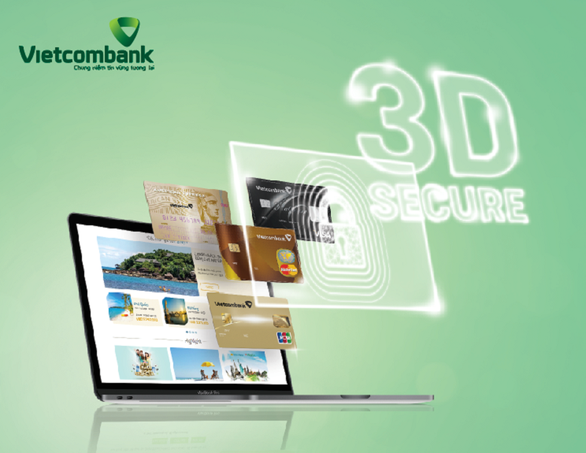
VIETCOMBANK LAUNCHED SECURE 3D SECURITY FOR INTERNATIONAL DEBIT CARD
In order to enhance the security when paying online by card, from October 1, 2019, Vietcombank officially implemented the 3D Secure security feature for international debit cards. So far, Vietcombank has implemented 3D Secure for all international credit and debit card products bearing the Visa / Mastercard / Amex / JCB brands issued by Vietcombank.
Xem chi tiết
Thực trạng và giải pháp phát triển ngân hàng số tại Việt Nam
Sự phát triển nhanh chóng của công nghệ thông tin hiện đại hình thành nên ngân hàng số – xu hướng mới cho ngân hàng bán lẻ tương lai. Do còn khá mới mẻ tại Việt Nam so với các nước phát triển, số lượng ngân hàng số ở Việt Nam còn ở mức khiêm
Xem chi tiết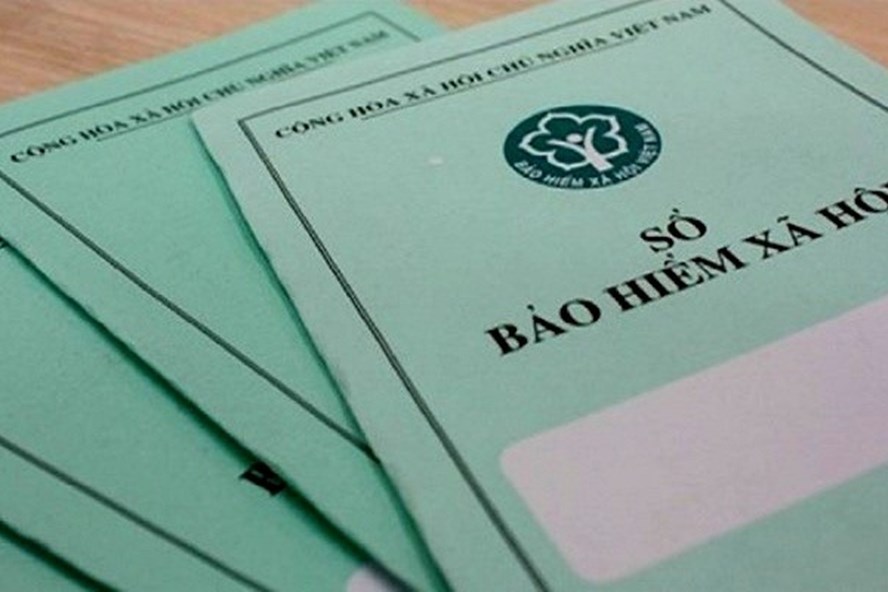
Toàn bộ 6 loại giấy tờ sắp thay đổi, dân cả nước hưởng lợi
Thời gian tới được cho là sẽ có một “cuộc cách mạng” liên quan đến hàng loạt các loại giấy tờ quan trọng đối với mỗi công dân – một bước tiến mới trong nỗ lực cải cách thủ tục hành chính của các cơ quan có thẩm quyền. 1. Căn cước công dân gắn
Xem chi tiết
Tấp nập chuyển đổi thẻ từ sang thẻ chip
Việc chuyển từ thẻ từ sang thẻ chip sẽ hạn chế được tình trạng tội phạm đánh cắp dữ liệu thẻ để chế tạo thẻ giả nhằm rút trộm tiền… “Giá thành để sản xuất một thẻ chip cao hơn sản xuất thẻ từ khoảng từ 8 đến 10 lần, như vậy với số lượng
Xem chi tiết